
$59.99
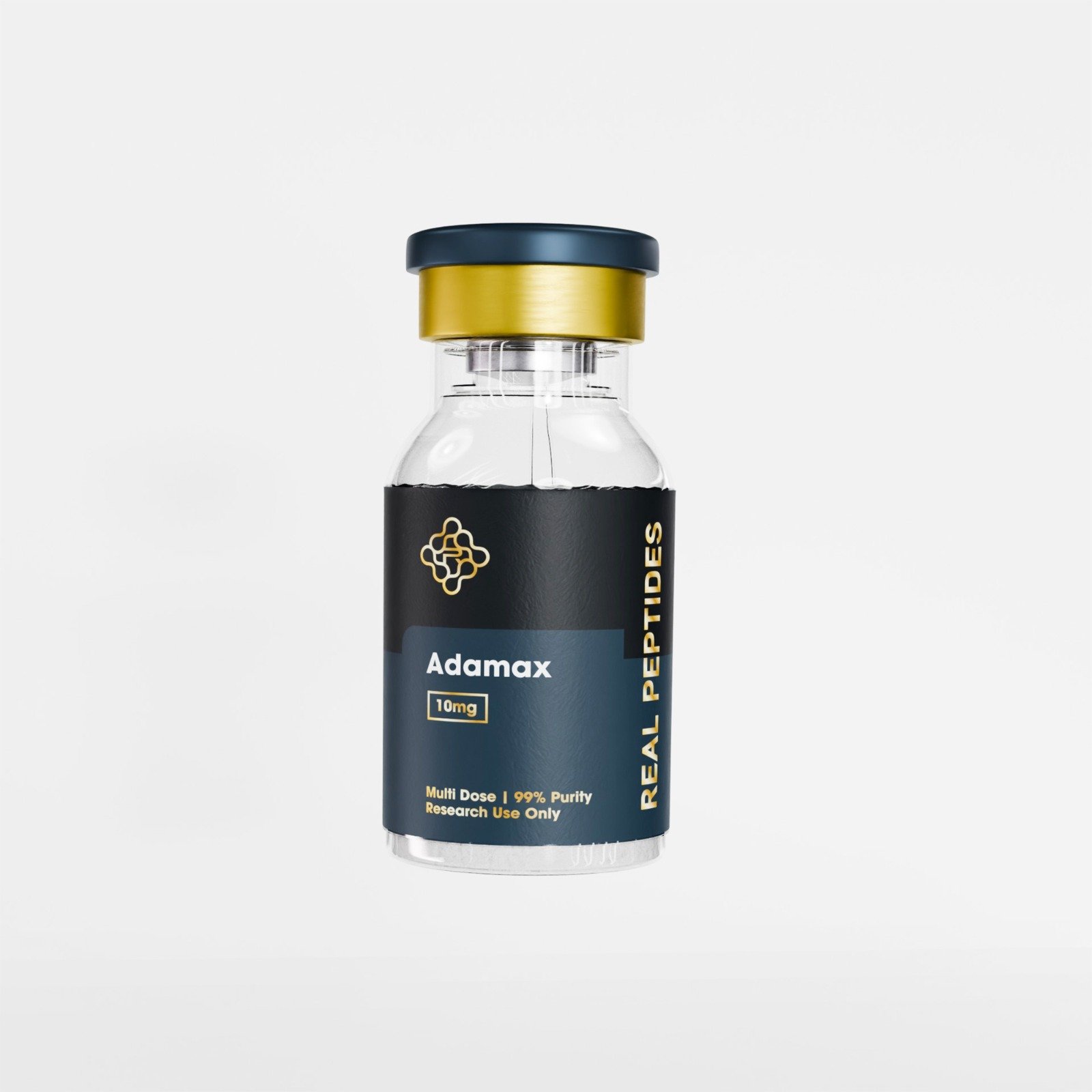
Buy Adamax Peptide 10 mg Online from SourceTides. N-Acetyl Semax Adamantane | Ac-MEHFPGP-Ad-NH₂ | MW ~1,032 g/mol | C₅₀H₆₉N₁₁O₁₁S | ≥99% HPLC purity (adamantyl modification confirmed by MS) | Endotoxin <1 EU/mg (LAL) | Full CoA | Lyophilised | Dry-ice cold chain. Designer analogue of Semax with N-Ac + C-terminal adamantane for enhanced stability and BBB penetration. Research rationale from Semax parent compound (BDNF/TrkB). No published human or animal clinical trials specific to Adamax. Not WADA-prohibited (verify). NZ Medsafe prescription classification June 2025. For in-vitro laboratory research use only. Not for human consumption.
Buy Adamax Peptide 10 mg Online | N-Acetyl Semax Adamantane | ≥99% Purity | CoA | SourceTides
Buy Adamax Peptide 10 mg Online from SourceTides.
Adamax (N-Acetyl Semax Adamantane; Ac-MEHFPGP-Ad-NH₂) is a synthetic heptapeptide research compound built on the Semax backbone — itself a derivative of ACTH(4-10) — with two pharmacokinetic-enhancing terminal modifications: an N-terminal acetyl group and a C-terminal adamantane (Ad) moiety.
Semax (MEHFPGP) is the well-characterised Russian neuropeptide developed at the Institute of Molecular Genetics of the Russian Academy of Sciences, approved in Russia for cognitive and neuroprotective indications. Adamax extends this backbone by adding N-acetylation (reducing aminopeptidase degradation) and a C-terminal adamantane group — a lipophilic, cage-like bicyclic carbon structure — which increases the peptide’s lipophilicity, enhances blood-brain barrier (BBB) penetration, and extends plasma half-life relative to unmodified Semax.
The proposed research mechanism of Adamax mirrors the well-documented Semax pharmacology: BDNF upregulation, TrkB receptor sensitisation, NGF modulation, and melanocortin system interaction — all extended in duration and potentially amplified in CNS penetration by the adamantane modification.
Important transparency note: Adamax has no published human clinical trials of its own. Its research rationale derives entirely from the Semax parent compound literature. It has been identified by New Zealand Medsafe (June 2025) as a compound requiring prescription medicine classification. All research applications of Adamax should be understood in the context of this limited and highly preliminary evidence base.
Every SourceTides vial is lyophilised, tested at ≥99% HPLC purity, and ships with a full lot-specific Certificate of Analysis.
For in-vitro laboratory research use only. Not for human consumption.
Adamax Peptide 10 mg — Technical Specifications
| Parameter | Specification |
|---|---|
| Common Name | Adamax |
| Full Designation | N-Acetyl Semax Adamantane; Ac-Semax-Ad; Adamantyl Acetyl Semax; Ac-MEHFPGP-Ad-NH₂ |
| Molecular Formula | C₅₀H₆₉N₁₁O₁₁S (approximate; adamantyl attachment configuration may alter this) |
| Molecular Weight | ~1,032 g/mol |
| Peptide Length | 7 amino acids (heptapeptide; Semax backbone); C-terminal adamantane group; N-terminal acetyl group |
| Sequence | Ac-Met-Glu-His-Phe-Pro-Gly-Pro-Ad-NH₂ (Ac-MEHFPGP-Ad-NH₂) |
| Parent Compound | Semax (MEHFPGP) — ACTH(4-10) heptapeptide analog; Russian-approved neuropeptide |
| Structural Modifications vs Semax | N-terminal acetyl group (reduces aminopeptidase degradation, extends half-life); C-terminal adamantane group (increases lipophilicity, improves BBB penetration, provides steric protection from carboxypeptidases); both termini protected |
| Adamantane Moiety | Adamantane (tricyclo[3.3.1.1³,⁷]decane) — a cage-shaped aliphatic carbon structure; highly lipophilic (logP increase); known to enhance membrane permeability and BBB penetration in modified peptides; also found in approved drugs (amantadine, memantine, vildagliptin) |
| Proposed Research Mechanism | BDNF upregulation (hippocampus + cortex); TrkB receptor sensitisation; NGF modulation; melanocortin receptor interaction (MC4R); ACTH-derived neuropeptide signalling — all extrapolated from parent Semax research |
| Evidence Base | No published human or animal clinical trials specific to Adamax; all pharmacological rationale derives from Semax parent compound literature (well-established) and general adamantane modification pharmacology; Adamax-specific data is limited to in-vitro characterisation and preclinical assays from research suppliers |
| Physical Form | White to off-white lyophilised powder; hygroscopic |
| Purity | ≥99% (RP-HPLC); identity confirmed by ESI-MS; adamantyl modification confirmed |
| Endotoxin | <1 EU/mg (LAL chromogenic assay) |
| Solubility | Soluble in DMSO; moderate aqueous solubility (lower than unmodified Semax due to adamantane lipophilicity); for aqueous use: DMSO stock then dilute to ≤1% DMSO in buffer; alternatively use 10–30% ethanol/water |
| Storage — Lyophilised | −20°C long-term (stable 24 months); 2–8°C short-term; protect from moisture and light; highly hygroscopic — seal immediately after opening |
| Storage — Reconstituted | 2–8°C for up to 7 days; −20°C for longer; avoid freeze-thaw; aliquot before freezing |
| Certificate of Analysis | Lot-specific CoA with every order; HPLC chromatogram + MS identity (adamantyl modification confirmed) + endotoxin result |
| Regulatory Status | Not approved by FDA, EMA, TGA, or Health Canada; identified by New Zealand Medsafe (June 2025) as requiring prescription medicine classification; research compound only |
| WADA Status | Not confirmed on 2024–2025 WADA Prohibited List; Semax (parent) is not WADA-prohibited; verify current list annually |
What Is Adamax? Understanding the Semax Lineage
Adamax sits at the intersection of two well-characterised research domains: the Semax neuropeptide family and the pharmacology of adamantane-modified peptides. To understand what Adamax is and what its research rationale is, you need to understand both components.
The Semax Backbone: ACTH(4-10) Neuropeptide Pharmacology
Semax (MEHFPGP) is a synthetic heptapeptide developed at the Institute of Molecular Genetics of the Russian Academy of Sciences and approved in Russia for cognitive and neuroprotective indications. It derives from ACTH(4-10) — a fragment of adrenocorticotropic hormone — extended with a C-terminal Pro-Gly-Pro (PGP) glyproline sequence for metabolic stability. Semax is well-characterised in published research: it upregulates BDNF in the hippocampus (Inozemtsev et al. 2008), modulates serotonin and dopamine systems, activates melanocortin receptors (particularly MC4R), and produces nootropic and anxiolytic effects in multiple animal models. Russian approval data supports its use in cognitive disorders and stroke recovery.
Semax’s primary pharmacokinetic limitation is its short effective duration. Intranasal Semax (the standard clinical route) has BDNF effects measurable within 30 minutes to a few hours — but the peptide is degraded relatively quickly by plasma aminopeptidases and carboxypeptidases. This limits the duration of research experiments and the sustained biological signal available for measurement.
The Two Modifications That Define Adamax
Adamax addresses Semax’s stability limitation through two terminal modifications:
1. N-terminal acetyl group (Ac-): Acetylation of the free amino terminus blocks aminopeptidase attack — the primary route of N-terminal peptide degradation in plasma. This is the same modification used in N-Acetyl Semax Amidate and numerous other stabilised research peptides. N-terminal acetylation typically extends plasma half-life 2–4-fold relative to the unmodified peptide.
2. C-terminal adamantane moiety (-Ad): Adamantane (tricyclo[3.3.1.1³,⁷]decane) is a cage-shaped polycyclic carbon structure known for its exceptional lipophilicity and metabolic stability. Adding it to the C-terminus of a peptide: (a) blocks carboxypeptidase cleavage; (b) dramatically increases the peptide’s logP, improving membrane permeability; (c) enhances blood-brain barrier (BBB) penetration relative to the parent peptide; and (d) provides long-term steric stability. Adamantane is not a novel concept in medicinal chemistry — it appears in FDA-approved drugs including amantadine (antiviral), memantine (Alzheimer’s NMDA antagonist), vildagliptin (DPP-4 inhibitor), and saxagliptin (DPP-4 inhibitor). Its application to peptide C-termini as a BBB-penetration enhancer is an active research strategy supported by multiple published structure-activity studies in the medicinal chemistry literature.
The result of combining both modifications with the Semax backbone is Adamax: a compound designed to deliver the Semax neuropeptide pharmacology to the CNS more efficiently and for longer than the parent compound. When you buy Adamax Peptide 10 mg from SourceTides, you receive the ≥99% purity Ac-MEHFPGP-Ad-NH₂ compound with adamantyl modification confirmed by MS.
The Evidence Hierarchy: What Is Actually Known About Adamax
| Claim | Evidence Level | Source | Applies to Adamax? |
|---|---|---|---|
| Semax increases BDNF in rat hippocampus | In vivo (rat; intranasal; published) | Inozemtsev et al. 2008 — PubMed PMID: 18803097 | Extrapolated — the MEHFPGP core sequence is shared; adamantane modification not studied for BDNF specifically |
| Semax modulates BDNF and TrkB in rat hippocampus | In vivo (rat; published) | Dolotov et al. 2006 — J Neurochem — PubMed PMID: 18474433 | Extrapolated — TrkB sensitisation is proposed for Adamax on basis of Semax data |
| Semax produces nootropic effects (attention, memory, learning) | Russian clinical data; animal behavioural studies | Ashmarin et al. 1997 — foundational Semax review | Extrapolated — Semax nootropic data forms the basis of Adamax efficacy claims; no independent Adamax behavioural data published |
| Adamantane modification improves peptide BBB penetration | Published medicinal chemistry studies (general; not Adamax-specific) | Medicinal Chemistry Letters — adamantane peptide modification | Directly applicable to Adamax — general adamantane lipophilicity and BBB data applies; Adamax-specific BBB studies not published |
| N-terminal acetylation extends peptide half-life | Well-established peptide chemistry principle | Multiple peptide chemistry references; standard knowledge | Directly applicable — aminopeptidase resistance from acetylation is compound-independent |
| Adamax-specific BDNF upregulation | No published peer-reviewed data specific to Adamax | Proposed by analogy with Semax data | Hypothesis only — the adamantane modification could enhance or alter Semax’s BDNF effect in ways not yet studied |
| Adamax human safety and tolerability | No human studies specific to Adamax | None | Unknown — human safety profile has not been characterised; Semax has excellent safety data but the adamantane modification adds an unstudied element |
How Adamax Is Proposed to Work — Mechanisms Inherited from Semax
The proposed mechanisms of Adamax are inherited from its parent compound Semax. The distinction between what is known about Semax and what is extrapolated to Adamax is maintained throughout this section.
BDNF Upregulation and TrkB Sensitisation
Semax upregulates BDNF (Brain-Derived Neurotrophic Factor) in the hippocampus following intranasal administration — confirmed by Inozemtsev et al. (2008; PMID: 18803097) in rats. Dolotov et al. (2006; J Neurochem) confirmed Semax modulates both BDNF mRNA and TrkB receptor expression in the hippocampus. BDNF is the most critical neurotrophic factor for synaptic plasticity, memory consolidation, and stress resilience. Its upregulation by Semax is the best-supported molecular basis for the parent compound’s nootropic and neuroprotective effects.
For Adamax, the same BDNF/TrkB mechanism is proposed by structural analogy — the MEHFPGP sequence is intact, and the adamantane modification is expected to enhance CNS delivery of the active sequence rather than alter its receptor pharmacology. This is a reasonable working hypothesis, but it has not been directly tested with Adamax-specific BDNF assays in published literature. Researchers should include BDNF ELISA alongside behavioural endpoints in any Adamax in-vivo study to generate the Adamax-specific BDNF data that currently does not exist. See the Semax page for context: Semax at SourceTides.
Melanocortin Receptor Interaction (ACTH(4-10) Pharmacophore)
Semax and its ACTH(4-10) origin share the His-Phe-Arg-Trp (HFRW) motif — the same melanocortin receptor-binding core present in α-MSH and ACTH. This motif interacts with melanocortin receptors, particularly MC4R in the brain, driving the cAMP-PKA-CREB cascade that mediates memory consolidation, attention, and stress-axis regulation. The ACTH(4-10)-MC4R axis is well-established in published literature (Catania et al. 2010; Brain Behavior Immunity) as a mechanism for cognitive and neuroprotective effects.
Adamax retains the His-Phe (HF) portion of this pharmacophore within the MEHFPGP backbone. Whether the full melanocortin receptor binding activity of ACTH(4-10) is preserved in Adamax — particularly with the bulky adamantane group at the C-terminus — is not confirmed in published assays for this specific compound. Researchers studying Adamax alongside other melanocortin-active peptides should note the mechanistic overlap with Semax and the mechanistic distinction from Selank Amidate (which is tuftsin-derived and acts on a different system entirely).
NGF and Neurotrophic Support
Semax has been shown to increase NGF (Nerve Growth Factor) levels in preclinical models, particularly in the context of stroke and ischaemic injury. NGF promotes the survival of cholinergic neurons in the basal forebrain — the neurons most important for attention and memory that are selectively lost in Alzheimer’s disease. Adamax is proposed to share this NGF-modulatory property through the conserved Semax core, potentially with improved delivery to target brain regions via the adamantane-enhanced BBB penetration. Again, this is extrapolated from Semax data and has not been directly confirmed for Adamax in published work.
The Adamantane Group’s Pharmacological Contributions
Beyond its role as a pharmacokinetic modifier, the adamantane group itself has documented pharmacological properties in approved drug contexts. Memantine — an adamantane derivative — is an FDA-approved NMDA receptor antagonist used for Alzheimer’s disease. Amantadine — another adamantane compound — has antiviral and dopaminergic properties. These findings raise the question of whether Adamax’s C-terminal adamantane contributes direct pharmacological activity beyond its stability-enhancing role. Specifically, whether the adamantane moiety on Adamax interacts with NMDA receptors, dopamine pathways, or membrane structures directly is an open research question that published literature has not yet addressed for this compound.
Adamax Research Evidence: What Is Published, What Is Not
| Research Domain | Published Evidence for Semax (parent) | Published Evidence for Adamax (this compound) | Research Implication |
|---|---|---|---|
| BDNF Upregulation | Strong — hippocampal BDNF confirmed in rats; mRNA and protein; multiple studies | None published | Include BDNF ELISA in all Adamax in-vivo protocols to generate foundational Adamax-specific data |
| TrkB Receptor Modulation | Confirmed — Dolotov et al. 2006 (J Neurochem) | None published | TrkB phosphorylation assay should be included as primary molecular endpoint in Adamax neuroplasticity studies |
| Cognitive / Nootropic Behaviour | Confirmed — Russian clinical data; multiple animal behavioural studies | None published | Morris water maze, novel object recognition, fear conditioning are appropriate endpoints for initial Adamax cognitive studies in rodents |
| BBB Penetration / CNS Exposure | Inferred from intranasal efficacy; not directly measured for Semax | None published (adamantane BBB data is from unrelated compounds) | Brain vs plasma concentration ratio after SC/IP administration would be the definitive pharmacokinetic study needed for Adamax |
| Neuroprotection (stroke, ischaemia) | Published in rat focal ischaemia models; gene expression changes confirmed | None published | MCAO (middle cerebral artery occlusion) rat model with infarct volume and neurological deficit scoring would be appropriate first neuroprotection study |
| Safety / Toxicology | Semax: excellent safety; Russian approval; no serious adverse events | None published | Include standard biochemistry panel (liver, kidney, haematology) in all in-vivo Adamax studies; the adamantane modification adds an unstudied safety element |
| Adamantane modification effects | N/A — Semax does not have adamantane | General adamantane medicinal chemistry published; adamantane-modified peptide BBB studies in literature | Adamantane contribution to Adamax pharmacology can be dissected by comparing Adamax vs Semax vs N-Acetyl Semax in the same experimental system — a direct SAR study not yet published |
Adamax in Context: The Semax Derivative Spectrum
Adamax exists within a research spectrum of Semax-derived compounds. Understanding where it sits in this family helps researchers select the right compound for their specific research question.
| Compound | Sequence / Modification | Evidence Base | Primary Research Use | SourceTides |
|---|---|---|---|---|
| Semax | MEHFPGP (free acid; unmodified; or intranasal formulation) | Strongest — Russian regulatory approval; multiple published human and animal studies; Russian Institute of Molecular Genetics development | Primary Semax research; BDNF/NGF; neuroprotection; stroke; cognitive baseline | Buy Semax |
| Selank Amidate | TKPRPGP-NH₂ (tuftsin-derived; different parent; C-terminal amide) | Strong — Russian approval (parent); multiple PMC publications; GABAergic + BDNF + IL-6 | Anxiolytic; GABAergic; neuroinflammation; IL-6; BDNF; neuropsychiatric research | Buy Selank Amidate |
| Adamax (this product) | Ac-MEHFPGP-Ad-NH₂ (N-Ac + C-adamantane) | Weakest — no published human or animal trials; research rationale from Semax + adamantane chemistry | Novel Semax analog exploration; adamantane peptide modification research; BBB penetration comparison studies | Buy Adamax |
| Pinealon (EDR) | Glu-Asp-Arg (tripeptide; different family) | Moderate — Khavinson bioregulator; multiple publications; CNS neuroprotection; antioxidant | CNS neuroprotection; antioxidant (SOD2/GPX1); ageing; Alzheimer’s dendritic preservation | Buy Pinealon 10 mg |
| DSIP | WAGGDASGE (nonapeptide; delta sleep-inducing) | Moderate — published; unique receptor profile; HPA axis; antioxidant; delta EEG | Sleep biology; HPA axis; neuroprotection; antioxidant research | Buy DSIP 5 mg |
What Is Adamax Used for in Research?
| Research Application | Rationale | Evidence Basis | Recommended Comparator |
|---|---|---|---|
| Adamantane peptide modification pharmacokinetics | Studying how C-terminal adamantane modification alters plasma half-life, CNS exposure, and BBB penetration of the Semax backbone | General adamantane chemistry; Semax baseline PK | Semax as the unmodified comparator — direct head-to-head PK study |
| ACTH(4-10) analog structure-activity research | Mapping how terminal modifications affect ACTH(4-10) analog potency, selectivity, and duration at MC4R and melanocortin-relevant cognitive targets | ACTH(4-10)/Semax literature; general SAR principles | Semax, Selank Amidate (different family; useful control) |
| BDNF/TrkB neuroplasticity assays | Testing Adamax’s ability to upregulate BDNF and sensitise TrkB in hippocampal or cortical cell culture and in-vivo models | Semax BDNF data (Inozemtsev 2008); TrkB data (Dolotov 2006) — hypothesis-based extrapolation | Semax as positive control; vehicle as negative; include TrkB phospho-Western alongside BDNF ELISA |
| Nootropic / cognitive neuroscience | Examining whether Adamax’s enhanced stability produces more sustained cognitive effects than Semax in rodent behavioural paradigms | Semax cognitive literature; hypothesis that adamantane enhances CNS delivery duration | Semax head-to-head comparison required to attribute any benefit to the modification |
| Neuroprotection research | Whether Adamax extends Semax’s neuroprotective effects in ischaemia/stroke models through improved CNS penetration | Semax focal ischaemia data; Adamax: hypothesis only | Pinealon and NAD⁺ as complementary neuroprotective research compounds with published data |
Adamax Quality Control at SourceTides
Every batch of Adamax Peptide 10 mg undergoes these tests. The adamantyl modification confirmation is the critical identity checkpoint — distinguishing Adamax from unmodified Semax or N-Acetyl Semax (without the adamantane group).
| Test | Method | Specification | Why It Matters |
|---|---|---|---|
| Purity | RP-HPLC (C18; UV 220 nm) | ≥99% peak area purity | HPLC separates Adamax from Semax (different MW and elution due to adamantane), N-Acetyl Semax (lacks adamantane; different elution), and synthetic by-products; ≥99% confirms the intended compound dominates |
| Identity and Adamantyl Confirmation | ESI-MS (expected [M+H]⁺ ~1033 Da; confirms adamantyl mass contribution) | Confirmed MW ~1,032 g/mol; adamantyl group confirmed by mass — absence of adamantane would reduce MW by ~134 Da to Semax range | The adamantane group is the defining structural feature of Adamax vs Semax; MS confirms its presence by the mass increment it contributes; any preparation without this mass is Semax (or N-Acetyl Semax), not Adamax |
| Endotoxin | LAL chromogenic assay | <1 EU/mg | CNS research is particularly sensitive to endotoxin — LPS activates neuroinflammatory pathways (NF-κB; IL-1β; TNF-α) that directly overlap with the neuroprotective effects being studied; endotoxin confounds all BDNF, neuroplasticity, and cognitive assays |
| Appearance | Visual inspection | White to off-white powder; no discolouration, no clumping | Clumping indicates moisture absorption (hygroscopic compound); discolouration may indicate Met oxidation in the MEHFPGP sequence |
| Moisture | Karl Fischer titration | <5% w/w | Low moisture prevents Met sulfoxide formation and preserves mass accuracy for dosing |
| Certificate of Analysis | Lot-specific PDF | HPLC + MS (adamantyl modification confirmed) + endotoxin + dates | MS confirmation of adamantyl group is the unique identifier for Adamax CoA |
Adamax Regulatory Status
| Jurisdiction | Status | Notes |
|---|---|---|
| USA (FDA) | Not approved; not a DEA controlled substance; research compound only | Adamax is not a scheduled substance. No FDA approval or clinical development programme. Research chemical status. SourceTides supplies for laboratory research use only. |
| New Zealand (Medsafe) | Classified as prescription medicine (June 2025) | New Zealand Medicines Classification Committee (June 2025) classified Adamax as a prescription medicine in New Zealand, along with other unscheduled ACTH analog peptides marketed as cognitive enhancers. This was a proactive regulatory action based on the Semax-family peptide category. Research use within licensed institutions may require appropriate authorisation under NZ regulations. |
| Australia (TGA) | Not listed on ARTG; research compound; unscheduled (verify current status) | Not registered as a therapeutic good. Laboratory research access. Verify current scheduling with TGA — the NZ Medsafe action may prompt similar review in Australia. |
| United Kingdom (MHRA) | Unlicensed; not a controlled drug; research compound | No MHRA marketing authorisation. Not listed under the Misuse of Drugs Act 1971. Research use. |
| Canada (Health Canada) | Unapproved; research access only | Not a CDSA controlled substance. Laboratory research access. |
| European Union (EMA) | No EMA marketing authorisation; research use | No authorised medicinal product in any EU member state. |
| WADA | Not confirmed on current WADA Prohibited List; Semax (parent) is not WADA-prohibited | Semax is not listed on the 2024–2025 WADA Prohibited List and is not considered a GH secretagogue or peptide hormone under S2. Adamax, as a Semax derivative, is likely in the same category. However, because Adamax is a designer compound not yet explicitly reviewed by WADA, researchers should verify current list status at wada-ama.org annually before any sport science research. |
Peer-Reviewed References (Semax Parent Compound)
The following peer-reviewed references document the Semax parent compound biology from which Adamax’s research rationale is derived. No peer-reviewed publications specific to Adamax are currently indexed.
| # | Citation | Relevance to Adamax | Link |
|---|---|---|---|
| 1 | Inozemtsev AN et al. (2008). Intranasal Semax regulates BDNF expression in rat hippocampus. Dokl Biol Sci. 421:241–243. PMID: 18803097. | Primary mechanistic basis for Adamax’s proposed BDNF-upregulating effect | PubMed PMID: 18803097 |
| 2 | Dolotov OV, Karpenko EA et al. (2006). Semax, an Analog of ACTH(4-10), Regulates BDNF and trkB Expression in the Rat Hippocampus. J Neurochem. PMID: 18474433. | Primary basis for TrkB receptor sensitisation claim attributed to Adamax by analogy | PubMed PMID: 18474433 |
| 3 | Ashmarin IP, Nezavibatko VN et al. (1997). A Nootropic Adrenocorticotropin Analog 4-10 Semax: 15 Years Experience in Its Design and Study. Zh Vyssh Nerv Deiat. PMID: 9131576. | Foundational 15-year review of Semax development, mechanisms, and clinical data; primary evidence base for all Semax-family nootropic research | PubMed PMID: 9131576 |
| 4 | Adamantane modification enhancing peptide CNS penetration and stability. Medicinal Chemistry Letters. Published literature on adamantane-modified peptide pharmacology. | Supporting evidence for the adamantane moiety’s role in BBB penetration — the pharmacokinetic rationale for the modification | PubMed — Adamantane peptide modification |
| 5 | New Zealand Medsafe. (June 2025). Classification of Unscheduled Peptides. Submission to the Medicines Classification Committee — references Adamax and Semax as ACTH analogues for scheduling review. | Regulatory signal confirming Adamax’s classification as a prescription medicine in New Zealand | NZ Medsafe MCC June 2025 |
| 6 | Wikipedia: Adamax. Structure (Ac-MEHFPGPAG-NH₂), formula (C₅₀H₆₉N₁₁O₁₁S), designer drug classification, NZ Medsafe scheduling. | Reference for Adamax’s classification as designer drug in border seizures and NZ regulatory action | Wikipedia: Adamax |
Frequently Researched Alongside Adamax
These compounds are commonly studied alongside Adamax in cognitive neuroscience, BDNF biology, and neuroprotection research:
- Semax — The parent compound; the essential comparator for any Adamax research protocol; studying Adamax vs Semax head-to-head is the fundamental SAR experiment that establishes what the adamantane modification contributes; Semax has the strongest published evidence base of any compound in this family
- Selank Amidate 10 mg — Also Russian origin, also Institute of Molecular Genetics; tuftsin-derived (different family from ACTH); studied alongside Semax/Adamax in CNS neuroprotection panels; Selank is anxiolytic (GABAergic/IL-6), Semax/Adamax are nootropic (BDNF/TrkB) — complementary CNS profiles
- Pinealon 10 mg — CNS neuroprotection via SOD2/GPX1 antioxidant upregulation; Khavinson bioregulator; studied with Adamax in multi-pathway neuroprotection panels combining BDNF/TrkB (Adamax) and antioxidant gene induction (Pinealon)
- DSIP Peptide 5 mg — Delta sleep-inducing neuropeptide; HPA axis modulation; antioxidant; studied with Adamax/Semax in sleep-cognition interface research, where GH secretion, HPA axis tone, and cognitive function intersect
- Epithalon 10 mg — Khavinson pineal bioregulator; telomere biology; studied alongside Adamax in comprehensive neurological ageing protocols combining BDNF/cognitive neuropeptide (Adamax) and cellular longevity/telomere (Epithalon) approaches
- Thymalin 10 mg — Thymic immune bioregulator; immune ageing; studied in multi-system longevity panels combining CNS neuroprotection (Adamax/Semax) with immune system restoration (Thymalin)
- NAD⁺ Injectable — Sirtuin substrate; mitochondrial function; SIRT1 supports neuronal survival; studied with Adamax in neurological ageing research combining sirtuin-metabolic (NAD⁺) and neurotrophic (Adamax) neuroprotection mechanisms
- BPC-157 — Tissue repair and CNS recovery; BPC-157 supports nerve regeneration and CNS recovery via VEGFR2/NO pathway; studied alongside Adamax in CNS recovery protocols combining neurotrophic support (Adamax/Semax) and direct tissue repair (BPC-157)
Frequently Asked Questions
You can buy Adamax Peptide 10 mg (N-Acetyl Semax Adamantane; Ac-MEHFPGP-Ad-NH₂) directly from SourceTides. Every order includes a lot-specific Certificate of Analysis with the RP-HPLC chromatogram (≥99% purity), ESI-MS identity confirmation (MW ~1032 Da; adamantyl modification confirmed by mass), and the LAL endotoxin result (<1 EU/mg). All vials are lyophilised and dispatched on dry-ice cold chain. See the SourceTides shipping policy for dispatch details.
Both Adamax and Semax share the same seven-amino acid MEHFPGP backbone derived from ACTH(4-10). The difference is two terminal modifications on Adamax: an N-terminal acetyl group (Ac-) and a C-terminal adamantane moiety (-Ad).
What the modifications do: N-terminal acetylation blocks aminopeptidases from degrading the peptide from the N-terminus — this is the same modification applied in N-Acetyl Semax Amidate and many other stabilised peptides. The C-terminal adamantane group is a cage-shaped lipophilic carbon structure that blocks carboxypeptidase attack, dramatically increases the peptide’s lipophilicity and membrane permeability, and is proposed to enhance blood-brain barrier penetration.
What this means for research: Adamax is designed to deliver the Semax pharmacology (BDNF upregulation, TrkB sensitisation, nootropic effects) with greater CNS penetration and longer duration. The practical trade-off is that Semax has a well-established published evidence base (Russian regulatory approval; multiple published studies), while Adamax has no published peer-reviewed studies specific to the compound. Semax should always be included as the comparator when studying Adamax, to attribute any observed differences to the adamantane modification specifically.
The honest answer: the evidence base for Adamax specifically is very limited. No peer-reviewed human clinical trials or published animal studies exist for the Adamax compound as such. Its research rationale derives entirely from:
1. The well-established Semax parent compound literature (strong evidence — Russian approval; multiple PMC publications on BDNF, TrkB, cognitive effects, neuroprotection).
2. General principles of N-terminal acetylation (well-established peptide chemistry — aminopeptidase resistance).
3. Published medicinal chemistry studies on adamantane-modified compounds (general; not Semax-specific).
This evidence hierarchy means Adamax is a reasonable research hypothesis based on established parent compound pharmacology and sound modification chemistry — but it has not been independently validated as a compound. Researchers should design Adamax studies with this in mind: include Semax as the positive control, include vehicle control, and generate BDNF/TrkB molecular readouts alongside any behavioural endpoints. The first published Adamax studies will be the ones your protocol generates. For more established neuropeptide evidence, Semax and Selank Amidate have published PMC data supporting their mechanisms.
New Zealand’s Medicines Classification Committee (Medsafe) reviewed a category of unscheduled ACTH-analog peptides in June 2025, including Adamax and Semax, and determined they should be classified as prescription medicines. The designation “designer drug” in Wikipedia refers to the fact that Adamax was identified in border seizures in New Zealand as a compound being sold as a cognitive enhancer without pharmaceutical oversight. The “designer drug” classification in this context means an engineered compound distributed outside conventional pharmaceutical channels — not that it is a scheduled controlled substance in the sense of illicit drugs.
The NZ Medsafe action was a proactive regulatory measure in response to increasing availability of ACTH-analog peptides marketed for cognitive enhancement online. The prescription classification means that in New Zealand, Adamax is now regulated as requiring a prescription for clinical use. This does not affect laboratory research use within institutional settings with appropriate ethical oversight. Researchers outside New Zealand should verify the regulatory status in their own jurisdiction. SourceTides supplies Adamax for in-vitro laboratory research use only.
In the USA, Adamax is not a DEA controlled substance and is available as a research compound for laboratory use. In the UK, it is not controlled under the Misuse of Drugs Act 1971. In Canada, it is not a CDSA controlled substance. In Australia, verify current TGA scheduling — the NZ Medsafe action may trigger parallel TGA review. In New Zealand specifically, Adamax was classified as a prescription medicine by Medsafe in June 2025. Researchers in New Zealand should obtain appropriate authorisation before ordering. WADA status: Semax (parent) is not prohibited; Adamax’s WADA status has not been explicitly reviewed but is likely similar — verify at wada-ama.org. SourceTides supplies for in-vitro laboratory research only. See the SourceTides shipping policy for jurisdiction details.
Adamax is less water-soluble than Semax due to the lipophilic adamantane group. Recommended reconstitution approach: (1) Dissolve in DMSO to a concentrated stock (5–10 mg/mL); (2) Dilute into sterile PBS or cell culture media to your working concentration, ensuring final DMSO does not exceed 0.1% in the assay (higher DMSO concentrations affect cell viability). Alternatively, for aqueous protocols: try 30% ethanol in PBS (v/v) as a vehicle, then dilute to ≤5% ethanol working concentration. Swirl gently — do not vortex. Filter through 0.22 µm syringe filter before cell culture use. For BDNF ELISA assays in primary hippocampal neurons or SH-SY5Y cells: working concentration range 0.1–10 µM based on Semax literature; run full dose-response for Adamax-specific characterisation. For in-vivo rodent protocols: dissolve in 30% ethanol/saline vehicle; standard Semax doses as starting reference. Store stock at −20°C; aliquot to avoid freeze-thaw cycles. Full guidance in the CoA with every SourceTides Adamax order.
SourceTides accepts Visa, Mastercard, American Express, cryptocurrency, and bank transfers for institutional orders. All payments go through secure, encrypted gateways. For institutional purchase orders, bulk research procurement, or custom quantities, contact the team via the SourceTides contact page. Orders are reviewed for research compliance before dispatch.
Research Use Only
All SourceTides products, including Adamax Peptide 10 mg (N-Acetyl Semax Adamantane; Ac-MEHFPGP-Ad-NH₂), are for in-vitro laboratory research use only. They are not approved by the FDA, EMA, TGA, or Health Canada. Adamax has no published human clinical trials. In New Zealand, Adamax is classified as a prescription medicine (Medsafe, June 2025). These products are not for human consumption. By purchasing, the buyer confirms authorised researcher status and accepts responsibility for compliance with all applicable regulations.
| Weight | 0.01 lbs |
|---|---|
| Dimensions | 5 × 5 × 5 in |
| Purity | ≥99% (HPLC; adamantyl modification confirmed by MS) |
| Strength | 10 mg |
| Form | Lyophilised Powder |
| Modification |
You may also like…
Cognitive & Mood Support
Selank Amidate Peptide 10 mg Online | ≥99% Purity | CoA Included | SourceTides
Cognitive & Mood Support
Pinealon Peptide 10 mg Online | EDR Tripeptide | ≥99% Purity | CoA | SourceTides
Related products
Healing & Recovery Peptides
BPC-157 500 mcg Capsules Online | ≥99% Purity | CoA Included | SourceTides
Peptides by Goal
GHK-Cu Cosmetic Peptide (Copper Tripeptide-1; Topical & Formulation Research Grade)
Cognitive & Mood Support
DSIP Peptide 5 mg Online | Delta Sleep-Inducing Peptide | ≥99% Purity | CoA | SourceTides
Immune & Antimicrobial Peptides
Thymalin Peptide 10 mg Online | Thymic Bioregulator | ≥99% Purity | CoA | SourceTides