
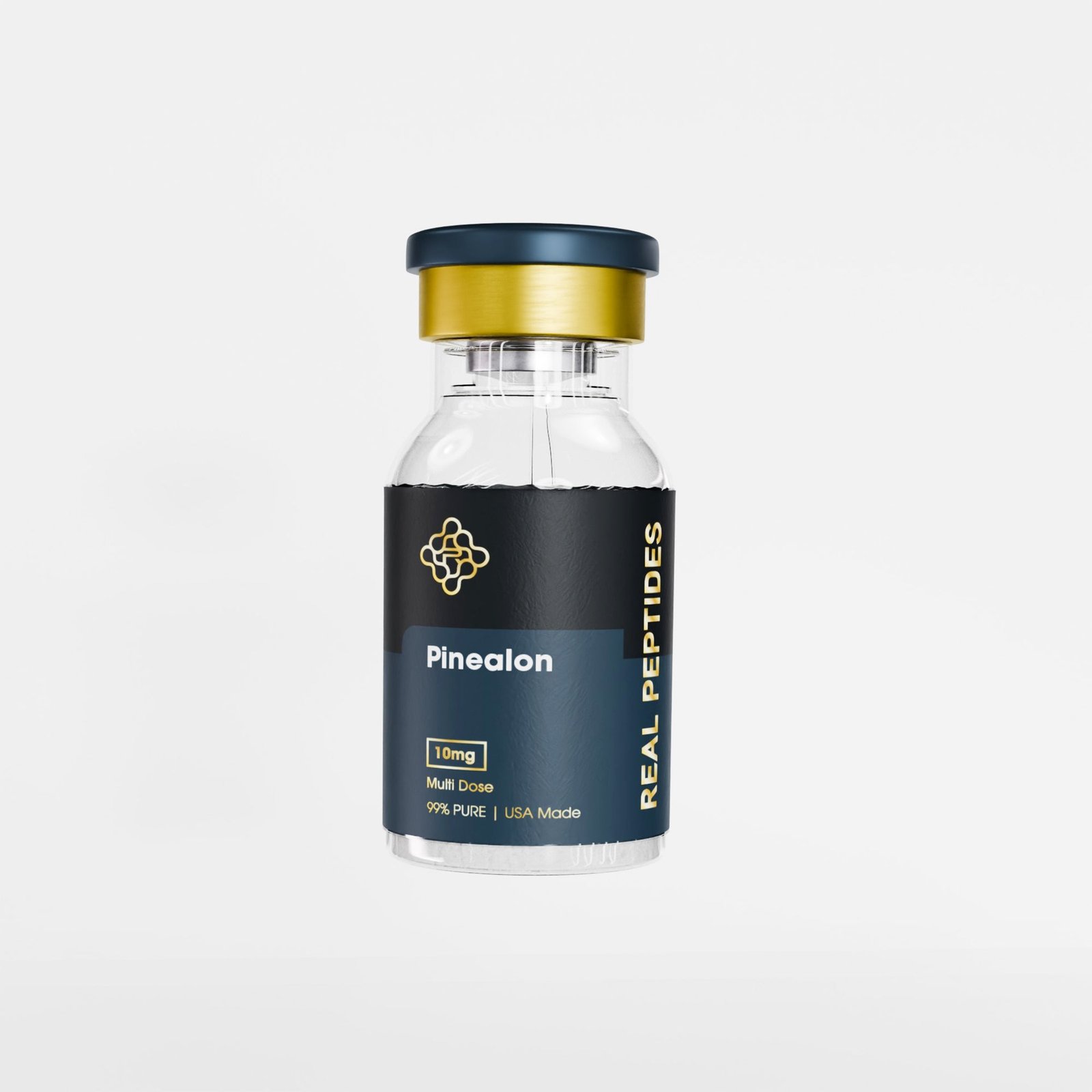
$49.99
Buy Pinealon Peptide 10 mg Online from SourceTides. CAS 175175-23-2 | EDR tripeptide (Glu-Asp-Arg) | MW 418.40 g/mol | C₁₅H₂₆N₆O₈ | ≥99% HPLC purity | Endotoxin <1 EU/mg (LAL) | Full CoA | Lyophilised | Dry-ice cold chain. Khavinson bioregulator. Neuroprotective epigenetic mechanism. Dendritic spine preservation in AD models. For in-vitro laboratory research use only. Not for human consumption.
Buy Pinealon Peptide 10 mg Online | EDR Tripeptide | ≥99% Purity | CoA | SourceTides
Buy Pinealon Peptide 10 mg Online from SourceTides.
Pinealon (CAS 175175-23-2) is a synthetic tripeptide with the amino acid sequence Glu-Asp-Arg (EDR).
It was developed by Professor Vladimir Khavinson at the St. Petersburg Institute of Bioregulation and Gerontology as part of the Russian peptide bioregulator programme.
Pinealon is studied for neuroprotection, epigenetic gene regulation, antioxidant defence in neural tissue, and dendritic spine preservation in Alzheimer’s disease models.
It is one of the smallest research peptides with proposed blood-brain barrier penetration via the PEPT2 and LAT1 transporter systems.
Every SourceTides vial is lyophilised, tested at ≥99% HPLC purity, and ships with a full lot-specific Certificate of Analysis.
For in-vitro laboratory research use only. Not for human consumption.
Pinealon 10 mg — Technical Specifications
| Parameter | Specification |
|---|---|
| Common Name | Pinealon |
| Also Known As | EDR peptide; Glu-Asp-Arg; Pinealon tripeptide; EDR bioregulator |
| CAS Number | 175175-23-2 |
| Molecular Formula | C₁₅H₂₆N₆O₈ |
| Molecular Weight | 418.40 g/mol |
| Peptide Length | 3 amino acids (tripeptide); linear; free C-terminus |
| Sequence | Glu-Asp-Arg (EDR); H-Glu-Asp-Arg-OH; all L-configured amino acids |
| Peptide Class | Short bioregulatory peptide (cytogen); Khavinson bioregulator series |
| Origin | Isolated from Cortexin (bovine/porcine brain cortex polypeptide complex); synthesised as standalone tripeptide |
| Primary Mechanism | Direct DNA/chromatin binding at specific hexanucleotide sequences (CCTGCC, CCAGCC); epigenetic modulation of neuroprotective gene expression |
| Key Gene Targets | CASP3 (apoptosis), PPARA, PPARG (neuroinflammation), SOD2, GPX1 (antioxidant), GAP43 (neuroplasticity), NES (neurogenesis), S100B (neuroprotection), APOE |
| BBB Penetration | Proposed via PEPT2 and LAT1 transporter systems; small MW (418 Da) favours CNS penetration; confirmed by radiolabelled biodistribution in rodents (Khavinson group) |
| Physical Form | White hygroscopic lyophilised powder |
| Purity | ≥99% (RP-HPLC); identity confirmed by ESI-MS |
| Endotoxin | <1 EU/mg (LAL chromogenic assay) |
| Solubility | Freely soluble in sterile water and PBS (pH 7.4); 2 mg/mL stock recommended; highly hygroscopic — keep sealed and desiccated |
| Storage — Lyophilised | −20°C long-term; 2–8°C short-term; protect from light, heat, and moisture; desiccate after each use — highly hygroscopic |
| Storage — Reconstituted | 2–8°C for up to 7 days; −20°C for longer; avoid repeated freeze-thaw |
| Certificate of Analysis | Lot-specific CoA with every order; HPLC chromatogram + MS data + endotoxin result |
| Regulatory Status | Not FDA, EMA, TGA, or Health Canada approved; research compound only; bioregulator classification in Russia |
| WADA Status | Not listed on the 2024–2025 WADA Prohibited List; verify current list before use in sport science research |
What Is Pinealon?
Pinealon is a synthetic tripeptide made from three amino acids: glutamic acid (Glu), aspartic acid (Asp), and arginine (Arg) — written in shorthand as EDR. It is one of the smallest research peptides studied in neuroscience, with a molecular weight of just 418.40 g/mol. That small size is one of its most important properties — it allows Pinealon to potentially cross the blood-brain barrier and reach neurons directly, which most larger peptides cannot do.
Despite the name “Pinealon” suggesting a pineal gland origin, the peptide was actually isolated from Cortexin — a polypeptide extract from bovine and porcine brain cortex tissue. Khavinson’s team identified EDR as one of the most active short sequences within Cortexin responsible for its neuroprotective properties. They then synthesised it as a standalone tripeptide for research. The name refers to its proposed biological target — the pineal gland and central nervous system — rather than its source.
Pinealon belongs to the Khavinson bioregulator family — the same programme that produced Epithalon (AEDG; pineal/telomere), Thymalin (thymic immune complex), and Vilon (Lys-Glu; immune). Like the other bioregulators, Pinealon’s proposed mechanism is epigenetic: it is thought to bind directly to specific regulatory sequences in DNA, changing which neuroprotective genes are switched on or off. This gene-level mechanism means its effects build up gradually and can persist long after the peptide itself is cleared from the body.
The most studied applications are neuroprotection in Alzheimer’s disease models, oxidative stress reduction in neural tissue, dendritic spine preservation (the structural basis of synaptic connections and memory), and support of serotonin synthesis pathways. Researchers also study Pinealon in models of prenatal hyperhomocysteinemia, traumatic brain injury, and retinal neuroprotection.
How Pinealon Works — Mechanism of Action
Step 1 — Blood-Brain Barrier Penetration
Most peptides cannot reach the brain. They are too large to cross the blood-brain barrier (BBB), and even if they survive gut digestion, the BBB blocks their entry. Pinealon is different. At 418 Da, it is small enough to be transported across the BBB by two peptide transporter systems — PEPT2, which is expressed in the choroid plexus and handles small peptide transport into cerebrospinal fluid, and LAT1, a large neutral amino acid transporter expressed at the BBB that computational studies suggest can bind EDR. Radiolabelled biodistribution studies in rodents (Khavinson group) showed tissue distribution consistent with CNS penetration after systemic injection.
It is important to note the limitation here: while the transporter hypothesis is pharmacologically plausible and the radiolabelled data is suggestive, no independent Western pharmacokinetic study has formally confirmed Pinealon’s brain exposure, distribution volume, or CSF kinetics using modern methods. This is a genuine gap in the current evidence base.
Step 2 — Direct DNA Binding and Epigenetic Gene Regulation
Once inside a neuron, Pinealon is proposed to enter the nucleus and bind directly to specific hexanucleotide sequences in DNA — particularly CCTGCC and CCAGCC motifs. These are the regulatory sequences (promoter regions) that control whether certain genes are transcribed or silenced. Molecular modelling and docking studies published in Pharmaceutics (2021; MDPI) confirmed that EDR binds to B-form double-stranded DNA with lowest-energy contacts at these specific hexanucleotide sequences.
The genes whose promoters contain these EDR-binding sequences include some of the most important in neuroprotection: CASP3 (apoptosis execution), PPARA and PPARG (neuroinflammation regulators), SOD2 and GPX1 (antioxidant enzymes), GAP43 (axonal plasticity), NES (neurogenesis), APOE (Alzheimer’s risk gene), and S100B (synaptic plasticity and neuroprotection). By modulating transcription at these gene promoters, EDR influences multiple neuroprotective pathways simultaneously — not through a single receptor, but through a broad epigenetic programme.
Step 3 — Antioxidant Defence Activation
One of Pinealon’s most documented effects is reduction of reactive oxygen species (ROS) in neural tissue. ROS accumulation damages neurons through lipid peroxidation, protein oxidation, and DNA strand breaks — a key driver of both acute neurological injury and chronic neurodegenerative disease. In prenatal rat models of hyperhomocysteinemia (elevated homocysteine causes oxidative stress in developing brain tissue), Pinealon significantly reduced intracellular ROS accumulation in cerebellum and decreased necrotic cell counts. The mechanism runs through upregulation of SOD2 (superoxide dismutase 2; mitochondrial) and GPX1 (glutathione peroxidase 1) — both confirmed as EDR gene targets by promoter analysis.
Step 4 — Dendritic Spine Preservation and Synaptic Protection
Dendritic spines are the small protrusions on neuron dendrites where synaptic connections form. Losing them means losing memory. In Alzheimer’s disease, dendritic spine loss is one of the earliest and most functionally damaging events — preceding plaque accumulation in many areas and directly causing cognitive decline.
In a 2017 in-vitro study, EDR (Pinealon) and the related peptide KED restored the number of dendritic spines in primary hippocampal neurons exposed to amyloid-beta (Aβ42) oligomers — the toxic species thought to drive synaptic damage in AD. The in-vivo follow-up study (2021; 5xFAD transgenic AD mice; MDPI Pharmaceutics; PMC8227791) confirmed these findings in a living animal model, showing that EDR and KED peptides prevented dendritic spine loss in hippocampal CA1 neurons. EDR also strongly stimulated dendritogenesis — the growth of new dendritic branches — an effect relevant to neuroplasticity research.
Step 5 — Serotonin Pathway Support and Neuroinflammation Modulation
Beyond its antioxidant and structural synaptic effects, Pinealon also acts on the serotonin synthesis pathway. In Alzheimer’s disease cell models, EDR normalised tryptophan hydroxylase expression — the rate-limiting enzyme in serotonin synthesis. Since serotonin deficiency is associated with depression, cognitive decline, and disrupted sleep architecture, this pathway connection links Pinealon to research in mood, circadian biology, and sleep-wake regulation. Separately, Pinealon modulates neuroinflammation through PPARA and PPARG — nuclear receptors that act as master regulators of inflammatory gene programmes in microglia and astrocytes.
Pinealon Research Evidence
| Research Area | Evidence Level | Key Finding | Source |
|---|---|---|---|
| Dendritic Spine Preservation (in vitro AD model) | In vitro (primary hippocampal neurons; Aβ42 model) | EDR and KED restored dendritic spine counts in amyloid-exposed hippocampal neurons; first demonstration of spine-protective activity for Pinealon | Khavinson et al. 2017 — ResearchGate |
| Dendritic Spine Preservation (in vivo 5xFAD) | In vivo (5xFAD transgenic AD mice; IP administration) | EDR and KED prevented hippocampal CA1 dendritic spine loss; EDR stimulated dendritogenesis; molecular docking confirmed DNA promoter binding; CASP3, GAP43, NES, APOE promoters targeted | MDPI Pharmaceutics 2021 — PMC8227791 |
| Alzheimer’s AD Model — Multi-Pathway | In vitro (AD cell culture model) | EDR normalised serotonin synthesis (tryptophan hydroxylase), restored antioxidant balance (SOD2/GPX1), suppressed apoptosis (caspase-3, p53), reduced neuroinflammation (PPARA/PPARG), prevented dendritic spine loss — five parallel protective pathways | Khavinson et al. 2021 — ResearchGate (EDR in AD) |
| Prenatal Hyperhomocysteinemia Neuroprotection | In vivo (rat prenatal model) | Pinealon protected rat offspring from homocysteine-induced brain oxidative stress; reduced ROS accumulation and necrotic cell count in cerebellum; improved postnatal cognitive function and motor coordination | Wikipedia: Pinealon (citing primary literature) |
| Diabetic Cognitive Impairment | In vivo (streptozotocin-induced diabetic rats) | Pinealon maintained learning and memory retention in rats with experimentally induced diabetes; neuroprotective effect against hyperglycaemia-driven cognitive decline | Wikipedia: Pinealon |
| ROS Reduction in Neural Tissue | In vitro and in vivo (rat neutrophil and brain models) | Dose-dependent inhibition of ROS accumulation in rat neutrophils (zymosan model) and in cerebellum of prenatal hyperhomocysteinemia model; antioxidant mechanism via SOD2/GPX1 upregulation | BenchChem: Pinealon Research Summary |
| Traumatic Brain Injury — Human Observational | Human observational (72 patients; TBI sequelae) | Oral Pinealon added to standard therapy improved memory, reduced headache duration and intensity, improved emotional balance and work performance in patients with TBI consequences and cerebrasthenia | EDR in AD Pathogenesis — ResearchGate |
| Neural Stem Cell Differentiation | In vitro (stem cell culture) | EDR activated neural differentiation in stem cell cultures; promoted neuronal lineage commitment; direction and magnitude concentration-dependent; complements KED peptide for neurogenesis research | PeptideInsight: Pinealon Research Profile |
Pinealon and Neuroprotection: The Strongest Evidence Domain
The most compelling evidence for Pinealon comes from its effects on dendritic spines in Alzheimer’s disease models. To understand why this matters, you first need to understand what dendritic spines do and why losing them is catastrophic.
Why Dendritic Spines Matter
Dendritic spines are tiny protrusions on the surface of neuron dendrites — there can be thousands on a single neuron. Each spine is the postsynaptic side of an excitatory synapse: the receiving dock where neurotransmitter signals land. When you form a memory, the relevant synapses strengthen — partly by growing more spines, and partly by making existing spines larger and more efficient. When you lose spines, you lose synaptic connections, and with them, the ability to retain and recall information.
In Alzheimer’s disease, dendritic spine loss in the hippocampus is one of the earliest measurable events. It precedes neuron death, it correlates more strongly with cognitive impairment than plaque burden, and it happens before most clinical symptoms appear. Any compound that can protect spines — or stimulate new spine growth — is directly addressing the structural basis of memory loss in AD.
What the 5xFAD Mouse Data Shows
The 2021 study published in MDPI Pharmaceutics (Khavinson et al.; PMC8227791) used the 5xFAD transgenic mouse — the most aggressive genetic Alzheimer’s model available. These mice carry five familial AD mutations that drive rapid amyloid accumulation, synapse loss, and cognitive impairment from the age of two months. It is a demanding test. By four months, they show significant LTP (long-term potentiation) deficits in the hippocampus — the cellular correlate of learning and memory. Dendritic spine counts in hippocampal CA1 neurons are substantially reduced.
Daily intraperitoneal administration of EDR (400 µg/kg) from 2 to 4 months of age prevented this spine loss. The treated mice retained hippocampal CA1 spine density significantly closer to wild-type controls than untreated 5xFAD mice. EDR also stimulated dendritogenesis — the treated neurons showed increased dendritic branching, suggesting not just protection against loss but active promotion of new connections. Molecular docking analysis confirmed that the EDR peptide binds to dsDNA containing hexanucleotide sequences present in the promoter regions of CASP3, GAP43, NES, and APOE — all genes directly relevant to synapse survival, neuroplasticity, neurogenesis, and Alzheimer’s risk.
Honest Assessment of the Evidence
The Pinealon data is genuinely interesting — but it comes almost entirely from Khavinson’s own institute in St. Petersburg, with no independent Western replication. The 5xFAD study is the most rigorous in-vivo data published so far. The human observational TBI data (72 patients) is hypothesis-generating at best — it was not randomised, blinded, or placebo-controlled. There are no Phase 1 or Phase 2 Western clinical trials for Pinealon.
This does not make the research worthless. The mechanistic data — particularly the DNA docking work and the multi-pathway AD cell model findings — is detailed enough to be scientifically productive as a research tool hypothesis. But researchers should treat Pinealon as a mechanistically interesting preclinical compound in need of independent replication, not as a clinically validated neuroprotective agent.
What Is Pinealon Used for in Research?
| Research Field | Application | Why Pinealon |
|---|---|---|
| Neurodegenerative Disease | Alzheimer’s disease models; synapse protection; amyloid toxicity assays; dendritic spine morphology | Published in-vitro and 5xFAD in-vivo data for dendritic spine preservation; five-pathway AD protection in cell models; most studied area for Pinealon |
| Epigenetics / Gene Regulation | DNA promoter binding studies; chromatin remodelling; neuroprotective gene expression assays | Molecular docking confirms EDR binds specific hexanucleotide sequences in gene promoters; tool for studying peptide-DNA interactions; complements Epithalon’s chromatin mechanism research |
| Oxidative Stress / Redox Biology | Neural ROS measurement; SOD2/GPX1 expression; antioxidant enzyme induction; hyperhomocysteinemia models | Dose-dependent ROS inhibition confirmed in neutrophil and brain tissue models; SOD2 and GPX1 upregulation via promoter binding; neuroprotective antioxidant mechanism well characterised |
| Neuroplasticity | Dendritic spine morphology; LTP; dendritogenesis; GAP43 expression; axonal growth assays | EDR stimulates dendritogenesis in 5xFAD neurons; GAP43 gene promoter binding confirmed; relevant to post-injury neuroplasticity and learning-related synaptic remodelling research |
| Neurogenesis / Stem Cell Biology | Neural stem cell differentiation; neuronal lineage commitment; NES (nestin) expression | EDR activated neural differentiation in stem cell cultures; NES promoter binding confirmed; concentration-dependent neuronal commitment; tool for neurogenesis pathway research |
| Bioregulator Peptide Research | Short peptide epigenetic mechanisms; Khavinson bioregulator comparison; cytogen pharmacology | One of the best-mechanistically-characterised Khavinson tripeptides; paired with KED, Epithalon, and Thymalin in comparative bioregulator studies; DNA-binding mechanism most explicitly documented |
| Neuroinflammation | PPARA/PPARG modulation in glial cells; microglial activation; inflammatory cytokine profiles | EDR binds PPARA and PPARG promoters; both are master inflammatory suppressors in microglia and astrocytes; anti-inflammatory effect confirmed in AD cell models |
Pinealon Pharmacokinetics
| Parameter | Notes | Research Implication |
|---|---|---|
| Plasma Half-Life | Not formally characterised; tripeptides are rapidly degraded by plasma peptidases; biological effects persist far longer than circulating peptide due to epigenetic gene expression changes | Measure downstream endpoints (gene expression, spine morphology, ROS levels) at hours-to-days, not minutes; plasma Pinealon measurement not standard or necessary |
| BBB Penetration | Proposed via PEPT2 (choroid plexus) and LAT1 (BBB); radiolabelled rodent studies suggest CNS distribution; small MW (418 Da) is conducive to transporter-mediated CNS entry; no independent Western PK confirmation | Design brain endpoint experiments (spine counts, gene expression in brain slices) with this caveat clearly noted; independence of replication needed for this claim |
| Routes of Administration | IP (used in 5xFAD in-vivo study; 400 µg/kg daily); SC; IV; oral (proposed for small tripeptide via PEPT1 intestinal transport — bioavailability low but greater than larger peptides) | IP daily dosing at 400 µg/kg is the validated in-vivo protocol from published 5xFAD data — use this as reference starting point for animal studies |
| In-Vitro Concentration Range | 0.1–100 µg/mL used in cell culture studies; concentration-dependent effects on neural differentiation and spine preservation confirmed | Run a 6-point dose-response (0.01, 0.1, 1, 10, 50, 100 µg/mL) in your cell system before committing to a single concentration; direction of effect on differentiation is concentration-dependent |
| Hygroscopicity Warning | Highly hygroscopic — absorbs atmospheric moisture rapidly; this can affect both measured mass and peptide stability | Weigh Pinealon quickly after removing from −20°C storage; reseal immediately; use desiccant; equilibrate to room temperature inside sealed vial before opening to avoid condensation |
| Metabolism | Proteolytic degradation to Glu, Asp, Arg — all naturally occurring amino acids; no toxic metabolites; no CYP450 involvement expected | No known drug-metabolic interactions; metabolites are non-toxic standard amino acids; this supports the generally benign safety profile observed in animal studies |
Pinealon Side Effects and Safety Profile
| Concern | Evidence | Protocol Note |
|---|---|---|
| No serious adverse events reported | No serious adverse events reported in published animal studies or the 72-patient TBI human observational study; good tolerability profile in all published data | Absence of reported events reflects limited study designs, not confirmed safety; no formal toxicology battery published |
| Injection site reactions | Expected for any injectable; mild and transient; standard IP/SC administration consideration | Rotate injection sites in animal protocols; standard technique applies |
| Hygroscopicity risk | Highly hygroscopic — moisture absorption can cause inaccurate dosing and accelerated degradation | Weigh rapidly, reseal immediately, equilibrate sealed vial to room temp before opening; use desiccant in storage container |
| Concentration-dependent effect direction (neural differentiation) | Stem cell differentiation effects are concentration-dependent; different concentrations can produce different or opposing biological responses | Always run dose-response curves; avoid assuming that more is better in differentiation experiments; validate your specific cell system first |
| Critical data gaps | No Western Phase 1 trial; no formal genotoxicity, carcinogenicity, or repeat-dose toxicology published; no independent PK study; all primary data from one Russian institute | Treat as a preclinical research compound with an interesting mechanism but incomplete characterisation; institutional risk assessment recommended before in-vivo protocols |
| No WADA prohibition | Not listed on WADA 2024–2025 Prohibited List; no performance-enhancing mechanism identified | Verify current WADA list annually before sport science use; WADA list is updated yearly |
Pinealon Quality Control at SourceTides
Every batch of Pinealon Peptide 10 mg from SourceTides passes these tests before release. Pinealon’s hygroscopicity makes moisture control during QC particularly important.
| Test | Method | Specification | Why It Matters |
|---|---|---|---|
| Purity | RP-HPLC (C18; UV 220 nm) | ≥99% peak area purity | As a tripeptide, synthesis impurities are typically dipeptide by-products (Glu-Asp or Asp-Arg); these have different or absent epigenetic activity and confound experiments at >1% contamination |
| Identity | ESI-MS (expected [M+H]⁺ = 419.41 Da) | Confirmed MW 418.40 g/mol; sequence Glu-Asp-Arg confirmed | At 418 Da, EDR is easy to confirm by MS; also confirms the tripeptide sequence vs the dipeptide impurities which appear at different masses |
| Endotoxin | LAL chromogenic assay | <1 EU/mg | Critical for neuronal cell culture experiments — LPS activates NF-κB and inflammatory pathways in neurons and microglia that directly overlap with Pinealon’s PPARA/PPARG anti-inflammatory targets |
| Residual Moisture | Karl Fischer titration | <5% w/w | Especially important for Pinealon given its high hygroscopicity; excess moisture causes dosing inaccuracy and promotes hydrolytic peptide bond degradation |
| Appearance | Visual inspection | White powder; no visible clumping, discolouration, or caking | Clumping is an early sign of moisture absorption; any discolouration indicates oxidation or contamination |
| Cold-Chain Dispatch | Dry-ice packaging; temperature-logged | ≤−20°C throughout transit | Maintains both thermal stability and minimises condensation risk during shipping |
| Certificate of Analysis | Lot-specific PDF | HPLC trace + MS + endotoxin + moisture + dates | Required for research traceability and journal submission |
Pinealon Regulatory Status
| Jurisdiction | Status | Notes |
|---|---|---|
| USA (FDA) | Not approved; research compound only | Not a DEA scheduled substance. No FDA approved therapeutic indication. Sold as a research chemical for laboratory use only. |
| Australia (TGA) | Not listed on ARTG; research compound | Not registered as a therapeutic good. Laboratory research access only. |
| United Kingdom (MHRA) | Unlicensed; not a controlled drug; research compound | No MHRA marketing authorisation. Not listed under the Misuse of Drugs Act 1971. Research use only. |
| Canada (Health Canada) | Unapproved new drug; research access only | Not a CDSA controlled substance. Not authorised for therapeutic sale. |
| European Union (EMA) | No EMA marketing authorisation; research use | No authorised medicinal product in any EU member state. |
| Russia | Bioregulator classification; available in specialist clinical settings | Used within Russian bioregulator framework. Not equivalent to FDA/EMA approval standard. Primary site of published clinical and preclinical research. |
| WADA | Not listed on the 2024–2025 Prohibited List | No performance-enhancing classification. Verify current WADA list annually at wada-ama.org before sport science research use. |
Pinealon vs Related Neuroprotective Research Peptides
| Compound | Type | Primary Focus | Key Difference vs Pinealon | SourceTides |
|---|---|---|---|---|
| Pinealon (EDR) | Synthetic tripeptide; CNS bioregulator | Neuroprotection; dendritic spine preservation; AD models; antioxidant gene regulation | — | Buy Pinealon 10 mg |
| Epithalon (AEDG) | Synthetic tetrapeptide; pineal/systemic bioregulator | Telomerase activation; telomere elongation; melatonin restoration; systemic ageing | Same Khavinson programme; different target — Epithalon is systemic anti-aging via telomerase and melatonin, while Pinealon is brain-specific neuroprotection via antioxidant and synaptic genes; often studied together | Buy Epithalon 10 mg |
| Thymalin | Thymic polypeptide complex | T-cell differentiation; immunosenescence; thymic bioregulation | Immune system target vs CNS target; same Khavinson bioregulator framework; used together in multi-system ageing research protocols | Buy Thymalin 10 mg |
| Sermorelin | 29-AA GHRH analog | GH secretion; somatopause; pituitary GH reserve | GH axis focus, not CNS neuroprotection; FDA-approved history; different mechanism entirely; studied alongside Pinealon in multi-axis ageing protocols | Buy Sermorelin 10 mg |
| BPC-157 | 15-AA gastric peptide fragment | Tissue repair; gut; angiogenesis; also studied for CNS effects | Peripheral tissue repair primary focus; also has CNS neuroprotective data (via BDNF, VEGF); different mechanism — growth factor-mediated vs epigenetic; complementary in neuroprotection research panels | Buy BPC-157 |
Peer-Reviewed References
| # | Citation | Link |
|---|---|---|
| 1 | Khavinson V et al. (2021). Neuroprotective Effects of Tripeptides — Epigenetic Regulators in Mouse Model of Alzheimer’s Disease. Pharmaceutics. 13(6):515. PMC8227791. | PMC8227791 — MDPI Pharmaceutics |
| 2 | Khavinson V et al. (2017). Tripeptides Restore the Number of Neuronal Spines under Conditions of In Vitro Modelled Alzheimer’s Disease. J Alzheimers Dis. | ResearchGate — 2017 In Vitro Spine Study |
| 3 | Khavinson V et al. (2021). EDR Peptide: Possible Mechanism of Gene Expression and Protein Synthesis Regulation Involved in the Pathogenesis of Alzheimer’s Disease. Molecules. | ResearchGate — EDR in AD Pathogenesis |
| 4 | Khavinson V et al. (2020). AEDG Peptide (Epitalon) Stimulates Gene Expression and Protein Synthesis During Neurogenesis: Possible Epigenetic Mechanism. Molecules. PMC7037223. | PMC7037223 — Epithalon/EDR Mechanism |
| 5 | Wikipedia: Pinealon. Covers hyperhomocysteinemia neuroprotection and diabetic cognitive model data. | Wikipedia: Pinealon |
| 6 | PubChem. Pinealon (Glu-Asp-Arg). CAS 175175-23-2. National Library of Medicine. | PubChem CAS 175175-23-2 |
| 7 | Khavinson VK, Morozov VG. (2003). Peptides of pineal gland and thymus prolong human life. Neuro Endocrinol Lett. PMID: 14523363. (Khavinson bioregulator programme context.) | PubMed PMID: 14523363 |
| 8 | ScienceDirect Topics: Kisspeptin-10 (for GPR54 receptor pharmacology context in same research panel). | ScienceDirect — Neuropeptide Research Context |
| 9 | Frontiers in Immunology: T-cell immunosenescence and mortality context for combined neuroprotection/immune ageing research panels. PMC10623116. | PMC10623116 — Frontiers Immunology |
Frequently Researched Alongside Pinealon
These peptides are commonly studied alongside Pinealon in neuroprotection, ageing, and bioregulator research:
- Epithalon 10 mg — The most closely related Khavinson bioregulator; targets telomerase and systemic ageing while Pinealon targets CNS neuroprotection; paired in longevity and multi-system ageing protocols
- Thymalin 10 mg — Thymic immune bioregulator from the same Khavinson programme; studied alongside Pinealon in protocols combining CNS and immune axis ageing research
- Sermorelin 10 mg — GHRH agonist; GH-IGF-1 axis activation provides a complementary neuroprotective angle (IGF-1 is neuroprotective) to Pinealon’s epigenetic CNS mechanism
- Ipamorelin 10 mg — GH secretagogue; studied alongside Pinealon in multi-axis ageing research examining GH axis and CNS neuroprotection simultaneously
- BPC-157 — Tissue repair and CNS neuroprotection peptide via BDNF/VEGF pathways; complementary to Pinealon’s epigenetic neuroprotection mechanism in neuroscience research panels
Frequently Asked Questions
You can buy Pinealon Peptide 10 mg directly from SourceTides. Every order includes a lot-specific Certificate of Analysis with the HPLC chromatogram (≥99% purity), ESI-MS identity confirmation (Glu-Asp-Arg sequence and MW 418.40 Da verified), and the LAL endotoxin result (<1 EU/mg). All vials are lyophilised and dispatched on dry-ice cold chain to protect this hygroscopic compound during shipping.
For primary neuronal culture, dendritic spine morphology assays, and gene expression studies, ≥99% HPLC purity is the recommended minimum. The key impurity concern for Pinealon is incomplete synthesis products — specifically the dipeptides Glu-Asp and Asp-Arg. These appear at different masses (easy to detect by MS) and have different or absent epigenetic activity. At more than 1% contamination, they can confound spine morphology and gene expression results. Mass spectrometry confirmation, included with every SourceTides Pinealon CoA, confirms the correct tripeptide sequence. Endotoxin testing (<1 EU/mg) is equally important — LPS activates NF-κB and PPARA/PPARG pathways that directly overlap with Pinealon’s anti-inflammatory targets.
Hygroscopicity is Pinealon’s most important handling consideration. At 418 Da, it is small and polar enough to absorb atmospheric moisture rapidly. Moisture causes two problems: it makes weighing inaccurate (your measured mass includes water) and it accelerates hydrolytic degradation of the peptide bonds. To handle it correctly: (1) Store the sealed vial at −20°C. (2) Before opening, let the sealed vial equilibrate to room temperature inside the bag — this prevents condensation from forming inside the vial when cold glass meets warm humid air. (3) Open the vial, take what you need, reseal immediately, and return to −20°C. (4) Keep a desiccant (silica gel) in the storage container. (5) Reconstitute in sterile water at 2 mg/mL and use within 7 days (store at 2–8°C) or freeze as single-use aliquots. All SourceTides Pinealon is shipped on dry-ice cold chain with moisture-protective packaging.
Pinealon can be purchased as a research compound in all major Western jurisdictions. In the USA, it is not a DEA scheduled substance and is legally sold as a research chemical. In the UK, it is not a controlled drug under the Misuse of Drugs Act 1971. In Australia, it is an unapproved therapeutic good available for laboratory research. In Canada, it is an unapproved new drug accessible for research use. Pinealon is not on the WADA Prohibited List. SourceTides supplies exclusively for in-vitro laboratory research use only. See the SourceTides shipping policy for jurisdiction-specific dispatch information.
The research base for Pinealon is genuinely interesting but comes with important caveats. The strongest findings are:
Dendritic spine preservation: In vitro (2017) and in vivo 5xFAD mouse (2021) studies showed EDR prevented hippocampal CA1 dendritic spine loss caused by amyloid toxicity and also stimulated new dendrite growth.
Five-pathway AD protection: In AD cell culture models, EDR simultaneously normalised serotonin synthesis, restored antioxidant balance (SOD2/GPX1), suppressed apoptosis (caspase-3, p53), reduced neuroinflammation (PPARA/PPARG), and protected dendritic spines.
Prenatal neuroprotection: Reduced ROS and necrotic cell counts in rat offspring exposed to hyperhomocysteinemia in utero.
TBI human data: 72-patient non-randomised observational study showed cognitive and headache improvements when Pinealon was added to standard TBI therapy.
The key limitation: virtually all primary data comes from Khavinson’s own institute in St. Petersburg. No independent Western replication has been published. All SourceTides Pinealon references are linked on the product page.
This is one of the most important and most debated questions about Pinealon. The short answer is: probably yes, at least partially — but it has not been confirmed by independent Western pharmacokinetic methods.
The evidence for BBB penetration comes from three sources: (1) Khavinson group radiolabelled biodistribution studies in rodents showing tissue distribution consistent with CNS penetration after systemic injection. (2) Computational modelling showing that EDR is a plausible substrate for both PEPT2 (expressed in choroid plexus, important for peptide entry into cerebrospinal fluid) and LAT1 (expressed at the BBB). (3) The biological plausibility argument: at 418 Da, Pinealon is small enough and has the right polarity profile for transporter-mediated BBB crossing — unlike most larger peptides.
The limitation is that no independent Western PK study has formally measured Pinealon’s brain concentration, distribution volume, or CSF kinetics. Until that data exists, BBB penetration should be treated as a well-supported hypothesis rather than a confirmed fact. This should be noted as a caveat in any experimental design that depends on it. All SourceTides Pinealon CoAs document purity and identity to research standards.
Pinealon (EDR) and Epithalon (AEDG) come from the same Khavinson bioregulator programme and share the DNA-binding epigenetic mechanism. They have different targets and research applications.
Epithalon targets the pineal gland and systemic aging via telomerase activation and melatonin restoration. Its 2025 independent Western replication (Al-Dulaimi et al., Biogerontology) makes it the more externally validated of the two. It is used in cellular senescence, telomere biology, and circadian rhythm research.
Pinealon targets the brain cortex specifically — dendritic spine preservation, antioxidant gene expression (SOD2, GPX1), apoptosis suppression (caspase-3), and neuroinflammation control (PPARA, PPARG). It is used in Alzheimer’s disease models, ROS biology in neural tissue, and neuroplasticity research.
In multi-system ageing protocols, researchers often study them together: Epithalon for the cellular and systemic anti-ageing axis, Pinealon for the CNS neuroprotection axis. SourceTides supplies both Pinealon 10 mg and Epithalon 10 mg.
No serious adverse events have been reported in any published Pinealon study — including the 72-patient TBI human observational study and preclinical animal models. The most important safety consideration is not toxicity but experimental design: Pinealon’s effects on neural differentiation are concentration-dependent, and different concentrations can produce different or opposing biological responses in stem cell models. Always run dose-response curves in your specific cell system before committing to a fixed concentration protocol.
From a practical laboratory standpoint, Pinealon’s hygroscopicity is a handling risk — not a toxicity risk. Moisture absorption can cause dosing inaccuracy that undermines your experiment without creating an apparent safety signal. The data gaps are significant: no formal Western toxicology battery, no independent PK study, no Phase 1 trial. Treat it as a preclinical compound with an incompletely characterised safety profile, appropriate for in-vitro research use. All SourceTides Pinealon is supplied for in-vitro laboratory research only.
Equilibrate the sealed vial to room temperature before opening (prevents condensation inside). Dissolve lyophilised Pinealon in sterile water or PBS (pH 7.4) to make a stock solution at 2 mg/mL (approximately 4.78 mM). Swirl gently — do not vortex. Pinealon dissolves easily in water. Filter through a 0.22 µm syringe filter before use in cell culture. For working concentrations, the published range in cell studies is 0.1–100 µg/mL. Important: because neural differentiation effects are concentration-dependent, run a pilot dose-response (0.01, 0.1, 1, 10, 100 µg/mL) in your specific cell line before your main experiment. Store the stock at 2–8°C for up to 7 days, or freeze as single-use aliquots at −20°C. The validated in-vivo IP dose from the 5xFAD mouse study is 400 µg/kg daily. Full reconstitution notes are included in the CoA with every SourceTides Pinealon order.
Pinealon (EDR; Glu-Asp-Arg) and Epithalon (AEDG; Ala-Glu-Asp-Gly) are different peptides from the same Khavinson bioregulator research programme. They share one amino acid overlap (Glu-Asp appears in both sequences) but have different lengths, different complete sequences, and different biological targets. Pinealon is a tripeptide (3 amino acids; MW 418 Da) targeting the CNS. Epithalon is a tetrapeptide (4 amino acids; MW 390 Da) primarily targeting the pineal gland and telomere biology. People sometimes confuse them because both are associated with pineal gland research — but Pinealon was actually isolated from brain cortex extract (Cortexin), not from the pineal gland itself. Both are available from SourceTides.
SourceTides accepts Visa, Mastercard, American Express, cryptocurrency, and bank transfers for institutional orders. All payments are processed through secure, encrypted gateways. For institutional purchase orders, bulk procurement, or custom quantities, contact the team via the SourceTides contact page. Orders are reviewed for research compliance before dispatch.
Research Use Only
All SourceTides products, including Pinealon Peptide 10 mg (CAS 175175-23-2), are for in-vitro laboratory research use only. They are not approved by the FDA, EMA, TGA, or Health Canada. They are not for human consumption. By purchasing, the buyer confirms authorised researcher status and accepts responsibility for compliance with all applicable laws and regulations.
| Weight | 0.01 lbs |
|---|---|
| Dimensions | 5 × 5 × 5 in |
| Purity | ≥99% (HPLC-verified) |
| Strength | 10 mg |
| Form | Lyophilised Powder |
| CAS Number | 175175-23-2 |
You may also like…
Growth Hormone Modulators Peptides
Sermorelin Peptide 10 mg Online | GHRH(1-29) | ≥99% Purity | CoA Included | SourceTides
Immune & Antimicrobial Peptides
Epithalon Peptide 10 mg Online | ≥99% Purity | Certificate of Analysis Included
Immune & Antimicrobial Peptides
Thymalin Peptide 10 mg Online | Thymic Bioregulator | ≥99% Purity | CoA | SourceTides
Related products
Growth Hormone Modulators Peptides
Tesamorelin Peptide 10 mg | GHRH Analog ≥99% Purity | SourceTides

Immune Support & Inflammation Peptides
KPV Peptide 10 mg (Lys-Pro-Val; α-MSH C-Terminal Tripeptide)
Healing & Recovery Peptides
TB-500 Online | Research-Grade Thymosin Beta-4 Fragment ≥99% Purity
Cognitive & Mood Support
Selank Amidate Peptide 10 mg Online | ≥99% Purity | CoA Included | SourceTides