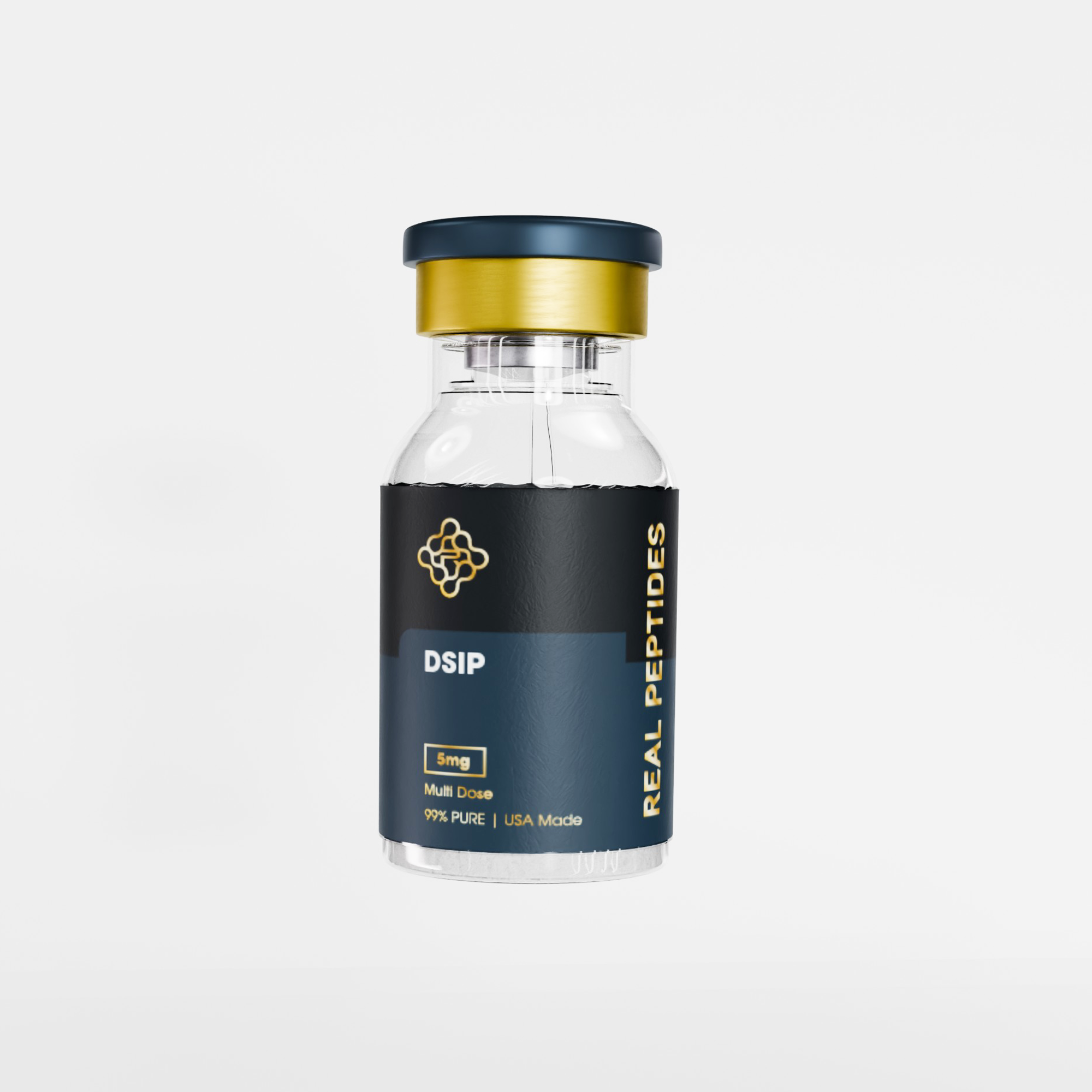
From $39.99
Buy DSIP Peptide Online from SourceTides. Not for human consumption.

Buy DSIP Peptide Online | Delta Sleep-Inducing Peptide | ≥99% Purity | CoA | SourceTides
Buy DSIP Peptide Online from SourceTides.
DSIP (Delta Sleep-Inducing Peptide; CAS 62568-57-4) is a synthetic nonapeptide — a nine-amino acid sequence (Trp-Ala-Gly-Gly-Asp-Ala-Ser-Gly-Glu; WAGGDASGE) first isolated in 1977 from the cerebral venous blood of electrically stimulated rabbits by Schoenenberger and Monnier at the University of Basel.
It is the only known neuropeptide whose gene and specific receptor have not yet been identified, making it one of the most scientifically unusual research compounds available.
DSIP is studied for delta-wave sleep induction, HPA axis modulation, antioxidant enzyme upregulation, neuroprotection in stroke and ischaemia models, and NMDA/GABA receptor interactions.
Every SourceTides vial is lyophilised, tested at ≥99% HPLC purity, and ships with a full lot-specific Certificate of Analysis.
For in-vitro laboratory research use only. Not for human consumption.
DSIP Peptide 5 mg — Technical Specifications
| Parameter | Specification |
|---|---|
| Common Name | DSIP (Delta Sleep-Inducing Peptide) |
| Synonyms | Emideltide; Delta-Sleep-Inducing Peptide; Sleep-Promoting Peptide; DSIP nonapeptide |
| CAS Number | 62568-57-4 |
| Molecular Formula | C₃₅H₄₈N₁₀O₁₅ |
| Molecular Weight | 848.81 g/mol |
| Peptide Length | 9 amino acids (nonapeptide); linear; free N- and C-terminus |
| Amino Acid Sequence | Trp-Ala-Gly-Gly-Asp-Ala-Ser-Gly-Glu (WAGGDASGE) |
| Key Structural Note | Amphiphilic — both hydrophilic and hydrophobic regions; only the α-aspartyl form is biologically active (not the β-Asp isomer) |
| Origin / Discovery | First isolated 1977 from cerebral venous blood of rabbits subjected to hypnogenic thalamic stimulation (Schoenenberger & Monnier, University of Basel) |
| Natural Distribution | Hypothalamus, limbic system, pituitary gland, peripheral organs, plasma, cerebrospinal fluid, gut secretory cells, pancreas, and human breast milk |
| Receptor / Gene Status | No specific receptor identified; no precursor gene found — unique among known neuropeptides; NMDA and α1-adrenergic receptors implicated in some effects |
| Primary Mechanisms | Delta EEG activity induction; NMDA receptor modulation; HPA axis dampening; antioxidant enzyme upregulation (SOD, catalase, GPX, GR); GABA system interaction |
| Plasma Half-Life (in vitro) | ~15 minutes (specific aminopeptidase degradation in vitro); in vivo carrier protein binding may extend effective half-life substantially |
| Physical Form | White lyophilised powder |
| Purity | ≥99% (RP-HPLC); identity confirmed by ESI-MS |
| Endotoxin | <1 EU/mg (LAL chromogenic assay) |
| Solubility | Freely soluble in sterile water and PBS pH 7.4; 1 mg/mL stock recommended; amphiphilic nature permits solubility in both aqueous and mildly hydrophobic media |
| Storage — Lyophilised | −20°C long-term; 2–8°C short-term (up to 4 weeks); protect from light and moisture |
| Storage — Reconstituted | 2–8°C for up to 7 days; −20°C for longer; avoid freeze-thaw cycles; add 0.1% BSA as carrier protein for extended in-vitro use |
| Certificate of Analysis | Lot-specific CoA with every order; HPLC chromatogram + MS data + endotoxin result |
| Regulatory Status | Not FDA, EMA, TGA, or Health Canada approved; research compound only; FDA noted potential immunogenicity concern for this peptide class |
| WADA Status | Not listed on the 2024–2025 WADA Prohibited List; verify current list before sport science research use |
What Is DSIP?
DSIP stands for Delta Sleep-Inducing Peptide. It is a nine-amino acid neuropeptide — one of the smallest biologically active peptides studied for sleep and brain function. It was first isolated in 1977 by Schoenenberger and Monnier at the University of Basel, who collected it from the cerebral venous blood of rabbits whose thalamic nuclei were being electrically stimulated to induce sleep. When they isolated the dialysate from these rabbits and infused it into resting rabbits, the recipient animals showed the characteristic delta-wave EEG pattern of deep sleep. The active component turned out to be the nonapeptide WAGGDASGE — and they named it delta sleep-inducing peptide.
DSIP is genuinely unusual among neuropeptides. Despite nearly 50 years of research, scientists have never found its precursor gene or its specific receptor. It appears naturally in the hypothalamus, limbic system, pituitary, gut, pancreas, peripheral blood, cerebrospinal fluid, and even human breast milk — an extremely wide tissue distribution for a compound with no known gene. The current thinking is that DSIP either complexes with carrier proteins in the body (which would explain its longer apparent in-vivo effects vs its short 15-minute in-vitro half-life) or is a proteolytic fragment of a larger precursor that has not yet been characterised.
Research on DSIP spans multiple biological systems. Sleep biology is the most studied area — particularly its capacity to promote delta-wave (slow-wave) sleep, which is the deep sleep stage where most physical restoration and GH secretion occur. But DSIP’s research profile has expanded significantly since the 1990s into antioxidant biology, neuroprotection, stress hormone regulation, pain modulation, and most recently stroke recovery — where a 2021 study in MDPI Molecules confirmed significant motor function recovery in stroke-subjected rats (PMC8434407).
Researchers studying sleep architecture, circadian rhythm regulation, HPA axis biology, antioxidant enzyme expression, or ischaemia-reperfusion injury will find DSIP Peptide 5 mg from SourceTides a well-characterised but genuinely mysterious research compound with a unique combination of breadth and scientific intrigue.
How DSIP Works — Mechanism of Action
DSIP’s mechanisms are more complex and less completely defined than most research peptides — partly because its specific receptor remains unknown. What follows is what the published data shows, with honest notes on what is still debated.
Step 1 — Delta EEG Induction and Sleep Architecture Modulation
The founding mechanism of DSIP is its capacity to induce delta-wave EEG activity — the high-amplitude, low-frequency brainwaves (0.5–4 Hz) that define slow-wave sleep (SWS) or NREM Stage 3. In the original rabbit model, intraventricular infusion produced a 35% mean increase in EEG delta activity compared to controls, with the effect specific to the alpha-aspartyl WAGGDASGE sequence (the beta-Asp isomer was inactive). This is not simply a sedative effect — DSIP does not suppress EEG activity broadly. It selectively enhances the delta wave component of sleep architecture while allowing the subject to remain arousable and maintaining normal sleep stage progression. The mechanism by which this selectivity is achieved is not yet fully understood, but NMDA receptor modulation and GABAergic system interaction are the leading proposed pathways. Delta-wave sleep is the stage during which growth hormone secretion peaks, metabolic waste is cleared from the brain via the glymphatic system, protein synthesis and tissue repair are prioritised, and memory consolidation occurs. DSIP research in this domain uses polysomnography (PSG) with EEG delta power analysis as the primary endpoint.
Step 2 — NMDA Receptor Modulation and Glutamate System Interaction
DSIP modulates glutamatergic signalling via NMDA receptors — one of the most important receptor systems in the brain for learning, memory, sleep regulation, and neuroprotection. Specifically, DSIP has been shown to block presynaptic NMDA receptors in cultured rat cortical neurons, and to reduce glutamate- or NMDA-stimulated calcium uptake into synaptosomes. This anti-excitotoxic action — reducing excessive glutamate-driven calcium influx — is directly relevant to stroke research, where NMDA-mediated excitotoxicity is a primary driver of ischaemic neuronal death. The NMDA modulation also provides a mechanistic basis for DSIP’s sleep effects: NMDA receptor activation is pro-arousal, and DSIP’s partial suppression of NMDA activity would shift the balance toward inhibitory GABA tone and delta-wave production.
Step 3 — HPA Axis Modulation and Stress Response
DSIP has been studied as a potential modulator of the hypothalamic-pituitary-adrenal (HPA) axis — the stress response system that controls cortisol and ACTH secretion. Animal studies show that DSIP administration attenuated stress-induced corticosterone elevation in rodents, reduced ulcer formation under immobilisation stress, and normalised stress-disrupted circadian hormone rhythms. DSIP was also shown to co-localise with ACTH and other stress hormones in the pituitary, suggesting a paracrine regulatory role. However, the human data on this mechanism is more equivocal. A controlled study in healthy men (Rivier et al.; PubMed PMID: 7777652) found that IV DSIP did not significantly inhibit CRH-stimulated ACTH and cortisol secretion — a direct contradiction of the in-vitro corticotropin-release inhibiting factor data. This human-animal discrepancy is one of the genuine unresolved puzzles of DSIP research and should be noted clearly in any experimental design relying on DSIP’s stress-modulation properties.
Step 4 — Antioxidant Enzyme Upregulation
One of DSIP’s most consistent effects across multiple model systems is the upregulation of endogenous antioxidant enzymes. Khvatova et al. (2003) demonstrated that DSIP (12 µg/100 g body weight) significantly increased the activities of superoxide dismutase (SOD), catalase, glutathione peroxidase (GPX), and glutathione reductase (GR) in rat tissues and erythrocytes. In stressed animals, preliminary DSIP restored the prooxidant-antioxidant balance and normalised myeloperoxidase activity in blood neutrophils. The mechanism appears to be increased gene expression of these antioxidant enzymes — confirmed in ageing animal studies. This antioxidant axis connects DSIP’s sleep biology and neuroprotection research: oxidative stress is a major driver of both poor sleep quality (through cortisol dysregulation and mitochondrial damage) and ischaemic brain injury. DSIP’s upregulation of SOD and GPX provides a mechanistic pathway for both its sleep-restorative and neuroprotective effects.
Step 5 — Neuroprotection in Ischaemia-Reperfusion Models
The most recently published research domain for DSIP is neuroprotection in stroke and cardiac ischaemia models. A 2021 study published in MDPI Molecules (PMC8434407; full text) showed that DSIP produced significant motor function recovery in Sprague-Dawley rats subjected to focal stroke, as measured by rotarod testing and other motor performance assays. The proposed protective mechanisms include: anti-excitotoxic NMDA receptor blockade (reducing calcium overload during ischaemia), SOD/GPX upregulation (reducing ROS damage during reperfusion), and correction of neuromediator imbalances under hypoxia. A closely related study on KND peptide — a structural DSIP analog — showed a 32% reduction in myocardial infarction area and significant brain infarction volume reduction when administered during reperfusion. These ischaemia-reperfusion studies represent the most rigorous recent preclinical evidence for DSIP and open a new research direction well beyond the original sleep biology applications.
DSIP Research Evidence
| Research Area | Evidence Level | Key Finding | Source |
|---|---|---|---|
| Delta EEG Induction (original discovery) | In vivo (rabbits; intraventricular infusion) | 35% mean increase in EEG delta activity vs controls; effect specific to α-aspartyl WAGGDASGE sequence; β-Asp isomer inactive; DSIP named and characterised | Schoenenberger & Monnier 1977 — PubMed PMID: 568769 |
| Chronic Insomnia — Human Double-Blind Study | Double-blind RCT (n=16 chronic insomnia patients) | Higher sleep efficiency and shorter sleep latency with DSIP vs placebo by polysomnography; significant result on objective sleep quality; weak-to-moderate effect size described | PubMed PMID: 1299794 — Double-Blind Insomnia Study |
| Stroke / Motor Recovery | In vivo (SD rats; focal stroke model; 2021) | Significant motor function recovery in stroke-subjected rats; improved rotarod performance; SOD/GPX upregulation proposed as protective mechanism; anti-excitotoxic NMDA blockade implicated | MDPI Molecules 2021 — PMC8434407 |
| Cardiac/Brain Ischaemia (KND Analog) | In vivo (rats and mice; ischaemia-reperfusion model) | DSIP analog KND reduced myocardial infarction area by 32%; brain infarction volume significantly reduced by intranasal KND; DSIP itself showed cardiac protection at smaller magnitude | MDPI Biomedicines 2021 — KND/DSIP Ischaemia Study |
| Antioxidant Enzyme Upregulation | In vivo (rat tissues; stress models) | DSIP increased SOD, catalase, GPX, and glutathione reductase activity in rat tissues; normalised prooxidant-antioxidant balance under cold stress; gene expression upregulation confirmed in ageing models | PeptideInsight DSIP Review (Khvatova et al. 2003 data) |
| Withdrawal Syndrome — Largest Human Study | Clinical observational (n=107 patients) | 87–97% improvement in alcohol and opiate withdrawal symptoms reported in the largest DSIP human study conducted; largest human dataset for DSIP; uncontrolled design limits interpretation | Wikipedia: Delta-sleep-inducing peptide |
| Longevity / Anti-tumour | In vivo (mice; single long-term study) | DSIP reduced spontaneous tumour incidence 2.6-fold and increased maximum lifespan by ~24% in mice; single study, single strain, never replicated; data is hypothesis-generating only | Wikipedia: Delta-sleep-inducing peptide |
| HPA Axis in Humans — Negative Result | Human controlled study (healthy men; n=10) | IV DSIP did NOT inhibit CRH-stimulated ACTH and cortisol secretion; directly contradicts in-vitro corticotropin-inhibiting data; human-animal discrepancy still unresolved | Rivier et al. 1994 — PubMed PMID: 7777652 |
DSIP: The Sleep Biology Deep-Dive
To understand why DSIP matters in sleep research, you first need to understand what delta sleep actually is — and why it is the most important sleep stage for physical and cognitive recovery.
What Delta Sleep Is and Why It Matters
Sleep is not a single state. It cycles through five stages: NREM Stages 1, 2, and 3 (slow-wave sleep), plus REM sleep, in roughly 90-minute cycles throughout the night. Delta sleep — NREM Stage 3, also called slow-wave sleep (SWS) — is the deepest stage. It is named for its dominant brainwave pattern: high-amplitude, 0.5–4 Hz delta waves that signal the brain is in its most restored, most anabolic, and least aroused state.
Delta sleep is when the most important restoration happens. Growth hormone secretion peaks during SWS — roughly 70% of daily GH is released during the first deep sleep cycle of the night. The glymphatic system clears metabolic waste from the brain, including amyloid-beta proteins implicated in Alzheimer’s disease. Protein synthesis, immune cell activity, and metabolic repair are all prioritised. Cortisol hits its daily nadir. Memory consolidation of procedural tasks occurs. People deprived of delta sleep report waking up exhausted, sore, cognitively impaired, and immunologically weakened — despite having spent adequate time in bed. Chronic delta sleep deficiency is linked to obesity, insulin resistance, cardiovascular disease, and accelerated neurodegeneration.
DSIP’s relevance is that it selectively promotes this specific sleep stage — not sleep in general, and not sedation. This selectivity is its defining research characteristic.
The Human Insomnia Trial
The most rigorous human evidence for DSIP’s sleep effects comes from a double-blind, matched-pairs, parallel-group study in 16 chronic insomnia patients (PubMed PMID: 1299794). Patients received DSIP (25 nmol/kg IV) or glucose placebo on three consecutive afternoons before sleep, with polysomnography measuring sleep architecture objectively. The DSIP group showed statistically significant improvements in sleep efficiency and shorter sleep latency compared to the placebo group. The study noted the effect size as weak-to-moderate — honest characterisation that the improvement was real but not dramatic. Earlier studies in alcohol withdrawal patients reported normalisation of sleep architecture, and a study combining DSIP with standard anaesthesia actually found an unexpected increase in heart rate and reduced anaesthetic depth — a result that highlights the complexity of DSIP’s CNS effects and the importance of careful control conditions in sleep research designs.
The Unresolved Mystery
What makes DSIP uniquely fascinating as a research compound is what we don’t know about it. After nearly 50 years of published research, no one has found its gene, its precursor protein, or its specific receptor. It is the only neuropeptide for which this is true. Research reviews have called it “a still unresolved riddle.” Its in-vitro half-life is only 15 minutes — yet its in-vivo effects persist for hours, suggesting carrier protein binding or a precursor relationship we have not yet characterised. It circulates in human plasma and cerebrospinal fluid naturally, co-localises with multiple pituitary hormones, and appears in peripheral tissues far from the CNS — yet no gene for it has been found through extensive genomic searches. For researchers in neuropeptide biology, receptor pharmacology, or sleep science, this mystery is a genuine invitation to discovery.
What Is DSIP Used for in Research?
| Research Field | Application | Why DSIP |
|---|---|---|
| Sleep Biology | Delta-wave EEG studies; sleep architecture analysis; PSG endpoint experiments; slow-wave sleep induction models | Selectively promotes delta-wave activity; human double-blind RCT data on sleep efficiency; most specifically sleep-stage-targeted neuropeptide available for research |
| Circadian Biology | Circadian hormone rhythms; cortisol/GH daily pattern; sleep-wake cycle studies | DSIP plasma concentrations correlate with human circadian rhythms; normalises disrupted circadian hormone patterns in animal models |
| Neuroprotection / Stroke | Ischaemia-reperfusion injury; motor recovery; NMDA excitotoxicity; oxidative stress in neural tissue | 2021 MDPI data confirming motor recovery in stroke model; SOD/GPX upregulation documented; NMDA anti-excitotoxic mechanism confirmed in cortical neuron culture |
| Oxidative Stress / Redox Biology | Antioxidant enzyme expression; SOD/GPX induction; ROS measurement; mitochondrial protection | Consistent antioxidant enzyme upregulation data across stress, ageing, and stroke models; gene expression mechanism confirmed; complements Pinealon and Epithalon for antioxidant research panels |
| Neuroendocrinology | HPA axis function; GH/LH/ACTH secretion; pituitary co-localisation studies; stress hormone dynamics | Co-localises with ACTH, MSH, TSH, and glucagon; regulates neuroendocrine secretion in some models; animal HPA dampening data; human data mixed — valuable for studying discrepancy |
| Neuropeptide Pharmacology | Peptide-receptor interaction without known receptor; carrier protein complexing; aminopeptidase stability studies | Unique as the only neuropeptide without identified gene or receptor — makes it a tool for studying neuropeptide activity mechanisms independent of classical receptor pharmacology |
| Pain Research | Antinociception; endorphin (Met-enkephalin) release; GABA/NMDA pain modulation | Potent antinociceptive effect shown via intracerebroventricular administration in mice; triggers Met-enkephalin release rather than direct opioid receptor binding; novel non-opioid pain modulation pathway |
DSIP Pharmacokinetics
| Parameter | Value / Notes | Research Implication |
|---|---|---|
| In-Vitro Half-Life | ~15 minutes (specific aminopeptidase-like enzyme in plasma; Wikipedia/published data) | Add 0.1% BSA to cell culture media as carrier protein to slow degradation; use freshly prepared solutions; add protease inhibitor cocktail if measuring endogenous DSIP in plasma samples |
| In-Vivo Effective Duration | Hours (much longer than in-vitro half-life suggests); proposed carrier protein complexing extends in-vivo half-life substantially | Biological endpoints (sleep architecture, antioxidant enzyme levels, motor function recovery) should be measured at hours-to-days, not minutes; the rapid in-vitro degradation underestimates in-vivo duration |
| Routes of Administration | IV (human trials; 25 nmol/kg); intraventricular (original rabbit studies); SC and IP (rodent studies); intranasal (DSIP analog studies — lower dose, CNS-targeted) | IV provides the most reproducible human PK data; SC/IP standard for rodent models; intranasal validated for CNS delivery in analog studies and relevant for brain endpoint research |
| Validated Human Dose | 25 nmol/kg IV (insomnia trial); 3–4 mg total IV (HPA axis studies in men) | 25 nmol/kg IV is the published, double-blind human trial dose — the primary reference for animal dose scaling and in-vitro concentration selection |
| In-Vitro Concentration Range | Published range: 1 nM–100 µM depending on model; antioxidant studies: 12 µg/100 g body weight equivalent; NMDA assays: low-nanomolar range | Run a full dose-response (0.1 nM – 10 µM) in your specific cell system; DSIP shows non-linear dose-response in some models — high doses may have qualitatively different effects than low doses |
| Metabolism | Degraded by a specific aminopeptidase-like enzyme; five metabolic products identified (fragments 1–8, 2–9, 2–8, 1–4, 5–9); some fragments retain partial activity | Metabolite fragments may contribute to biological effects in vivo; this complicates dose-response interpretation; use freshly reconstituted solutions for reproducibility |
| Amphiphilicity | Both hydrophilic and hydrophobic regions in the nonapeptide; unusual for a neuropeptide of this size | Amphiphilicity enables membrane interactions and may facilitate passage across the blood-brain barrier more readily than purely hydrophilic peptides of similar size |
DSIP Side Effects and Safety Profile
| Concern | Evidence | Protocol Note |
|---|---|---|
| LD50 never determined — no toxic dose found | No dose of DSIP has caused animal death in any published study; LD50 cannot be established; exceptional safety margin at all studied doses | Consistent with DSIP as an endogenous neuropeptide; body already contains it naturally; metabolites are standard amino acids; no novel toxic compounds produced |
| Unexpected cardiovascular effect in anaesthesia study | Single human study: DSIP as adjunct to isoflurane anaesthesia increased heart rate and reduced anaesthetic depth — opposite of expected sedative effect | Important cautionary finding; DSIP does not simply sedate — its CNS effects are state-dependent and context-dependent; monitor cardiovascular endpoints in any in-vivo CNS protocol |
| FDA immunogenicity concern | FDA specifically flagged DSIP for potential immunogenicity risk; not based on observed adverse events but on peptide class characteristics | Monitor for immune response markers in in-vivo protocols; this risk not substantiated by published adverse event data but warrants inclusion in study design considerations |
| Human-animal discrepancy in HPA axis effects | Animal data shows HPA dampening; human data shows no ACTH/cortisol inhibition — a real contradiction that is unresolved | Researchers must not assume animal HPA data translates to human-relevant endpoints; explicitly note this discrepancy in any study design that uses HPA axis readouts |
| Very short in-vitro half-life | 15-minute in-vitro plasma half-life due to aminopeptidase degradation | Not a safety concern per se — but critical for experimental design; use BSA carrier protein; prepare fresh solutions; account for progressive degradation in long-incubation assays |
| No WADA prohibition | Not listed on WADA 2024–2025 Prohibited List; no classified performance-enhancing mechanism | Verify WADA list annually; list is updated each year; research use in accredited labs does not constitute a violation |
DSIP Quality Control at SourceTides
Every batch of DSIP Peptide 5 mg from SourceTides passes these tests before release. DSIP’s α-aspartyl requirement (only the α-Asp configuration is biologically active) makes isomer confirmation by mass spectrometry particularly important for this compound.
| Test | Method | Specification | Why It Matters |
|---|---|---|---|
| Purity | RP-HPLC (C18; UV 220 nm) | ≥99% peak area purity | HPLC separates the biologically active α-Asp DSIP from the inactive β-Asp isomer; ≥99% confirms the correct active isomer dominates the batch |
| Identity | ESI-MS ([M+H]⁺ = 849.82 Da) | Confirmed MW 848.81 g/mol; WAGGDASGE sequence confirmed | Confirms full 9-residue sequence; distinguishes from truncated metabolic fragments (1–8, 2–9, etc.) that appear at lower masses |
| Endotoxin | LAL chromogenic assay | <1 EU/mg | LPS activates NF-κB, antioxidant pathways, and NMDA receptor sensitivity — all of which overlap directly with DSIP’s studied biological pathways and would confound experimental results |
| Appearance | Visual inspection | White powder; no clumping, discolouration | Trp residue (position 1) is susceptible to photo-oxidation; yellow tinge indicates Trp oxidation — degraded batch with reduced receptor-relevant activity |
| Moisture | Karl Fischer titration | <5% w/w | Low moisture preserves stability of the Trp residue and prevents aminopeptidase hydrolysis during storage |
| Cold-Chain Dispatch | Dry-ice packaging; temperature-logged | ≤−20°C throughout | Protects Trp residue from oxidation and prevents any in-transit aminopeptidase degradation if moisture is present |
| Certificate of Analysis | Lot-specific PDF | HPLC + MS + endotoxin + moisture + dates | Full analytical data required for GLP research environments; isomer confirmation via HPLC peak position is unique to DSIP CoA |
DSIP Regulatory Status
| Jurisdiction | Status | Notes |
|---|---|---|
| USA (FDA) | Not approved; research compound; FDA flagged potential immunogenicity concern | Not a DEA controlled substance. No FDA marketing authorisation. FDA specifically noted immunogenicity risk concern for DSIP in this peptide class. Research chemical sold for laboratory use only. |
| Australia (TGA) | Not listed on ARTG; research compound | Not registered as a therapeutic good. Laboratory research access only. |
| United Kingdom (MHRA) | Unlicensed; not a controlled drug; research compound | No MHRA marketing authorisation. Not listed under the Misuse of Drugs Act 1971. |
| Canada (Health Canada) | Unapproved new drug; research access only | Not a CDSA controlled substance. Not authorised for therapeutic sale. |
| European Union (EMA) | No EMA authorisation; research use | No authorised medicinal product in any EU member state. Russia used DSIP (as “Deltaran”) in clinical settings, but this is not an EMA/FDA equivalent approval. |
| WADA | Not listed on the 2024–2025 Prohibited List | No performance-enhancing classification. Verify WADA list annually at wada-ama.org. |
DSIP vs Related Sleep and Neuroprotective Research Peptides
| Compound | Type | Primary Focus | Key Difference vs DSIP | SourceTides |
|---|---|---|---|---|
| DSIP 5 mg | Endogenous nonapeptide | Delta sleep induction; neuroprotection; antioxidant; HPA modulation | — | Buy DSIP 5 mg |
| Pinealon (EDR) | Synthetic tripeptide; Khavinson bioregulator | CNS neuroprotection; dendritic spine preservation; antioxidant gene regulation | Epigenetic DNA-binding mechanism vs DSIP’s NMDA/GABA mechanism; brain cortex target vs sleep-specific delta wave target; different research applications despite some antioxidant overlap | Buy Pinealon 10 mg |
| Epithalon (AEDG) | Synthetic tetrapeptide; pineal bioregulator | Telomerase activation; melatonin restoration; cellular ageing | Pineal gland target and melatonin/circadian focus complements DSIP’s delta-wave focus; both studied in sleep and circadian biology; Epithalon targets the melatonin axis while DSIP targets delta-wave architecture directly | Buy Epithalon 10 mg |
| Sermorelin | 29-AA GHRH analog; pituitary | GH secretion; pituitary GH reserve; somatopause | Both DSIP and Sermorelin are studied in sleep-GH coupling research (delta sleep is when GH peaks; GHRH drives GH secretion during sleep); complementary tools for sleep-GH axis studies | Buy Sermorelin 10 mg |
| BPC-157 | 15-AA gastric peptide; tissue repair | Angiogenesis; GI repair; musculoskeletal healing | Peripheral tissue repair focus vs DSIP’s CNS/sleep focus; VEGFR2/NO mechanism vs NMDA/GABA mechanism; complementary in recovery research protocols where both sleep quality and tissue repair are relevant endpoints | Buy BPC-157 Capsules |
Peer-Reviewed References
| # | Citation | Link |
|---|---|---|
| 1 | Schoenenberger GA, Monnier M. (1977). Characterization of a delta-EEG-inducing peptide from human brain. Proc Natl Acad Sci USA. 74(3):1282–1286. PMID: 568769. | PubMed PMID: 568769 |
| 2 | DSIP double-blind insomnia study. Higher sleep efficiency and shorter sleep latency vs placebo. PSG endpoints. PMID: 1299794. | PubMed PMID: 1299794 |
| 3 | Delta Sleep-Inducing Peptide Recovers Motor Function in SD Rats after Focal Stroke. Molecules. 2021. PMC8434407. | PMC8434407 — MDPI Molecules 2021 |
| 4 | DSIP-Like KND Peptide Reduces Brain Infarction. MDPI Biomedicines. 2021. KND and DSIP in ischaemia-reperfusion models. | MDPI Biomedicines 2021 |
| 5 | Rivier C et al. (1994). Delta-sleep-inducing peptide does not affect CRH and meal-induced ACTH and cortisol secretion. Human controlled study. PMID: 7777652. | PubMed PMID: 7777652 |
| 6 | Wikipedia: Delta-sleep-inducing peptide. History, sequence, mechanisms, distribution, regulatory status, WADA, research overview. | Wikipedia: Delta-sleep-inducing peptide |
| 7 | Graf MV, Kastin AJ. Delta-sleep-inducing peptide (DSIP): a review. Neurosci Biobehav Rev. 1986. Comprehensive early review covering discovery, distribution, mechanisms, and pharmacology. | PubMed PMID: 3526116 |
| 8 | PeptideInsight DSIP Research Profile. 2026. Covers antioxidant data (Khvatova et al. 2003), receptor pharmacology, and NMDA mechanism. | PeptideInsight DSIP 2026 |
| 9 | PubChem. Delta-sleep-inducing peptide. CAS 62568-57-4. National Library of Medicine. | PubChem CAS 62568-57-4 |
Frequently Researched Alongside DSIP
These compounds are commonly studied alongside DSIP in sleep, circadian, and neuroprotective research:
- Epithalon 10 mg — Pineal bioregulator targeting melatonin restoration and circadian rhythm; studied alongside DSIP for combined sleep architecture (delta-wave) and melatonin circadian axis research
- Pinealon 10 mg — CNS neuroprotection via antioxidant gene regulation; complementary to DSIP’s antioxidant enzyme upregulation and neuroprotection in stroke models
- Sermorelin 10 mg — GHRH agonist; delta sleep is when GH secretion peaks; DSIP and Sermorelin are complementary tools for studying the sleep-GH coupling axis
- Ipamorelin 10 mg — GH secretagogue; studied alongside DSIP in protocols examining how delta sleep quality and GH pulse amplitude interact
- Thymalin 10 mg — Thymic immune bioregulator; studied alongside DSIP in ageing protocols combining sleep-immune axis research (delta sleep deprivation is immunosuppressive)
Frequently Asked Questions
You can buy DSIP Peptide 5 mg directly from SourceTides. Every order includes a lot-specific Certificate of Analysis with the RP-HPLC chromatogram (≥99% purity — confirming the biologically active α-aspartyl isomer), ESI-MS identity confirmation (MW 848.81 Da; WAGGDASGE sequence), and the LAL endotoxin result (<1 EU/mg). All vials are lyophilised and dispatched on dry-ice cold chain to protect the Trp residue from photo-oxidation during shipping.
Three things make DSIP genuinely unique among sleep research compounds. First, it selectively promotes delta-wave (slow-wave, NREM Stage 3) EEG activity specifically — not general sedation, and not other sleep stages. This is the most restorative sleep stage, where GH secretion peaks and the brain clears metabolic waste. No other research peptide targets this stage with this specificity. Second, it is the only known neuropeptide whose gene and specific receptor have not been identified despite 50 years of research — which makes it a uniquely compelling tool for studying neuropeptide pharmacology mechanisms independent of classical receptor binding assays. Third, it is endogenous — found naturally in human plasma, CSF, hypothalamus, gut, and even breast milk — which means studying it is studying the body’s own sleep regulation system. SourceTides DSIP 5 mg is supplied at ≥99% purity with full CoA.
For EEG delta-wave experiments, NMDA receptor inhibition assays, and neuronal calcium uptake studies, ≥99% HPLC purity is the minimum. The critical quality issue for DSIP specifically is the α/β-aspartyl isomer ratio. Only the α-aspartyl configuration (normal L-Asp peptide bond) is biologically active — the β-Asp isomer, which forms as a common racemisation/synthesis side reaction, is inactive. HPLC separates these isomers by elution time, and ≥99% purity confirms the active α-Asp form dominates. Endotoxin (<1 EU/mg by LAL) is equally important — LPS activates NMDA receptor sensitivity and antioxidant enzyme pathways that overlap directly with DSIP’s research mechanisms. Every SourceTides DSIP CoA confirms both the HPLC purity (isomer profile) and MS identity.
DSIP’s short in-vitro half-life (15 minutes due to aminopeptidase degradation) requires specific design considerations. For cell-based assays: (1) Add BSA at 0.1–0.5% to all media — carrier protein substantially reduces degradation rate by mimicking in-vivo carrier-protein complexing. (2) Prepare fresh working solutions from frozen stock immediately before each experiment — do not use pre-diluted solutions prepared more than 1 hour earlier. (3) For long-duration experiments (24h+), consider adding a broad-spectrum protease inhibitor cocktail to your medium. (4) Add DSIP to wells last, as close to incubation start as possible. For in-vivo rodent studies: the in-vivo effective duration is much longer than the in-vitro half-life suggests — measure biological endpoints (sleep stage scoring, antioxidant enzyme levels, motor function) at hours to days after administration, not minutes. All reconstitution guidance is included in the CoA with every SourceTides DSIP order.
DSIP can be purchased as a research compound in all major Western jurisdictions. In the USA, it is not a DEA scheduled substance and is legally sold as a research chemical, though the FDA has flagged a potential immunogenicity concern for this peptide class specifically. In the UK, it is not a controlled drug. In Australia, it is an unapproved therapeutic good available for laboratory research. In Canada, it is an unapproved new drug accessible for research. DSIP is not on the WADA Prohibited List. SourceTides supplies exclusively for in-vitro laboratory research use only. See the SourceTides shipping policy for jurisdiction-specific dispatch information.
The DSIP evidence base spans nearly 50 years and several distinct research domains:
Sleep: A double-blind RCT in chronic insomnia patients (n=16) showed significantly higher sleep efficiency and shorter sleep latency vs placebo by polysomnography. A 107-patient observational study reported 87–97% improvement in alcohol and opiate withdrawal symptoms. Effect sizes are modest.
Neuroprotection: A 2021 MDPI study confirmed significant motor function recovery in stroke-subjected rats. Antioxidant enzyme (SOD, GPX, catalase) upregulation confirmed in multiple animal models.
HPA axis: Animal data shows cortisol/corticosterone dampening. Human controlled study found no ACTH/cortisol inhibition — a genuine unresolved discrepancy.
Key limitation: No large Phase 2/3 RCT. Most evidence comes from small human studies or animal models. DSIP has no identified gene or receptor — making it unusual scientifically but harder to characterise pharmacologically.
All references are listed on the SourceTides DSIP product page.
DSIP has the best safety signal of any research peptide in one specific respect: no dose of DSIP has ever killed an animal. The LD50 has never been established because it cannot be reached. This reflects its nature as an endogenous neuropeptide — the body naturally produces it, and its amino acid metabolites are non-toxic. In human studies, no serious adverse events were reported in the insomnia trial or withdrawal studies. However, one unexpected finding deserves attention: when used as an adjunct to isoflurane anaesthesia in humans, DSIP increased heart rate and reduced anaesthetic depth — the opposite of what was expected. This context-dependent, state-dependent cardiovascular effect should be noted in any in-vivo CNS protocol. The FDA also flagged DSIP for a potential immunogenicity concern specific to this peptide class. All SourceTides DSIP is for in-vitro research only.
DSIP and Epithalon both have sleep and circadian biology relevance, but they target completely different aspects of the sleep system and should not be treated as interchangeable. DSIP directly promotes delta-wave EEG activity — the brainwave pattern that defines NREM Stage 3 deep sleep. It works through NMDA/GABA modulation to specifically drive the deepest, most restorative sleep stage. Epithalon, by contrast, works through the pineal gland’s melatonin production — restoring the circadian amplitude of melatonin secretion (the nightly melatonin surge) that declines with age. Melatonin governs sleep onset timing and circadian phase; delta-wave sleep is about sleep depth and quality once sleep is established. The two mechanisms are complementary: you could study them together to examine the combined effects of improved sleep timing (Epithalon/melatonin axis) and improved deep sleep architecture (DSIP/delta-wave). SourceTides supplies both DSIP 5 mg and Epithalon 10 mg.
Dissolve lyophilised DSIP in sterile water or PBS (pH 7.4) to a stock of 1 mg/mL. Work quickly and in low light — Trp at position 1 is susceptible to photo-oxidation. Add 0.1% BSA to the stock solution to act as a carrier protein and slow aminopeptidase degradation. For NMDA receptor assays and neuronal calcium uptake studies, working concentrations are typically in the low nanomolar range (1–100 nM). For antioxidant enzyme induction assays, validated published doses are around 12 µg/100 g body weight equivalent in rodents. Filter all reconstituted solutions through a 0.22 µm filter before cell culture use. Prepare fresh dilutions for each experiment — do not reuse diluted DSIP solutions after 1 hour at room temperature. Freeze single-use aliquots at −20°C for longer-term storage. Complete reconstitution notes are in the CoA with every SourceTides DSIP order.
This is one of the most fascinating open questions in neuropeptide biology. DSIP is the only known neuropeptide whose gene and specific receptor have not been found despite extensive research. Several hypotheses exist. One: DSIP may not have a single dedicated receptor — its amphiphilic structure allows membrane interactions, and it may act through multiple lower-affinity interactions with existing receptor complexes (NMDA, α1-adrenergic) rather than a dedicated DSIP receptor. Two: DSIP may be a proteolytic fragment of a larger precursor that has not been identified — but BLAST genomic searches have not found this precursor. Three: DSIP might act through receptor-independent mechanisms, such as membrane lipid interactions or direct nuclear entry similar to how some short bioregulator peptides (like Epithalon) bind DNA directly. The research opportunity here is real: identifying DSIP’s receptor or mechanism of action would be a significant discovery in neuropeptide pharmacology. This open question is part of why DSIP remains an active research topic and why SourceTides DSIP is relevant to researchers in receptor pharmacology as well as sleep biology.
SourceTides accepts Visa, Mastercard, American Express, cryptocurrency, and bank transfers for institutional orders. All payments go through secure, encrypted gateways. For institutional purchase orders, bulk procurement, or custom quantities, contact the team via the SourceTides contact page. Orders are reviewed for research compliance before dispatch.
Research Use Only
All SourceTides products, including DSIP Peptide 5 mg (CAS 62568-57-4), are for in-vitro laboratory research use only. They are not approved by the FDA, EMA, TGA, or Health Canada. They are not for human consumption. By purchasing, the buyer confirms authorised researcher status and accepts responsibility for compliance with all applicable laws and regulations.
| Weight | 0.01 lbs |
|---|---|
| Dimensions | 5 × 5 × 5 in |
| Purity | ≥99% (HPLC; α-aspartyl isomer confirmed) |
| Strength | 10 mg, 15 mg, 5 mg |
| Form | Lyophilised Powder |
| CAS Number | 62568-57-4 |
| Pack Size | 1 Kit (10 vials), Single Vial |
You may also like…
Growth Hormone Modulators Peptides
Sermorelin Peptide 10 mg Online | GHRH(1-29) | ≥99% Purity | CoA Included | SourceTides
Cognitive & Mood Support
Pinealon Peptide 10 mg Online | EDR Tripeptide | ≥99% Purity | CoA | SourceTides
Immune & Antimicrobial Peptides
Epithalon Peptide 10 mg Online | ≥99% Purity | Certificate of Analysis Included
Related products
Fat Loss & Metabolic Support Peptides
MOTS-c Peptide Online | 10 mg Research Grade ≥99% Purity | SourceTides
Immune & Antimicrobial Peptides
Thymalin Peptide 10 mg Online | Thymic Bioregulator | ≥99% Purity | CoA | SourceTides
Fat Loss & Metabolic Support Peptides
AOD-9604 Peptide Online | HGH Fragment 176-191 | ≥99% Purity | CoA Included | SourceTides
Healing & Recovery Peptides
TB-500 Online | Research-Grade Thymosin Beta-4 Fragment ≥99% Purity
Cognitive & Mood Support
Cognitive & Mood Support
Selank Amidate Peptide 10 mg Online | ≥99% Purity | CoA Included | SourceTides