
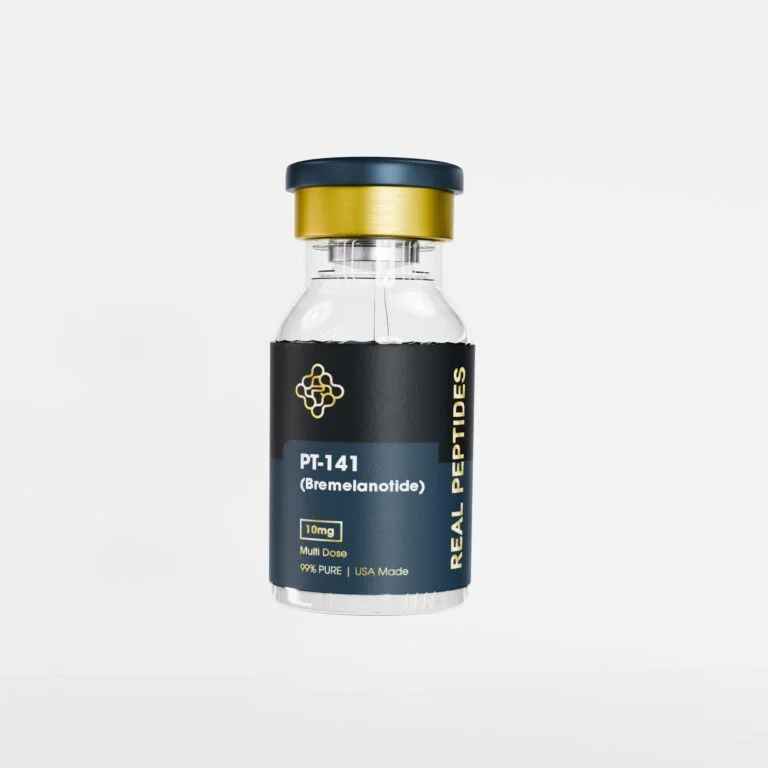
$74.99
Buy PT-141 Peptide (Bremelanotide) from SourceTides — research-grade cyclic heptapeptide melanocortin receptor agonist (Ac-Nle-cyclo[Asp-His-D-Phe-Arg-Trp-Lys]-OH) at ≥99% HPLC-verified purity. The only FDA-approved melanocortin receptor agonist, backed by Phase III RECONNECT trial data. 10 mg lyophilised vial with third-party batch CoA confirming cyclic structure, Nle substitution, and molecular identity (1,025.2 Da). Cold-chain packaging. For in-vitro laboratory research use only — not for human consumption.
Buy PT-141 Peptide (Bremelanotide) 10 mg | ≥99% Purity Cyclic Heptapeptide | SourceTides
When researchers buy PT-141 Peptide (Bremelanotide) from SourceTides, they receive the most clinically validated central melanocortin agonist available for laboratory research — supplied at ≥99% purity, confirmed by reverse-phase HPLC and mass spectrometry on every production batch. PT-141, known generically as bremelanotide and approved by the FDA in 2019 under the brand name Vyleesi, is a synthetic cyclic heptapeptide analog of alpha-melanocyte-stimulating hormone (α-MSH) that operates through a mechanism entirely distinct from all other sexual function research compounds: it engages central nervous system melanocortin receptors — specifically MC3R and MC4R in the hypothalamus and limbic system — rather than acting through peripheral vascular pathways as PDE5 inhibitors do.
PT-141 Bremelanotide is the only melanocortin receptor agonist to hold FDA approval (NDA 210557), and the only peptide in the sexual dysfunction research category backed by Phase III randomised controlled trial data from the RECONNECT trials (n=1,247). Researchers looking to order PT-141 Bremelanotide online for melanocortin system biology, central nervous system sexual arousal models, or neuroendocrine pathway studies gain access to an unusually well-characterised peptide with a public pharmacology dataset generated by the FDA approval process — including full receptor binding characterisation, metabolite profiling, pharmacokinetic studies across multiple species, haemodynamic studies, and behavioural pharmacology.
Every SourceTides PT-141 vial ships with a batch-specific Certificate of Analysis (CoA) and cold-chain packaging. This product is supplied exclusively for in-vitro and laboratory research purposes only and is not approved for general use outside the specific FDA-approved indication (premenopausal women with HSDD, as Vyleesi).
Buy PT-141 Peptide (Bremelanotide) — Full Technical Specifications
The following table provides the complete physicochemical and handling parameters required before designing any PT-141 Bremelanotide research protocol.
| Parameter | Detail |
|---|---|
| Generic Name | Bremelanotide |
| Research Name | PT-141 |
| Amino Acid Sequence | Ac-Nle-cyclo[Asp-His-D-Phe-Arg-Trp-Lys]-OH |
| Peptide Class | Cyclic heptapeptide; alpha-MSH analog; melanocortin receptor agonist |
| Structure | Cyclic lactam — 7 amino acids in closed ring; N-terminal acetylation; Nle at position 1 (oxidation resistance vs. Met) |
| Molecular Formula | C₅₀H₆₈N₁₄O₁₀ |
| Molecular Weight | 1,025.2 Daltons |
| CAS Number | 189691-06-3 |
| Receptor Targets | MC3R & MC4R (primary); MC1R (moderate); MC5R (negligible); no MC2R activity |
| Receptor Affinity (Ki) | Low nanomolar range for MC3R and MC4R; MC1R affinity ~10 nM (competitive binding) |
| Primary Mechanism | Central MC4R/MC3R agonism → cAMP elevation → hypothalamic/limbic neural circuit activation |
| BBB Penetration | Yes — documented in rodent models; central CNS access confirmed |
| Half-Life | ~2.7 hours (range 1.9–4.0 hours); SC onset 30–60 min |
| Metabolism & Excretion | Peptide bond hydrolysis; 64.8% urine, 22.8% fecal |
| Purity (HPLC) | ≥99% |
| Identity Confirmation | Mass Spectrometry (MS) |
| Endotoxin Level | <1 EU/mg (LAL assay) |
| Vial Size (this listing) | 10 mg lyophilised |
| Physical Form | Lyophilised white powder, sealed glass vial |
| Long-Term Storage | –20 °C (up to 24 months, sealed) |
| Short-Term Storage | 4 °C (up to 4 weeks, sealed) |
| Reconstituted Stability | 4 °C, use within 28 days; avoid light; no repeated freeze-thaw |
| FDA Status | Approved (Vyleesi) — HSDD in premenopausal women only (NDA 210557, 2019) |
| Also Known As | Bremelanotide, Vyleesi, PT141, TH9507 (early), cyclic lactam α-MSH analog |
| Certificate of Analysis | Third-party batch CoA included with every order |
Buy PT-141 Peptide Online — What Is Bremelanotide and Why Is It Research-Significant?
PT-141 Bremelanotide has an origin story unlike most research peptides. In the early 1990s, researchers at the University of Arizona were investigating melanotan peptides — analogs of α-MSH originally developed for sunless tanning by activating skin melanocytes. During early human trials of melanotan II, investigators observed unexpected, prominent sexual arousal effects that had nothing to do with pigmentation. That serendipitous finding redirected years of melanocortin biology research toward sexual function. The pharmaceutical team at Palatin Technologies isolated the specific CNS-active fragment responsible — creating PT-141 as a refined, purified cyclic heptapeptide designed to maximise melanocortin receptor engagement relevant to sexual response while minimising melanogenic side effects. (Wikipedia — Bremelanotide identity and development history)
What makes PT-141 structurally distinctive is its cyclic lactam architecture. Rather than a linear peptide chain, the seven amino acids are joined in a closed ring via a lactam bond between the aspartate and lysine side chains. This ring structure confers exceptional metabolic stability compared to linear α-MSH fragments — the peptide resists proteolytic degradation in a way that a linear chain of the same residues would not — making it a far more tractable research tool for in-vivo behavioural and pharmacological studies. The norleucine (Nle) residue at position 1 (substituting for methionine found in the parent α-MSH) provides an additional stability benefit by eliminating the methionine sulfoxide formation that would otherwise occur under storage or physiological oxidative conditions. (Loti Labs — PT-141 melanocortin receptor pharmacology guide)
The critical research distinction for PT-141 Bremelanotide versus all traditional sexual function pharmacological tools: it works centrally, not peripherally. PDE5 inhibitors (sildenafil, tadalafil) achieve their effects by blocking phosphodiesterase-5 in penile vascular smooth muscle, increasing local blood flow. They require existing vascular capacity and intact neural arousal signals to work. PT-141 targets the upstream neural signals themselves — engaging MC4R and MC3R circuits in the hypothalamus and limbic system that govern sexual motivation and desire — making it uniquely valuable for studying the central neural architecture of sexual arousal independent of peripheral vascular biology.
PT-141 Bremelanotide Mechanism of Action — The Melanocortin System Explained
To understand PT-141 peptide research, the five-member melanocortin receptor family requires contextualisation. Each receptor has a distinct anatomical distribution and functional role, and PT-141’s selectivity profile determines which biological processes it engages.
The Five Melanocortin Receptors — PT-141’s Selectivity Profile
| Receptor | Primary Location | Known Function | PT-141 Activity |
|---|---|---|---|
| MC1R | Melanocytes; skin | Pigmentation (melanogenesis); anti-inflammatory | Moderate (~10 nM Ki) — minor pigmentation side effect risk |
| MC2R | Adrenal cortex | ACTH receptor; cortisol regulation | No activity — PT-141 does not stimulate cortisol release |
| MC3R | Hypothalamus; limbic system; gut | Energy homeostasis; sexual behaviour; feeding; cardiovascular | High affinity (primary target) — key sexual arousal mechanism |
| MC4R | Hypothalamic PVN; limbic system; brain stem | Sexual function; energy balance; autonomic control | High affinity (primary target) — erectile function; sexual motivation; reward |
| MC5R | Exocrine glands; muscle | Exocrine gland function; sebum production | Negligible — clinically irrelevant at research doses |
Source: Receptor selectivity data from Ki competitive binding characterisation; PT-141 pharmacology characterised in NDA 210557 submissions and Loti Labs melanocortin receptor research guide.
MC4R and Sexual Function — The Genetic Evidence
The centrality of MC4R in sexual function is not merely pharmacological inference — it has been demonstrated by genetic ablation. MC4R knockout mice show markedly impaired erectile function in males and reduced sexual receptivity in females, establishing MC4R as a key mediator of centrally-regulated sexual arousal in preclinical models. This makes PT-141’s MC4R agonism the mechanistic basis for its documented effects in both the preclinical and Phase III clinical literature. MC4R is most densely expressed in the paraventricular nucleus (PVN) of the hypothalamus — the primary integrating centre for autonomic, neuroendocrine, and behavioural responses including sexual motivation. (Spartan Peptides — PT-141 MC4R and PVN mechanism review)
MC4R Activation Cascade — From Receptor to Behaviour
When PT-141 Bremelanotide binds MC4R, it activates adenylyl cyclase through the Gs protein pathway, elevating intracellular cAMP in hypothalamic and limbic neurons. This cAMP elevation modulates neuronal excitability in circuits involved in sexual motivation and reward, activates downstream protein kinase A (PKA) signalling, and modulates melanocortin-receptor-mediated gene transcription in neurons of the paraventricular nucleus and medial preoptic area. Downstream from MC4R activation, dopaminergic and oxytocinergic pathways are engaged — particularly in limbic reward circuits — and central nitric oxide release occurs through CNS neuronal pathways (distinct from the peripheral NOS mechanism exploited by PDE5 inhibitors). This multi-layer central signalling cascade produces the appetitive and motivational components of sexual arousal rather than the peripheral erectile reflex alone. (Cenexa Labs — PT-141 cAMP/dopamine/NO mechanism)
Blood-Brain Barrier Penetration
PT-141 Bremelanotide crosses the blood-brain barrier, as documented in rodent brain distribution studies where peak brain concentration at approximately 40 minutes post-intraperitoneal injection has been measured. This BBB penetration is a defining pharmacological property that enables the central melanocortin receptor engagement responsible for PT-141’s CNS mechanism — and distinguishes it from peripheral-acting compounds that cannot access hypothalamic targets.
PT-141 Bremelanotide Research Areas — Clinical Evidence Summary Table
| Research Area | Evidence Tier | Key Finding | Source |
|---|---|---|---|
| HSDD in Premenopausal Women | Phase III RCT (FDA-approved indication) | RECONNECT trials (n=1,247): ~0.5 additional satisfying sexual events/month vs. placebo; significant improvement in FSDS-DAO desire scores and reduced desire-related distress. FDA advisory committee 14-2 in favour of approval. | PMC — RECONNECT trial |
| Erectile Dysfunction (Male) | Phase II clinical trial; ongoing Phase III | 67% of PT-141 recipients reported improved erections vs. 33% placebo (p<0.01) in Phase II. Palatin initiated Phase III trials in 2025 for male ED, including PDE5-resistant populations. | PubMed — Diamond et al. 2006 |
| SSRI-Associated Sexual Dysfunction | Exploratory clinical data | PT-141’s central MC4R mechanism bypasses the serotonergic dysfunction responsible for SSRI-associated sexual side effects — a CNS-bypass mechanism of active research interest | ScienceDirect — Bremelanotide overview |
| Melanocortin System CNS Biology | Preclinical; in-vitro receptor pharmacology | Well-characterised MC3R/MC4R pharmacological probe; Ki values in low nM range; selective MC4R vs. MC2R/MC5R; BBB-penetrant; stable cyclic structure; reliable tool for central melanocortin pathway dissection | Loti Labs — MC receptor guide |
| Neuroprotective & Inflammatory Pathway Research | Early preclinical / exploratory | A small number of studies have investigated whether MC1R/MC3R activation by melanocortin analogs may contribute to anti-inflammatory effects; PT-141 provides a tool for probing these pathways though evidence is early-stage | Peptide Resource — PT-141 research overview |
PT-141 Peptide Clinical Evidence — The RECONNECT Phase III Trials
The RECONNECT trials are the evidentiary foundation for PT-141 Bremelanotide’s FDA approval and the most rigorous clinical dataset available for any research peptide in the sexual function category. Two identical Phase III randomised, double-blind, placebo-controlled trials enrolled a combined 1,267 premenopausal women diagnosed with acquired, generalised hypoactive sexual desire disorder (HSDD). Participants self-administered bremelanotide 1.75 mg subcutaneous injection or identical placebo on an as-needed basis approximately 45 minutes before anticipated sexual activity.
The primary endpoints were change from baseline in satisfying sexual events (SSEs) and in sexual desire score on the Female Sexual Distress Scale — Desire/Arousal/Orgasm (FSDS-DAO) subscale. Both trials demonstrated statistically significant improvements on both co-primary endpoints: approximately 0.5 additional satisfying sexual events per month versus placebo, and significant improvement in desire scores and reduction in desire-related personal distress. The FDA advisory committee voted 14-2 in favour of approval. (PMC — RECONNECT Phase III trial results)
Research context note: the magnitude of effect (0.5 additional SSEs/month) is modest in absolute terms, which is consistent with the inherent complexity of sexual desire disorders where psychological and relational factors contribute substantially. The trial design itself — as-needed self-administration, validated patient-reported outcome instruments, placebo-controlled — generates the highest-quality evidence type possible for this indication and provides the field with a robust benchmark against which other melanocortin pathway interventions can be measured.
PT-141 Bremelanotide Research in Male Erectile Dysfunction — Where Does the Evidence Stand?
One of the most active investigational areas for PT-141 peptide research is male erectile dysfunction, particularly in populations where PDE5 inhibitors provide incomplete response. The Phase II clinical trial by Diamond and colleagues (2006, Journal of Sexual Medicine, PMID: 17100927) enrolled men with erectile dysfunction and demonstrated that 67% of PT-141 recipients reported improved erections versus 33% in the placebo group (p<0.01), with sustained improvement across an 8-week treatment period.
The mechanistic rationale for PT-141’s utility in PDE5-resistant erectile dysfunction is particularly compelling: because PT-141 acts centrally on motivational and arousal circuits rather than peripherally on vascular smooth muscle, it addresses the neural arousal signal upstream of the pathway that PDE5 inhibitors amplify. Men who fail PDE5 inhibitors due to insufficient or absent central arousal signalling — rather than inadequate vascular response — represent a population where MC4R agonism may provide mechanistically distinct benefit. This is now being formally evaluated in Phase III trials by Palatin Technologies, announced in 2025 for male ED including PDE5-resistant populations. (Men’s Reproductive Health — PT-141 for men, Phase III 2025)
What Types of Research Is PT-141 Bremelanotide Peptide Most Relevant For?
Researchers across several neuroscience and pharmacology disciplines study PT-141 as a melanocortin system probe. The following table outlines the primary research contexts and why PT-141 specifically serves each domain.
| Research Discipline | Primary Application | Why PT-141 Bremelanotide |
|---|---|---|
| Central Melanocortin Biology | MC3R/MC4R receptor pharmacology; hypothalamic circuit mapping | Best-characterised selective MC3R/MC4R agonist available; low nM Ki; no MC2R activity; stable cyclic structure; BBB-penetrant |
| Sexual Function Neuroscience | Hypothalamic PVN sexual arousal circuits; central vs. peripheral mechanism comparison | Phase III clinical validation; central-only mechanism (no PDE5 activity); MC4R knockout genetic model comparisons available |
| Neuroendocrinology | Hypothalamic-pituitary axis signalling; POMC pathway research | α-MSH structural analog; probe for POMC-derived peptide receptor biology; no MC2R/adrenal activity avoids cortisol confounders |
| Pharmacology — Cyclic Peptide Design | Structure-activity relationship (SAR) studies; cyclic vs. linear peptide stability | Well-defined cyclic lactam with Nle substitution; FDA-generated multi-species metabolite profile; complete public PK dataset from NDA 210557 |
| Comparative Sexual Dysfunction Pharmacology | Central (MCR) vs. peripheral (PDE5) mechanism comparison in same model | Only MCR agonist with Phase III data; can be run in direct mechanistic comparison with sildenafil/tadalafil in animal models to isolate central vs. vascular arousal contributions |
PT-141 Bremelanotide Pharmacokinetics — Half-Life, Onset and Research Protocol Implications
PT-141 Bremelanotide has a well-characterised pharmacokinetic profile from Phase III clinical studies, providing researchers with reliable parameters for protocol design.
| PK Parameter | Value | Research Implication |
|---|---|---|
| Elimination Half-Life | ~2.7 hours (range 1.9–4.0 h) | Longer than most research peptides; plan observation windows accordingly |
| Onset (SC) | Peak central effect 30–60 min post-administration | Dose 30–60 min before behavioural endpoints in rodent models |
| Effect Duration | Reported up to 12 hours; diminishing effects over up to 72 h in some human data | Design wash-out periods accordingly in multi-dose protocols |
| Metabolism | Peptide bond hydrolysis (no CYP450 involvement) | Minimal CYP drug interaction risk in multi-compound protocols; no hepatic enzyme induction |
| Excretion | 64.8% urine; 22.8% fecal | Plan urine/fecal collection endpoints for metabolite studies |
| BBB Penetration | Confirmed in rodent models; peak brain conc. ~40 min (IP) | Central dosing effects measurable; relevant for CNS endpoint timing in preclinical designs |
PT-141 Bremelanotide Side Effects — What the Clinical Trial Data Shows
Because researchers designing PT-141 preclinical protocols need to select appropriate safety endpoints, and because balanced content reflects E-E-A-T quality standards, the following adverse event data is drawn directly from the RECONNECT Phase III trials and FDA prescribing information. All data is from the FDA-approved human indication and should not be interpreted as product claims by SourceTides.
| Adverse Event | Frequency (Phase III) | Proposed Mechanism | Research Protocol Note |
|---|---|---|---|
| Nausea | ~40% (bremelanotide) vs. ~13% (placebo); most common AE | MC3R activation in area postrema (chemoreceptor trigger zone) outside BBB; onset 1–2 h; predominantly mild to moderate | Monitor emetic response in in-vivo rodent models; include anti-emetic control arms where relevant |
| Flushing | Common (≥10%); facial flushing | Melanocortin receptor-mediated peripheral vasodilation; MC1R involvement | Monitor cutaneous blood flow endpoints; include temperature measurement in vascular models |
| Blood Pressure Elevation | Transient; ~12 h duration; ~1% reached 180/110 mmHg in Phase III | Central MCR cardiovascular regulation; possible peripheral MC1R; FDA contraindicates in uncontrolled hypertension | Include haemodynamic monitoring (BP, HR) in all in-vivo cardiovascular-sensitive models |
| Headache | Common (≥10%) | Likely linked to transient BP changes and CNS MC receptor activation | Monitor pain behaviour endpoints in rodent models |
| Focal Hyperpigmentation | ~1% with repeated use; face, gingiva, breasts | Residual MC1R activity → focal melanogenesis; gradual onset with repeat dosing | Monitor pigmentation changes in multi-dose chronic rodent models; photograph injection/observation sites |
| Injection Site Reactions | Common, especially at higher doses | Local tissue response to SC injection | Rotate injection sites; document site reactions histologically where relevant |
⚠️ Key Contraindications (from FDA label): Bremelanotide (Vyleesi) is contraindicated in patients with uncontrolled hypertension or cardiovascular disease. It is not recommended in pregnancy or lactation. In research models involving cardiovascular, haemodynamic, or blood pressure endpoints, baseline and post-dose BP/HR monitoring should be included as standard safety parameters. SourceTides supplies PT-141 for in-vitro laboratory research use only.
Buy PT-141 Peptide vs Other Sexual Function Research Compounds — Mechanistic Comparison
Understanding how PT-141 Bremelanotide differs from other compounds studied in the same therapeutic area is essential for selecting the right tool for a given research question.
| Compound | Class | Primary Target | Mechanism | Evidence Tier |
|---|---|---|---|---|
| PT-141 (Bremelanotide) | Cyclic heptapeptide; MCR agonist | MC3R / MC4R (CNS) | Central neural arousal signal; hypothalamus/limbic; cAMP/dopamine | FDA-approved (HSDD); Phase III RCT |
| Sildenafil (Viagra) | Small molecule; PDE5 inhibitor | PDE5 (peripheral vascular) | Peripheral: cGMP elevation → smooth muscle relaxation → blood flow ↑ | FDA-approved (ED); extensive RCT data |
| Flibanserin (Addyi) | Small molecule; 5-HT1A agonist / 5-HT2A antagonist | Serotonin receptors (CNS) | Central serotonin pathway modulation; daily dosing (not on-demand) | FDA-approved (HSDD); daily oral |
| Setmelanotide (RM-493) | Cyclic peptide; MC4R selective | MC4R (highly selective) | MC4R agonist for metabolic research (obesity); higher MC4R selectivity than PT-141 | FDA-approved (POMC/LEPR obesity) |
| Melanotan II | Linear α-MSH analog | MC1R–MC4R (broad) | Predecessor to PT-141; broader MCR profile including strong MC1R (tanning); less selective | Research only; not FDA-approved |
High-Purity PT-141 Bremelanotide for Sale — SourceTides Quality Control
PT-141’s cyclic lactam architecture requires specialised SPPS protocols with on-resin cyclisation chemistry to form the aspartate-lysine lactam bond correctly. Linear synthesis of the same 7 residues without cyclisation would produce a pharmacologically inactive compound — verifying the ring closure by mass spectrometry is therefore essential, not optional. The Nle substitution at position 1 also requires confirmation, as a methionine-containing analog (the uncorrected predecessor) would show oxidation over time and altered receptor kinetics.
| QC Stage | Method | Specification | PT-141-Specific Note |
|---|---|---|---|
| Purity Assay | Reverse-Phase HPLC | ≥99% | Separates correctly cyclised PT-141 from linear open-ring by-product and deletion sequences |
| Identity Confirmation | Mass Spectrometry (MS) | Exact MW (1,025.2 Da) | Confirms cyclic structure (MW difference from linear); verifies Nle vs. Met substitution |
| Endotoxin Testing | LAL Assay | <1 EU/mg | Critical for CNS/behavioural assays — LPS independently activates inflammatory cascades that alter sexual behaviour endpoints |
| Batch Traceability | Third-Party Lab CoA | Included with every order | Essential for publication methodology; confirms cyclic structure and Nle position at lot level |
| Cold-Chain Packaging | Insulated + cold packs | ≤4 °C in transit | Prevents ring-opening of cyclic structure under thermal stress during shipping |
PT-141 Bremelanotide Regulatory and Legal Status — 2025 Overview
✅ FDA-Approved Drug (Vyleesi): PT-141 Bremelanotide holds FDA approval (NDA 210557, June 2019) for one specific indication: acquired, generalised hypoactive sexual desire disorder (HSDD) in premenopausal women. SourceTides supplies research-grade PT-141 peptide for in-vitro laboratory research only — not as the approved drug product Vyleesi.
| Jurisdiction | Status (2025) | Notes |
|---|---|---|
| USA | FDA-approved (Vyleesi) for HSDD in premenopausal women only | Prescription required for Vyleesi; research-grade supply for lab use not specifically prohibited; not a scheduled controlled substance |
| Australia | TGA prescription-only; not TGA-listed for general use | Importation without appropriate authorisation likely prohibited; verify with TGA |
| United Kingdom | Not MHRA-approved; research use only | MHRA licensing may apply; verify before ordering |
| Canada | Not Health Canada approved; research grey area | Health Canada new drug provisions may apply; verify locally |
| EU | Not EMA-approved; member-state rules vary | Verify nationally before ordering |
| WADA | Not specifically listed on WADA Prohibited List as of 2025 | Athletes should verify current WADA code annually; class-based prohibitions for peptide hormones may apply |
View SourceTides’ full shipping and compliance policy.
PT-141 Bremelanotide Peer-Reviewed Research References
| # | Authors / Year | Journal | Topic | Link |
|---|---|---|---|---|
| 1 | Clayton et al. (2019) | Obstet Gynecol / PMC | RECONNECT Phase III — pivotal trial results; bremelanotide for HSDD in premenopausal women | PMC |
| 2 | Diamond et al. (2006) | J Sex Med | Phase II — bremelanotide male erectile dysfunction; 67% vs 33% placebo response | PubMed |
| 3 | Wikberg et al. (2000) | Eur J Pharmacol | MC4R knockout — impaired erectile function in males; reduced sexual receptivity in females | PubMed |
| 4 | King et al. (2007) | J Sex Med | PT-141 CNS mechanism; hypothalamic melanocortin pathways and sexual behaviour | PubMed |
| 5 | Pfaus et al. (2007) | J Sex Med | Bremelanotide female sexual arousal; dopamine pathway interaction | PubMed |
| 6 | Giuliano et al. (2010) | J Sex Med | Melanocortin receptor agonism and erectile function — comprehensive review of preclinical and clinical data | PubMed |
| 7 | ScienceDirect Topics (2025) | ScienceDirect | Bremelanotide pharmacology overview — MC4R/MC1R mechanism, flushing, nausea, BP effects | ScienceDirect |
| 8 | NIH LiverTox / NCBI | NCBI | Bremelanotide drug profile — hepatotoxicity review, safety summary | NCBI |
| 9 | Wikipedia (2025) | Wikipedia | Bremelanotide identity, development history, CAS, Vyleesi approval summary | Wikipedia |
Frequently Researched Alongside PT-141 Bremelanotide — SourceTides Catalogue
- Tesamorelin — GHRH analog with Phase III clinical data; GH-axis and metabolic research
- MOTS-c — Mitochondria-derived peptide; metabolic and aging research
- BPC-157 (Body Protection Compound-157) — GI and musculoskeletal repair research
- TB-500 (Thymosin Beta-4 Fragment) — Actin regulation and tissue repair research
- Ipamorelin — GH secretagogue; GHSR agonist research
- Browse All Research Peptides — Full SourceTides catalogue
Frequently Asked Questions — Buy PT-141 Peptide (Bremelanotide)
Where can I buy PT-141 Peptide (Bremelanotide) online with a verified Certificate of Analysis?
You can buy PT-141 Peptide (Bremelanotide) online directly from SourceTides. Every vial ships with a batch-specific CoA from a third-party ISO-accredited laboratory confirming ≥99% purity by HPLC and exact molecular identity (1,025.2 Da) by mass spectrometry — including verification of the cyclic lactam ring structure and Nle substitution. Endotoxin levels below 1 EU/mg are confirmed by LAL assay. This level of documentation is essential for CNS behavioural research where impurity-driven confounders can invalidate endpoint results. Request any batch CoA before ordering from our research support team.
Is PT-141 the same as Bremelanotide? What is the difference?
PT-141 and bremelanotide refer to the same molecule — the name difference is contextual. “PT-141” is the research and peptide-community designation used in preclinical and investigational contexts, originating from Palatin Technologies’ internal compound numbering. “Bremelanotide” is the generic pharmaceutical name assigned when the compound entered formal clinical development, and is used in clinical publications, FDA submissions, and the prescribing information for the approved drug product Vyleesi. The FDA NDA 210557 approved bremelanotide (as Vyleesi) in 2019 for HSDD in premenopausal women. When researchers buy PT-141 Bremelanotide for research use, both names describe the same cyclic heptapeptide: Ac-Nle-cyclo[Asp-His-D-Phe-Arg-Trp-Lys]-OH, MW 1,025.2 Da, CAS 189691-06-3.
How does PT-141 (Bremelanotide) differ from Viagra (sildenafil) in its mechanism?
The mechanisms are fundamentally different and non-overlapping, which is precisely what makes PT-141 valuable for research. Sildenafil and other PDE5 inhibitors work peripherally — they block the enzyme PDE5 in penile vascular smooth muscle, preventing breakdown of cGMP and causing smooth muscle relaxation and blood flow increase. They require intact central arousal signals and existing vascular capacity to work. PT-141 Bremelanotide works centrally — it crosses the blood-brain barrier and engages MC4R and MC3R in the hypothalamus and limbic system, directly activating the neural circuits that generate sexual motivation and desire. It does not act on PDE5, does not increase genital blood flow directly, and produces effects even in the absence of visual or physical sexual stimulation in some preclinical models. This central vs. peripheral distinction makes PT-141 and PDE5 inhibitors mechanistically complementary research tools rather than substitutes — they can be studied in combination to dissect the relative contributions of central arousal and peripheral vascular response to sexual function endpoints.
What is the half-life of PT-141 Bremelanotide and how does it affect research protocols?
PT-141 Bremelanotide has an elimination half-life of approximately 2.7 hours (range 1.9–4.0 hours) following subcutaneous administration in clinical studies — substantially longer than most research peptides. Peak central effect occurs 30–60 minutes post-administration. Researchers designing rodent behavioural protocols should dose 30–60 minutes before observational windows and plan adequate wash-out periods (minimum 24 hours, ideally 48+ hours) between repeated doses given the documented possibility of effects lasting up to 12–72 hours in some subjects. The lack of CYP450 metabolism (clearance occurs via peptide bond hydrolysis) simplifies multi-compound protocol design by minimising enzyme-based drug interaction risk.
What does the PT-141 clinical trial data actually show? Is the evidence strong?
PT-141 Bremelanotide has one of the strongest clinical evidence bases of any research peptide available, including Phase III RCT data. The RECONNECT trials (combined n=1,247 premenopausal women with HSDD) showed statistically significant improvements in satisfying sexual events (~0.5 additional events/month over placebo) and significant improvements in sexual desire scores and desire-related distress on validated instruments (FSDS-DAO). The FDA advisory committee voted 14-2 in favour of approval. For male erectile dysfunction, Phase II data (Diamond et al. 2006) documented 67% improved erections versus 33% placebo (p<0.01). The effect sizes are modest in absolute terms but are real, statistically significant, and reproduced across two identical Phase III trials. The quality and completeness of PT-141’s public pharmacology dataset — generated by the FDA NDA 210557 process — is unmatched in the research peptide category.
Is PT-141 Bremelanotide legal to buy online in the USA, UK, Australia, or Canada?
In the USA, bremelanotide is an FDA-approved prescription drug (Vyleesi) for the specific indication of HSDD in premenopausal women; the prescription product requires a licensed prescriber. Research-grade PT-141 for laboratory use is not a federally scheduled controlled substance, and laboratory supply for non-therapeutic research purposes is not specifically prohibited. In Australia, TGA prescription-only classification likely applies; importation without appropriate authorisation is prohibited. In the UK, not MHRA-approved; MHRA oversight may apply. In Canada, not Health Canada approved; new drug provisions may govern importation. SourceTides ships exclusively to qualified researchers and institutions. Researchers bear sole responsibility for compliance with local regulations. View our full compliance policy.
What are the main side effects of PT-141 Bremelanotide that researchers should plan for?
Based on Phase III RECONNECT trial data and FDA prescribing information: nausea is the dominant adverse event (~40% of treated patients vs. ~13% placebo), mediated by MC3R activation in the area postrema (a brain region outside the blood-brain barrier accessible to circulating peptides). Flushing (~10%+) and headache (~10%+) are common. A transient blood pressure elevation lasting approximately 12 hours is documented — approximately 1% of treated patients reached ≥180/110 mmHg in trials, and the FDA contraindicates use in uncontrolled hypertension. Focal hyperpigmentation (face, gingiva, breasts) occurs in approximately 1% of patients with repeated use due to residual MC1R activity. Researchers designing in-vivo protocols should include haemodynamic monitoring (BP/HR), gastrointestinal/emetic endpoints, and if multi-dose chronic protocols are planned, skin pigmentation monitoring. All adverse event data is from the human clinical indication only.
Does PT-141 cause the same tanning/pigmentation effects as Melanotan II?
No — not to any significant degree under standard research doses. This is one of the key design improvements from Melanotan II (MT-II) to PT-141 Bremelanotide. Melanotan II has strong MC1R activity, which is the receptor primarily responsible for melanogenesis (skin pigmentation/tanning). PT-141 was specifically engineered to preserve MC3R/MC4R activity (responsible for sexual arousal effects) while minimising MC1R agonism. At standard research doses, PT-141’s MC1R activity is sufficiently reduced that significant melanogenesis is not observed. Residual MC1R activity at higher or repeated doses can produce focal hyperpigmentation in approximately 1% of patients (face, gingiva, breasts) — a documented clinical finding — but this is qualitatively and quantitatively different from the systematic tanning effect of MT-II. View PT-141 Bremelanotide at SourceTides.
What payment methods does SourceTides accept for PT-141 Bremelanotide orders?
SourceTides accepts Visa, Mastercard, American Express, cryptocurrency (Bitcoin, Ethereum, major stablecoins), and bank transfer for institutional purchase orders. All card transactions use a PCI-DSS compliant gateway with 256-bit SSL encryption. Universities, research hospitals, and registered laboratories can request institutional invoicing with net-30 payment terms on approved accounts. Proceed to secure checkout or contact us for institutional invoicing.
| Purity | ≥99% (HPLC-verified) |
|---|---|
| Strength | 10mg |
| Form | Lyophilised Powder |
| CAS Number | 189691-06-3 |
Be the first to review “PT-141 Peptide (Bremelanotide) 10 mg | ≥99% Purity Cyclic Heptapeptide | SourceTides”
Related products
Growth Hormone Modulators Peptides
Immune & Antimicrobial Peptides
Epithalon Peptide 10 mg Online | ≥99% Purity | Certificate of Analysis Included

Cognitive & Mood Support
Cognitive & Mood Support
Selank Amidate Peptide 10 mg Online | ≥99% Purity | CoA Included | SourceTides
Fat Loss & Metabolic Support Peptides
MOTS-c Peptide Online | 10 mg Research Grade ≥99% Purity | SourceTides
Peptides by Goal
GHK-Cu Cosmetic Peptide (Copper Tripeptide-1; Topical & Formulation Research Grade)
Fat Loss & Metabolic Support Peptides
Kisspeptin-10 Peptide 10 mg Online | ≥99% Purity | CoA Included | SourceTides
Reviews
There are no reviews yet.