
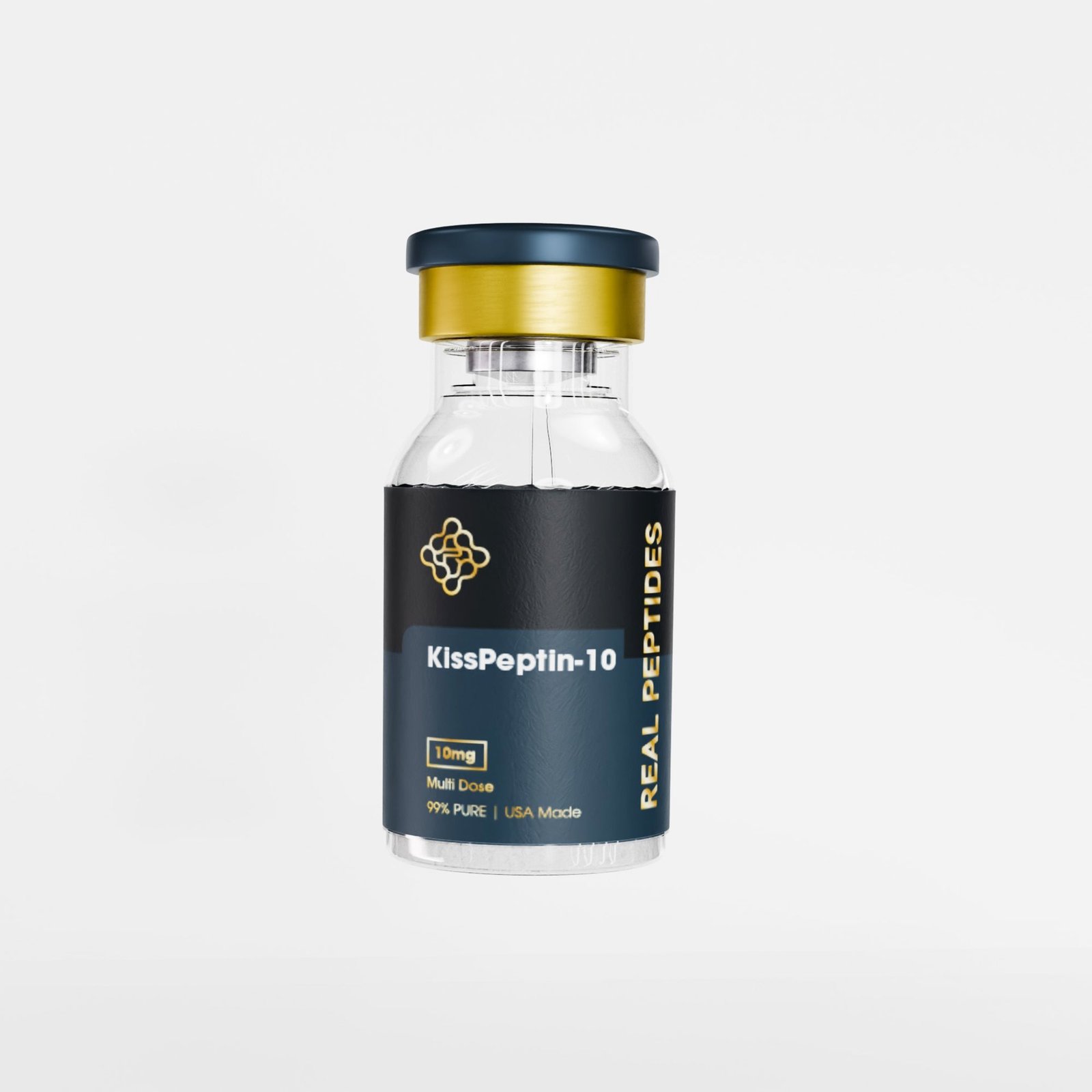
$54.99
Buy Kisspeptin-10 Peptide 10 mg Online from SourceTides. CAS 374675-21-5 | YNWNSFGLRF-NH₂ | MW 1,302.45 g/mol | ≥99% HPLC purity | Endotoxin <1 EU/mg (LAL) | Full CoA included | Lyophilised | Dry-ice cold chain. Full KISS1R (GPR54) agonist. HPG axis activator. Multiple Phase 1/2 human clinical trials. WADA S2 prohibited. For in-vitro laboratory research use only. Not for human consumption.
Buy Kisspeptin-10 Peptide 10 mg Online | ≥99% Purity | CoA Included | SourceTides
Buy Kisspeptin-10 Peptide 10 mg Online from SourceTides.
Kisspeptin-10 (Kp-10; CAS 374675-21-5) is a synthetic 10-amino acid neuropeptide derived from the C-terminal region of kisspeptin-54.
It is a full agonist at the KISS1R (GPR54) receptor with sub-nanomolar potency.
Kisspeptin-10 is the master upstream regulator of the hypothalamic-pituitary-gonadal (HPG) axis — the signalling pathway that controls GnRH, LH, FSH, and ultimately testosterone and oestrogen production.
It has completed multiple Phase 1 and Phase 2 human clinical trials for reproductive disorders.
Every SourceTides vial is lyophilised, tested at ≥99% HPLC purity, and ships with a full lot-specific Certificate of Analysis.
For in-vitro laboratory research use only. Not for human consumption.
Kisspeptin-10 — Technical Specifications
| Parameter | Specification |
|---|---|
| Common Name | Kisspeptin-10 (Kp-10) |
| Synonyms | Metastin (45-54); KP-10; KISS-1(45-54); Kisspeptin 112-121 |
| CAS Number | 374675-21-5 |
| Molecular Formula | C₆₃H₈₃N₁₇O₁₄ |
| Molecular Weight | 1,302.45 g/mol |
| Peptide Length | 10 amino acids (decapeptide); C-terminal amide |
| Amino Acid Sequence | Tyr-Asn-Trp-Asn-Ser-Phe-Gly-Leu-Arg-Phe-NH₂ (YNWNSFGLRF-NH₂) |
| Key Structural Feature | Conserved C-terminal Arg-Phe-NH₂ (RFamide) motif — essential for KISS1R binding and activation |
| Gene Origin | C-terminal fragment of KISS1 gene product (kisspeptin-54; 145-AA precursor → proteolytic cleavage) |
| Receptor Target | KISS1R (GPR54) — Gq/11α-coupled GPCR; full agonist |
| Binding Affinity (Ki) | Ki = 1.59 nM (rat KISS1R); Ki = 2.33 nM (human KISS1R); EC50 (Ca²⁺) = 0.18–1.1 nM |
| Plasma Half-Life (human) | ~4 minutes (t½ = 3.8 ± 0.3 min in men; 4.1 ± 0.4 min in women; IV; Calley et al. 2014) |
| LH Response Peak (IV) | 30–90 minutes post-IV bolus in healthy subjects |
| Physical Form | White lyophilised powder |
| Purity | ≥99% (RP-HPLC); identity confirmed by ESI-MS |
| Endotoxin | <1 EU/mg (LAL chromogenic assay) |
| Solubility | Soluble in sterile water and PBS pH 7.4; 1 mg/mL stock recommended |
| Storage — Lyophilised | −20°C long-term; 2–8°C short-term (up to 4 weeks); protect from light |
| Storage — Reconstituted | 2–8°C for up to 7 days; −20°C for longer; avoid freeze-thaw cycles |
| Certificate of Analysis | Lot-specific CoA with every order; HPLC chromatogram + MS data + endotoxin result |
| WADA Status | Prohibited — classified under S2 (Peptide Hormones, Growth Factors and Related Substances) or as a hormone modulator depending on list year; verify current list |
What Is Kisspeptin-10?
Kisspeptin-10 is a 10-amino acid neuropeptide. It comes from the KISS1 gene, which produces a 145-amino acid precursor protein. The body cleaves this precursor into several active fragments — kisspeptin-54, kisspeptin-14, kisspeptin-13, and kisspeptin-10. All four fragments share the same C-terminal Arg-Phe-NH₂ sequence, which is the part that binds to the receptor. Despite being the shortest fragment, kisspeptin-10 activates the KISS1R receptor with the same potency as the full-length kisspeptin-54.
The KISS1 gene was discovered in the 1990s by researchers studying cancer. They found it suppressed metastasis in melanoma and breast cancer cell lines, so they named the gene product “metastin.” Years later, scientists discovered that metastin was also a powerful reproductive hormone signal. That same peptide — responsible for blocking cancer spread — turned out to be the master switch controlling puberty, fertility, and gonadotropin secretion.
Kisspeptin neurons sit in two key areas of the hypothalamus: the arcuate nucleus (ARC) and the anteroventral periventricular nucleus (AVPV). From there, they send kisspeptin signals directly to GnRH neurons. When kisspeptin binds to KISS1R on GnRH neurons, those neurons fire and release GnRH into the pituitary portal blood. This triggers the pituitary to release LH and FSH — the hormones that drive ovarian and testicular function. No kisspeptin signal means no GnRH pulse, which means no LH, no FSH, and no sex hormone production. It is the entry point to the entire reproductive hormone cascade.
Kisspeptin-10 has been tested in multiple human clinical trials. It has been used to stimulate LH in men with hypogonadotropic hypogonadism, trigger oocyte maturation in IVF, restore reproductive function in hypothalamic amenorrhea, and assess HPG axis function as a diagnostic tool.
When you buy Kisspeptin-10 Peptide 10 mg from SourceTides, you get the most clinically contextualised KISS1R agonist available for reproductive and neuroendocrine research.
How Kisspeptin-10 Works — Mechanism of Action
Step 1 — KISS1R Binding and Gq/11 Activation
Kisspeptin-10 binds to KISS1R — a G-protein coupled receptor on GnRH neurons in the hypothalamus. The C-terminal Arg-Phe-NH₂ motif is the critical binding element. Remove or modify this sequence and receptor activation drops sharply. The binding constants are well established: Ki = 1.59 nM at the rat receptor and Ki = 2.33 nM at the human receptor. These are sub-nanomolar to low-nanomolar affinities — very potent by any peptide standard.
After binding, KISS1R activates the Gq/11α subunit. This starts a phospholipase C (PLC) cascade. PLC converts membrane phospholipids into two second messengers: inositol-1,4,5-trisphosphate (IP3) and diacylglycerol (DAG). IP3 triggers calcium release from the endoplasmic reticulum. This intracellular calcium surge drives neuronal depolarisation and action potential firing.
Step 2 — GnRH Neuron Firing and Pulse Generation
The calcium signal fires the GnRH neuron. GnRH is released in a pulse into the portal blood vessels connecting the hypothalamus to the anterior pituitary. The pulsatile pattern matters — the pituitary responds very differently to pulsatile GnRH versus continuous GnRH. Pulses stimulate LH and FSH secretion. Continuous exposure paradoxically suppresses them (which is how GnRH agonist drugs like leuprolide work to lower testosterone in prostate cancer).
Kisspeptin-10 boosts both the frequency and the amplitude of LH pulses. In a key human study by Dhillo et al. (JCEM, 2005; PMID: 16091559), IV Kisspeptin-10 produced a rapid, dose-dependent LH surge in healthy volunteers within 30–90 minutes. A follow-up study confirmed that continuous infusion increased LH pulse frequency, pulse amplitude, and total testosterone levels.
Step 3 — LH and FSH Secretion from the Pituitary
GnRH pulses reach the gonadotroph cells in the anterior pituitary and bind the GnRH receptor. This triggers LH and FSH secretion into the bloodstream. LH drives testosterone production in Leydig cells of the testes and oestrogen/progesterone production in the ovaries. FSH drives spermatogenesis in men and follicle development in women. The entire reproductive axis depends on this upstream kisspeptin signal being present and correctly timed.
Step 4 — ERK1/2 and MAPK Signalling
Beyond the calcium pathway, KISS1R also activates ERK1/2 and p38 MAPK phosphorylation. These are cell survival and proliferation pathways. This is relevant to Kisspeptin-10’s other research domain — metastasis suppression. In tumour cells expressing KISS1R, kisspeptin signalling through ERK1/2 appears to reduce cell migration and invasion. This is the molecular basis of the original “metastin” observation: kisspeptin signals tumour cells to stop moving.
Step 5 — Negative Feedback and Steroid Control
Kisspeptin neurons themselves are regulated by sex steroids. Testosterone and oestrogen feed back to the kisspeptin neurons in the ARC and suppress them. This creates the HPG axis negative feedback loop — rising sex steroids reduce GnRH pulses, which protects against overproduction. The AVPV neurons, by contrast, are stimulated by oestrogen and drive the LH surge needed for ovulation. Understanding this bidirectional feedback is central to reproductive neuroendocrinology research — and Kisspeptin-10 is the key tool for interrogating it.
Kisspeptin-10 Research Evidence
| Research Area | Evidence Level | Key Finding | Source |
|---|---|---|---|
| LH Stimulation in Healthy Men | Phase 1 human clinical trial | IV Kp-10 produced rapid, dose-dependent LH surges in healthy male volunteers; first human confirmation of kisspeptin’s role in HPG axis regulation | Dhillo et al. 2005 — JCEM (PubMed) |
| LH Pulse Frequency Increase | Human clinical study (J Clin Endocrinol Metab) | Kp-10 increased both LH pulse frequency and amplitude, not just total LH output; continuous infusion raised testosterone levels; kisspeptin analogues described as having therapeutic potential | JCEM 2011 — Oxford Academic |
| Hypogonadotropic Hypogonadism | Human clinical study; Phase 2 ongoing | Kp-10 distinguished hypothalamic dysfunction from pituitary dysfunction; stimulated LH in neurokinin B pathway defects; kisspeptin testing more specific than GnRH testing for hypothalamic lesion localisation | Seminara et al. 2014 — PMC4255107 |
| GPR54 Signalling (Gq/Ca²⁺) | In vitro (GPR54-transfected cells) | Kp-10 induces calcium mobilisation in GPR54-expressing cells (EC50 = 0.18–1.1 nM); inhibits GPR54-transfected CHO cell migration at 10–100 nM | Millar et al. 2015 — PMC4678402 |
| Metastasis Suppression | In vitro and in vivo (melanoma; breast cancer) | KISS1 gene product suppresses melanoma and breast cancer metastasis; kisspeptin inhibits cancer cell invasion and migration at 10–100 nM; VEGF expression in endothelial cells reduced by Kp-10 | Wikipedia: Kisspeptin (sourced from primary literature) |
| Sexual Desire / Behaviour | Human clinical (Hamson et al.; Imperial College London) | Kisspeptin administration in men with low sexual desire improved sexual brain processing and psychosexual function; brain regions activated on fMRI; 56% improvement in some sexual function scores vs placebo | HPG axis review — PubMed PMID: 34410262 |
| Pharmacokinetics (human) | Controlled human PK study | t½ Kp-10 = ~4 minutes (IV, human volunteers; men and women); t½ Kp-54 = 27.6 min; short half-life enables precise on/off control in research protocols | Calley et al. 2014 — Wiley Advances in Biology |
| Cardiovascular / Vasoconstriction | In vitro and in vivo (ApoE−/− mice) | Kp-10 is a potent vasoconstrictor; promoted atherosclerotic plaque progression in ApoE−/− mice; KISS1R expressed in vascular smooth muscle; relevant to pre-eclampsia and cardiovascular biology research | J Am Heart Assoc 2018 — AHA Journals |
The HPG Axis: Why Kisspeptin-10 Is the Key Research Tool
To understand why Kisspeptin-10 matters so much in reproductive research, you need to understand what sits upstream of GnRH. For decades, GnRH was considered the master regulator of reproduction. Then, in 2003, researchers found that mutations in GPR54 (KISS1R) caused a complete failure of puberty — despite normal GnRH neurons and normal pituitary function. The GnRH neurons were present. They just weren’t receiving the signal to fire. That signal was kisspeptin.
The Discovery That Changed Reproductive Biology
Two independent research groups published simultaneously in 2003. De Roux et al. at the Necker Hospital in Paris and Seminara et al. at Massachusetts General Hospital both found that loss-of-function mutations in the GPR54 gene caused idiopathic hypogonadotropic hypogonadism (IHH) in humans — the same condition produced by GnRH deficiency, but caused by an upstream failure of kisspeptin signalling. This placed kisspeptin upstream of GnRH as the true initiator of the reproductive hormone cascade.
This finding launched an entire new research field. If kisspeptin is the switch that starts the entire cascade, then kisspeptin agonists could treat IHH without bypassing the natural pulsatile architecture of GnRH release. That distinction matters: external GnRH replacement works, but it requires careful pump programming to mimic pulses. Kisspeptin, by acting upstream, recruits the patient’s own GnRH neurons — preserving the natural pulse pattern the pituitary is calibrated to receive.
Human Clinical Trial Data
Kisspeptin-10 has been used in multiple Phase 1 and Phase 2 human clinical trials. The first human study (Dhillo et al. 2005) showed that a single IV bolus of Kp-10 produced a large, dose-dependent LH surge in healthy men within 30–90 minutes — the first direct confirmation that the kisspeptin-GnRH-LH pathway described in animals also operates in humans.
Subsequent studies showed that Kp-10 increases both LH pulse frequency and amplitude — a finding that matters for fertility research, because defects in IHH typically reduce pulse frequency rather than amplitude. A 2022 study from Imperial College London (Abbara et al.) showed that kisspeptin-54 administration perfectly identified hypothalamic GnRH neuronal dysfunction in men with congenital IHH, with an AUC of 1.0 — making it a more specific diagnostic tool than the standard GnRH stimulation test. Ongoing Phase 2 trials (NCT identifiers registered at ClinicalTrials.gov) are exploring kisspeptin for IHH treatment, IVF triggering, and hypothalamic amenorrhea.
What Is Kisspeptin-10 Used for in Research?
| Research Field | Application | Why Kisspeptin-10 |
|---|---|---|
| Reproductive Neuroendocrinology | HPG axis activation; GnRH pulse mapping; LH/FSH secretion studies | The most upstream pharmacological tool for triggering GnRH pulses; sub-nM KISS1R potency; validated in humans and multiple animal species |
| Hypogonadism Research | IHH models; GnRH neuron responsiveness testing; testosterone axis restoration | Distinguishes hypothalamic from pituitary dysfunction better than GnRH testing; Phase 2 trial data in IHH; targets the pathway defect directly |
| Fertility / IVF Research | Oocyte maturation triggering; follicle development; ovulation induction models | Clinical trials show kisspeptin can trigger oocyte maturation in IVF without causing ovarian hyperstimulation syndrome (OHSS); physiological LH surge produced |
| Puberty Research | Pubertal onset mechanisms; KISS1R knockout models; sex steroid feedback | KISS1R knockout mice fail to undergo puberty; kisspeptin-10 administration induces precocious puberty in immature rodents; essential tool for puberty timing research |
| Oncology / Metastasis | Tumour invasion assays; KISS1R expression in cancer; metastasis suppressor research | Original “metastin” discovery in melanoma and breast cancer; inhibits cell migration and invasion at 10–100 nM in GPR54-expressing tumour cells; VEGF reduction also documented |
| Sexual Behaviour / Neuroscience | Neural correlates of sexual desire; limbic system activation; psychosexual function studies | Kisspeptin activates limbic brain regions on fMRI; improved sexual processing in clinical trials; KISS1R expressed in amygdala and regions involved in attraction and arousal |
| Cardiovascular Research | Vascular biology; vasoconstriction; pre-eclampsia models; atherosclerosis | Kp-10 is a potent vasoconstrictor in endothelial cells; KISS1R expressed in cardiac tissue; published data in ApoE−/− mouse atherosclerosis models; plasma kisspeptin elevated in pre-eclampsia |
Kisspeptin-10 Pharmacokinetics
| Parameter | Value / Notes | Research Implication |
|---|---|---|
| Plasma Half-Life (IV, human) | ~4 minutes (t½ = 3.8 min men; 4.1 min women; Calley et al. 2014) | Very short; allows precise on/off control; downstream LH response persists for 30–90 min despite rapid peptide clearance; measure LH not Kp-10 plasma levels as pharmacodynamic endpoint |
| vs Kisspeptin-54 Half-Life | Kp-54 t½ = 27.6 minutes (7-fold longer); longer in-vivo effect duration | Choose Kp-10 for acute pulse studies needing rapid offset; choose Kp-54 for sustained HPG axis activation experiments |
| Route of Administration | IV bolus or infusion (human trials); SC and IP used in animal studies | IV provides immediate bioavailability; SC is standard for rodent studies; dose-response confirmed via all three routes in published literature |
| LH Response Window | LH peaks 30–90 min post-IV; elevated for 2–4 hours | Sample at 15, 30, 45, 60, 90, and 120 min post-dosing for LH assay; include a 4 h sample to capture full response and return to baseline |
| Validated Human Dose | IV: 0.3–10 nmol/kg bolus; infusion: 1.5 µg/kg/h; SC animal: 1–100 nmol/kg | Published human and rodent dose-response curves available in referenced studies; linear dose-LH relationship confirmed within this range |
| In-Vitro Range | 0.1 nM – 100 nM for receptor binding and calcium mobilisation assays | Use a 10-point dose-response (0.01 nM – 1 µM) to characterise full KISS1R activation curve in cell lines expressing GPR54 |
| Degradation | Serum endopeptidase degradation; C-terminal RFamide motif partially protected but still susceptible | Prepare fresh working solutions; avoid prolonged exposure of reconstituted peptide to warm temperatures; add protease inhibitors in plasma sample collection if measuring endogenous levels |
Kisspeptin-10 Side Effects and Safety Profile
| Concern | Evidence | Protocol Note |
|---|---|---|
| Well tolerated in human trials at studied doses | Multiple Phase 1/2 trials; canine tox study showed no adverse events at 1,000 µg/kg IV for 14 days | Favourable acute safety window; long-term chronic exposure data not available |
| Acute LH/testosterone surges | Expected pharmacological effect; dose-dependent | Design experiments with appropriate hormone monitoring windows; supraphysiological LH surges can confound endpoints unrelated to the HPG axis |
| Vasoconstriction | Documented in endothelial cell studies and ApoE−/− mouse models; potency comparable to angiotensin II | Monitor blood pressure endpoints in in-vivo protocols; KISS1R expressed in vascular tissue; relevant confound in cardiovascular experiments |
| Injection site reactions | Mild; expected for any SC injectable | Rotate injection sites; standard SC protocol |
| WADA prohibition | Prohibited as a hormone modulator / S2 substance | Sport science researchers must account for this in study design; do not administer to competitive athletes |
| Theoretical concern in hormone-sensitive cancers | Kisspeptin raises testosterone and oestrogen; theoretical risk in hormone-dependent tumour models | Not for use in cancer models where sex steroid elevation is a confounding variable; paradoxically, kisspeptin also suppresses metastasis via KISS1R in some cancer cells |
| No genotoxicity data published | Formal genotoxicity battery not published for Kp-10 | Absence of data is not evidence of safety; treat as insufficiently characterised for long-term in-vivo use without institutional risk assessment |
Kisspeptin-10 Quality Control at SourceTides
Every batch of Kisspeptin-10 Peptide 10 mg from SourceTides passes these tests before release.
| Test | Method | Specification | Why It Matters |
|---|---|---|---|
| Purity | RP-HPLC (C18; UV 220 nm) | ≥99% peak area purity | The C-terminal RFamide motif is critical — truncated sequences lacking Arg or Phe lose nearly all KISS1R binding; impurity profiling confirms correct C-terminus |
| Identity | ESI-MS (expected [M+H]⁺ = 1303.46 Da) | Confirmed MW 1,302.45 g/mol; C-terminal amide confirmed | C-terminal amide (not acid) is biologically required; acid form has substantially reduced KISS1R potency |
| Endotoxin | LAL chromogenic assay | <1 EU/mg | LPS activates inflammatory signalling that confounds KISS1R-mediated GnRH neuron firing assays and in-vivo HPG axis experiments |
| Appearance | Visual inspection | White powder; no clumping or discolouration | Any yellow tinge may indicate Trp (Trp3) oxidation — Trp at position 3 is susceptible to photo-oxidation; protect from light at all times |
| Moisture | Karl Fischer titration | <5% w/w | Low moisture extends stability; moisture promotes Trp oxidation and hydrolytic degradation |
| Cold-Chain Dispatch | Dry-ice packaging; temperature-monitored transit | ≤−20°C throughout | Maintains lyophilised peptide integrity from dispatch to your lab |
| Certificate of Analysis | Lot-specific PDF | HPLC trace + MS + endotoxin + synthesis date + expiry | Required for GLP compliance and peer-reviewed publication traceability |
Kisspeptin-10 Regulatory Status
| Jurisdiction | Status | Notes |
|---|---|---|
| USA (FDA) | Investigational; not approved; research compound only | Multiple IND applications filed for clinical trials. Not a DEA controlled substance. No approved therapeutic indication. Sold as research chemical for laboratory use only. |
| Australia (TGA) | Not listed on ARTG; research compound | Not registered as a therapeutic good. Laboratory research access only. |
| United Kingdom (MHRA) | Unlicensed; not a controlled drug; research compound | No MHRA marketing authorisation. Not listed under the Misuse of Drugs Act 1971. Clinical trial use requires CTA approval. |
| Canada (Health Canada) | Unapproved drug; research access only | Not a CDSA controlled substance. Not authorised for sale as a drug or natural health product. |
| European Union (EMA) | Investigational; no EMA marketing authorisation | EMA-authorised trials have been conducted at academic centres. No approved therapeutic product. Research use only. |
| WADA | Prohibited — S2 category (Peptide Hormones and Hormone Modulators); banned in-competition and out-of-competition | Kisspeptin-10 raises LH, FSH, and testosterone — all monitored hormones in anti-doping programmes. It is explicitly prohibited. Sport scientists must account for this in all study designs involving athletes. |
Kisspeptin-10 vs Related HPG Axis Research Peptides
| Compound | Receptor / Mechanism | Primary Use | vs Kisspeptin-10 | SourceTides |
|---|---|---|---|---|
| Kisspeptin-10 | KISS1R (GPR54) full agonist | HPG axis activation; GnRH stimulation; IHH; fertility | — | Buy Kisspeptin-10 |
| GnRH (Gonadorelin) | GnRH receptor on pituitary; direct LH/FSH trigger | LH/FSH stimulation; pituitary function testing; IVF | Acts downstream of kisspeptin; activates the pituitary directly; kisspeptin-10 is more specific for hypothalamic dysfunction testing | Buy GnRH |
| Sermorelin | GHRH-R on pituitary; GH release | GH secretion; somatopause; pituitary GH reserve testing | Different axis (GH axis vs reproductive axis); complementary in multi-system ageing research; both target hypothalamic-pituitary pathways | Buy Sermorelin |
| Ipamorelin | GHS-R1a (ghrelin receptor); GH release | Clean GH pulse; bone growth; GH secretagogue research | GH axis, not HPG reproductive axis; no testosterone or LH effects; used together in research studying GH and reproductive ageing in parallel | Buy Ipamorelin |
| BPC-157 | Multiple tissue repair pathways; VEGF, NO | Tissue repair; gut protection; tendon healing | No HPG axis activity; peripheral tissue repair focus; sometimes studied alongside kisspeptin in general recovery and regenerative biology protocols | Buy BPC-157 |
Peer-Reviewed References
| # | Citation | Link |
|---|---|---|
| 1 | Dhillo WS et al. (2005). Kisspeptin-10 is a potent stimulator of LH secretion in men. J Clin Endocrinol Metab. 90(12):6609–6615. PMID: 16091559. | PubMed PMID: 16091559 |
| 2 | Millar RP et al. (2015). Kisspeptin signalling and its roles in humans. J Endocrinol. PMC4678402. | PMC4678402 |
| 3 | George JT et al. (2011). Kisspeptin-10 is a potent stimulator of LH and increases pulse frequency in men. J Clin Endocrinol Metab. 96(8):E1228–E1236. | JCEM Oxford Academic |
| 4 | Seminara SB et al. (2014). Kisspeptin as a probe of GnRH neuronal function in idiopathic hypogonadotropic hypogonadism. PMC4255107. | PMC4255107 |
| 5 | Calley et al. (2014). Effects of kisspeptin on reproductive hormone release in humans. Advances in Biology. Wiley. | Wiley Advances in Biology |
| 6 | HPG axis review (2021). Beyond GnRH, LH and FSH: The role of kisspeptin in HPG axis pathology. PubMed. PMID: 34410262. | PubMed PMID: 34410262 |
| 7 | Kisspeptin neuron control of LH pulsatility and ovulation (2022). Stevenson H et al. Front Endocrinol. PMID: 36479214. | PubMed PMID: 36479214 |
| 8 | Potent vasoconstrictor Kisspeptin-10 induces atherosclerotic plaque progression. J Am Heart Assoc. 2018. | AHA Journals 2018 |
| 9 | PubChem. Kisspeptin-10 (human). CID 16133831. National Library of Medicine. | PubChem CID 16133831 |
Frequently Researched Alongside Kisspeptin-10
These peptides are commonly studied alongside Kisspeptin-10 in HPG axis and reproductive biology research:
- Sermorelin 10 mg — GHRH agonist; studied alongside Kisspeptin-10 in protocols comparing GH axis and reproductive axis ageing simultaneously
- Ipamorelin 10 mg — GH secretagogue; complementary to Kisspeptin-10 in multi-hormone neuroendocrine research designs
- BPC-157 — Tissue repair peptide; studied in general recovery models alongside hormonal peptides
- Thymalin 10 mg — Thymic immune bioregulator; used in multi-system ageing protocols examining immune and reproductive axis decline together
- Epithalon 10 mg — Telomerase activator; studied alongside Kisspeptin-10 in longevity research examining cellular and reproductive ageing pathways
Frequently Asked Questions
You can buy Kisspeptin-10 Peptide 10 mg directly from SourceTides. Every order includes a lot-specific Certificate of Analysis with the HPLC chromatogram (≥99% purity), ESI-MS identity confirmation (C-terminal amide and full sequence verified), and the LAL endotoxin result (<1 EU/mg). All vials are lyophilised and dispatched on dry-ice cold chain.
For KISS1R (GPR54) receptor binding assays, calcium mobilisation assays, and GnRH neuron activation experiments, use ≥99% HPLC purity as a minimum. The most important impurity to watch for is truncation of the C-terminal Arg-Phe-NH₂ motif — even losing the C-terminal phenylalanine drops receptor binding affinity dramatically. Mass spectrometry identity confirmation, included with every SourceTides Kisspeptin-10 CoA, verifies the intact C-terminal amide and full 10-residue sequence. Endotoxin testing (<1 EU/mg) is equally critical — LPS activates inflammatory signalling pathways that confound KISS1R-mediated calcium flux readouts in cell-based assays.
Store lyophilised Kisspeptin-10 at −20°C long-term (stable for 24+ months). Short-term storage at 2–8°C is fine for up to 4 weeks. Keep vials sealed and away from light at all times — the Trp residue at position 3 (Trp3) is susceptible to photo-oxidation, which produces a +16 Da impurity that reduces KISS1R binding affinity. Once reconstituted, store at 2–8°C for up to 7 days, or freeze single-use aliquots at −20°C. Avoid freeze-thaw cycles. A yellow tinge on the powder is a warning sign of Trp oxidation — do not use discoloured vials for binding assays. All SourceTides Kisspeptin-10 vials are dispatched on dry-ice cold chain.
Kisspeptin-10 can be purchased as a research compound in all major Western jurisdictions. In the USA, it is not a DEA scheduled substance and is legally sold as a research chemical. In the UK, it is not a controlled drug under the Misuse of Drugs Act 1971. In Australia, it is an unapproved therapeutic good available for laboratory research. In Canada, it is an unapproved new drug accessible for research use. However, Kisspeptin-10 is WADA-prohibited under S2 (Peptide Hormones and Hormone Modulators) because it raises endogenous LH, FSH, and testosterone. Researchers working with athletes must account for this. SourceTides supplies for in-vitro laboratory research use only. Visit the SourceTides shipping policy for jurisdiction-specific dispatch information.
Kisspeptin-10 has one of the most robust human clinical datasets of any research peptide outside approved therapeutics. Key findings:
LH stimulation: A single IV bolus raised LH 10–20-fold in healthy men within 30–90 minutes — confirmed in Phase 1 trials as early as 2005 (Dhillo et al., PMID: 16091559).
Pulse frequency: Continuous infusion increased LH pulse frequency, pulse amplitude, and total testosterone — not just total LH output (George et al., JCEM 2011).
Hypothalamic diagnostics: Kisspeptin distinguishes hypothalamic from pituitary dysfunction more accurately than GnRH testing (AUC = 1.0 in one study, vs ~0.8 for GnRH testing).
Sexual function: Kisspeptin improved sexual brain processing and psychosexual scores in men with low libido in clinical trials at Imperial College London — activating limbic regions on fMRI.
All references are on the SourceTides Kisspeptin-10 product page.
Kisspeptin-10 is generally well tolerated in published human clinical trials. Acute LH and testosterone surges are the expected pharmacological effect, not an adverse event, but they can confound endpoints in experiments not focused on the HPG axis. The most important non-hormonal safety concern is its potent vasoconstrictive activity — KISS1R is expressed in vascular smooth muscle, and Kp-10 is comparable in potency to angiotensin II as a vasoconstrictor. Blood pressure should be monitored in in-vivo protocols. Injection site reactions (mild, transient) are expected for any SC injectable. No serious adverse events were reported at standard research doses in Phase 1/2 trials. Note: no formal long-term chronic exposure data exists. Kisspeptin-10 is WADA-prohibited. All SourceTides Kisspeptin-10 is for in-vitro research only.
Kisspeptin-10 and GnRH act at different levels of the same axis. GnRH acts directly on the pituitary gonadotroph cells — it bypasses the hypothalamus entirely. Kisspeptin-10 acts upstream, on GnRH neurons in the hypothalamus, recruiting the body’s own GnRH release mechanism. This distinction matters hugely for diagnostic research: if you give GnRH and get an LH response, you know the pituitary is functional. But you learn nothing about hypothalamic function. If you give Kisspeptin-10 and get an LH response, you know both the hypothalamic GnRH neurons and the pituitary are functional. If Kisspeptin-10 fails to produce LH but GnRH does, the defect is at the hypothalamic kisspeptin-GnRH level. This is why kisspeptin testing has a higher diagnostic AUC than GnRH testing for identifying the site of HPG axis dysfunction. SourceTides supplies both Kisspeptin-10 and GnRH (Gonadorelin).
Both fragments activate KISS1R with the same efficacy — they are full agonists with comparable potency at the receptor. The key difference is pharmacokinetics and in-vivo duration. Kisspeptin-10 has a plasma half-life of ~4 minutes in humans. Kisspeptin-54 has a half-life of ~27 minutes — roughly 7-fold longer. In animals, Kp-54 produces a slower onset but longer duration of LH elevation compared to the sharp, rapid-offset pulse from Kp-10. Choose Kp-10 for studies requiring precise on/off HPG axis control or short-window LH pulse characterisation. Choose Kp-54 for studies needing sustained HPG axis activation or for use as a diagnostic test where a longer measurement window is preferred (Kp-54 is used in the clinical diagnostic test that achieved AUC = 1.0 for hypothalamic dysfunction in IHH). SourceTides supplies Kisspeptin-10 for in-vitro research.
Dissolve lyophilised Kisspeptin-10 in sterile water or PBS (pH 7.4) to a stock of 1 mg/mL (769 µM). Work in low light to protect Trp3 from photo-oxidation. For cell-based KISS1R assays (calcium mobilisation, ERK1/2 phosphorylation, receptor binding), use 0.1–10 nM working concentrations in assay buffer with 0.1% BSA to prevent adsorption to plasticware. For in-vivo rodent HPG axis studies, validated SC doses range from 1 nmol/kg (sub-maximal LH stimulation) to 100 nmol/kg (maximal response). Filter all solutions through a 0.22 µm syringe filter before use. Prepare fresh dilutions from stock for each experiment where possible to avoid Trp oxidation from repeated freeze-thaw. Full reconstitution notes are included with the CoA in every SourceTides Kisspeptin-10 order.
Yes. Kisspeptin-10 and kisspeptin-54 have been evaluated as IVF oocyte maturation triggers in human clinical trials — specifically to replace or supplement hCG (human chorionic gonadotropin) as the final trigger for follicle rupture and oocyte release. The advantage studied in trials is that kisspeptin triggers a physiological LH surge (through the patient’s own pituitary) rather than pharmacological LH-receptor stimulation from exogenous hCG, which may reduce the risk of ovarian hyperstimulation syndrome (OHSS) — a serious complication of IVF. Preclinical studies also show that Kp-10 promotes follicle maturation, ovulation, and progesterone production in animal models. Researchers modelling oocyte maturation, granulosa cell biology, or LH surge dynamics will find Kisspeptin-10 from SourceTides a well-validated tool compound for these applications.
SourceTides accepts Visa, Mastercard, American Express, cryptocurrency, and bank transfers for institutional orders. All payments go through secure, encrypted gateways. For institutional purchase orders, bulk procurement, or custom quantities, contact the team via the SourceTides contact page. All orders are reviewed for research compliance before dispatch in line with our terms of service.
Research Use Only
All SourceTides products, including Kisspeptin-10 Peptide 10 mg (CAS 374675-21-5), are for in-vitro laboratory research use only. They are not approved by the FDA, EMA, TGA, or Health Canada. They are not for human consumption. Kisspeptin-10 is WADA-prohibited under S2. By purchasing, the buyer confirms authorised researcher status and accepts responsibility for regulatory compliance.
| Weight | 0.01 lbs |
|---|---|
| Dimensions | 5 × 5 × 5 in |
| Purity | ≥99% (HPLC-verified) |
| Size | 10 mg |
| Form | Lyophilised Powder |
| CAS Number | 374675-21-5 |
You may also like…
Growth Hormone Modulators Peptides
Ipamorelin Peptide 10 mg Online | ≥99% Purity | CoA Included | SourceTides
Growth Hormone Modulators Peptides
Sermorelin Peptide 10 mg Online | GHRH(1-29) | ≥99% Purity | CoA Included | SourceTides
Immune & Antimicrobial Peptides
Thymalin Peptide 10 mg Online | Thymic Bioregulator | ≥99% Purity | CoA | SourceTides
Related products
Muscle Growth & Performance Peptides
PT-141 Peptide (Bremelanotide) 10 mg | ≥99% Purity Cyclic Heptapeptide | SourceTides

Healing & Recovery Peptides
TB-500 Online | Research-Grade Thymosin Beta-4 Fragment ≥99% Purity
Fat Loss & Metabolic Support Peptides
Survodutide Peptide | BI 456906 | ≥98% Purity | CoA Included | SourceTides
Healing & Recovery Peptides
BPC-157 500 mcg Capsules Online | ≥99% Purity | CoA Included | SourceTides

Growth Hormone Modulators Peptides
Tesamorelin Peptide 10 mg | GHRH Analog ≥99% Purity | SourceTides
Fat Loss & Metabolic Support Peptides
MOTS-c Peptide Online | 10 mg Research Grade ≥99% Purity | SourceTides
