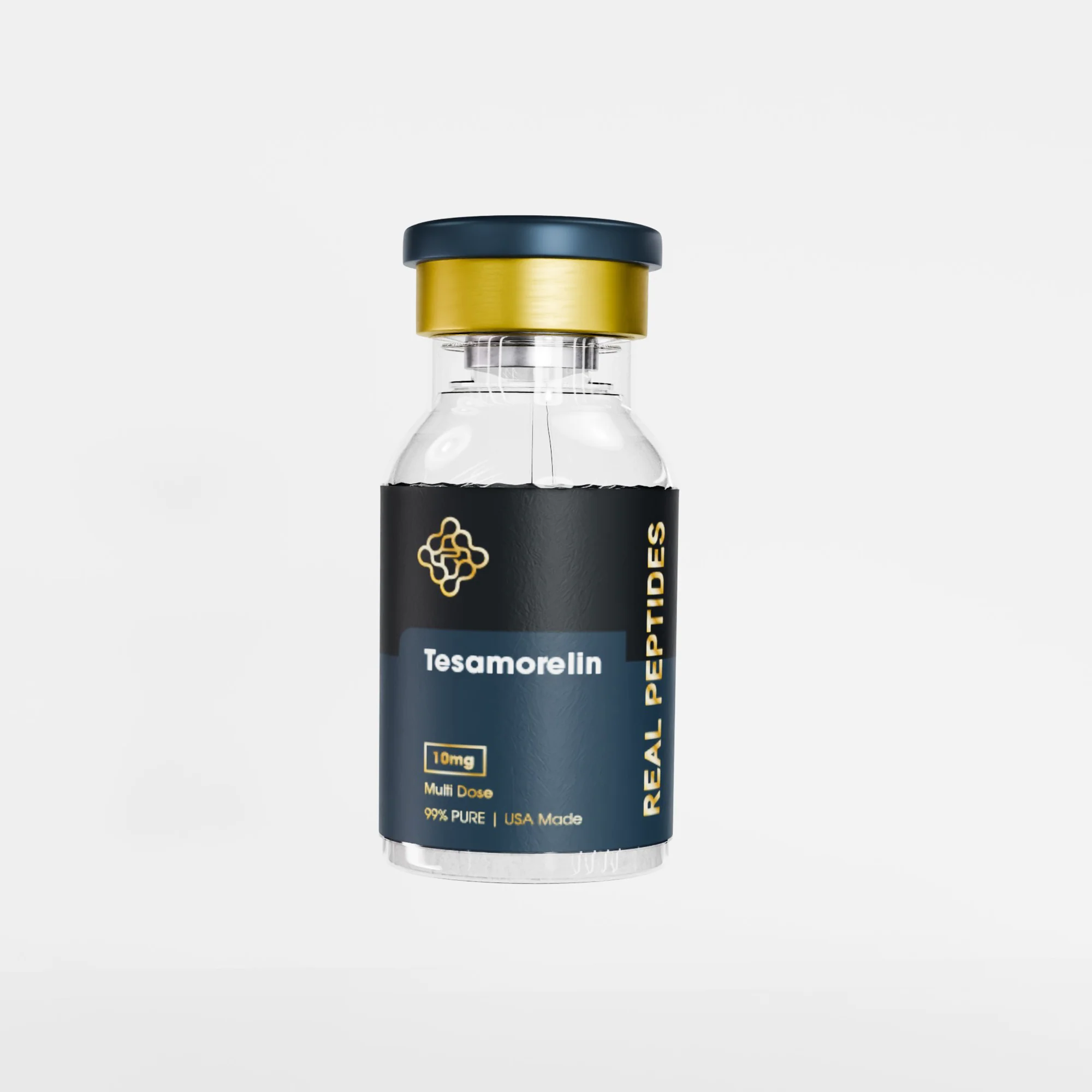
$79.99
Buy Tesamorelin Peptide 10 mg from SourceTides — research-grade synthetic GHRH analog (trans-3-hexenoyl-GHRH 1-44-NH₂) at ≥99% HPLC-verified purity. The most clinically evidenced GHRH analog available for laboratory research. Every 10 mg vial ships with a third-party batch Certificate of Analysis confirming purity, molecular identity (5,135.9 Da), and N-terminal hexenoyl modification verification. Cold-chain packaging standard. For in-vitro laboratory research use only — not for human consumption.
Buy Tesamorelin Peptide 10 mg | GHRH Analog ≥99% Purity | SourceTides
Buy Tesamorelin Peptide 10 mg from SourceTides and receive the most clinically evidenced GHRH analog available for laboratory research — supplied at ≥99% purity, confirmed by reverse-phase HPLC and mass spectrometry on every production batch. Tesamorelin is a synthetic 44-amino-acid analog of endogenous growth hormone-releasing hormone (GHRH), modified at the N-terminus with a trans-3-hexenoyl group that confers superior resistance to enzymatic degradation compared with native GHRH. It is the only GHRH-class peptide to hold FDA approval — granted in 2010 under the brand name Egrifta for the reduction of excess visceral adipose tissue (VAT) in HIV-infected patients with lipodystrophy — and the only peptide in its class backed by Phase III randomised, double-blind, placebo-controlled clinical trial data with body composition imaging endpoints.
Researchers looking to buy Tesamorelin Peptide online for preclinical or translational studies gain access to one of the most thoroughly characterised peptides in the GHRH receptor class, with a peer-reviewed evidence base spanning visceral fat reduction, non-alcoholic fatty liver disease (NAFLD), cognitive function in aging populations, and IGF-1 axis regulation. Every SourceTides Tesamorelin 10 mg vial ships with a batch-specific Certificate of Analysis (CoA) and cold-chain packaging. This product is supplied exclusively for in-vitro and laboratory research purposes only and is not approved for general human use beyond its specific FDA-approved indication.
Buy Tesamorelin Peptide 10 mg — Full Technical Specifications
Before designing any Tesamorelin research protocol, researchers need precise physicochemical and handling data. The table below consolidates all key parameters for the SourceTides Tesamorelin 10 mg vial.
| Parameter | Detail |
|---|---|
| Full Chemical Name | Trans-3-hexenoyl-GHRH(1-44)-NH₂ acetate |
| Peptide Class | GHRH analog — synthetic 44-amino-acid growth hormone-releasing hormone analog |
| N-Terminal Modification | Trans-3-hexenoyl group on Tyr-1 — protects against DPP-4 cleavage |
| Molecular Formula | C₂₂₁H₃₆₆N₇₂O₆₇S |
| Molecular Weight (free base) | 5,135.9 Daltons |
| CAS Number | 218949-48-9 |
| Receptor Target | GHRH receptor (GHRHR) on anterior pituitary somatotroph cells |
| Primary Action | Stimulates pulsatile endogenous GH secretion → hepatic IGF-1 production → lipolysis |
| Half-Life (human, SC) | ~26–38 minutes (PK studies); mean 11 min (FDA label EGRIFTA WR) |
| Purity (HPLC) | ≥99% |
| Identity Confirmation | Mass Spectrometry (MS) |
| Endotoxin Level | <1 EU/mg (LAL assay) |
| Vial Size (this listing) | 10 mg |
| Physical Form | Lyophilised (freeze-dried) white powder, sealed glass vial |
| Long-Term Storage | –20 °C (up to 24 months, sealed) |
| Short-Term Storage | 4 °C (up to 4 weeks, sealed) |
| Reconstituted Stability | 4 °C, use within 28 days; avoid light and repeated freeze-thaw |
| FDA Status | Approved (Egrifta / Egrifta WR) — HIV-associated lipodystrophy only. Research peptide supply for lab use only. |
| Also Known As | Egrifta, TH9507, GHRH analog, trans-3-hexenoyl-GHRH(1-44)-NH₂ |
| Certificate of Analysis | Third-party batch CoA included with every order |
Buy Tesamorelin Peptide Online — What Is It and Why Does the Research Matter?
Tesamorelin is a structural analog of endogenous GHRH — the hypothalamic peptide that governs the physiological pulsatile release of growth hormone from the anterior pituitary. Native GHRH has a critically short plasma half-life, degraded within minutes by the ubiquitous enzyme dipeptidyl peptidase IV (DPP-4), which cleaves the Tyr¹-Ala² N-terminal bond. This rapid clearance renders native GHRH impractical as a research tool for sustained GH-axis stimulation studies.
Tesamorelin solves this problem through N-terminal chemical modification: a trans-3-hexenoyl group is attached to the tyrosine residue at position 1, physically blocking DPP-4 access and extending plasma stability from seconds to 26–38 minutes in human pharmacokinetic studies. This is not a truncated or active-fragment peptide like TB-500 or Ipamorelin — Tesamorelin contains the complete 44-amino acid GHRH sequence, ensuring all secondary signalling pathways of the native molecule are engaged alongside the primary GHRHR-cAMP-GH secretion cascade. This completeness is why researchers describe Tesamorelin as the most “physiologically accurate” GHRH analog available for research. (NIH LiverTox — Tesamorelin drug and pharmacology profile)
When researchers want to order Tesamorelin peptide for a GH-axis study, the critical differentiator versus other GH secretagogues is the preserved negative feedback loop. Tesamorelin stimulates GH release through the natural hypothalamic–pituitary–GH (HPGH) axis, meaning somatostatin and IGF-1 feedback continue to regulate GH pulsatility. This is mechanistically distinct from synthetic GH administration, which bypasses this feedback entirely, and from ghrelin-receptor agonists (GHRPs such as Ipamorelin), which act on an entirely separate receptor pathway. This physiological preservation makes Tesamorelin an important research probe for studying endocrine regulation under controlled conditions.
Tesamorelin Peptide Mechanism of Action — GHRH Receptor to IGF-1 to Fat Metabolism
Understanding how Tesamorelin works at the receptor and downstream signalling level is essential for designing valid research protocols. The cascade operates across four linked biological layers.
GHRH Receptor Binding and cAMP Signalling
Tesamorelin binds with high affinity to the GHRH receptor (GHRHR) expressed on anterior pituitary somatotroph cells. Receptor engagement activates adenylate cyclase, elevating intracellular cyclic AMP (cAMP) by 20–25% in pituitary cell culture systems. Elevated cAMP activates protein kinase A (PKA), which phosphorylates downstream transcription factors controlling GH gene expression and exocytosis of stored GH from secretory granules. Research models document a 2–5× increase in GH secretion in rat pituitary cultures at 1–10 nM concentrations, and 3–4× amplification of pulsatile GH pulses in rodent in-vivo models. (Protide Health — Tesamorelin GHRHR signalling data)
Pulsatile GH Release and Preserved Feedback Architecture
Unlike exogenous recombinant human growth hormone (rhGH), which produces a sustained, non-physiological GH elevation that suppresses endogenous GH secretion via negative feedback, Tesamorelin stimulates pulsatile GH release that mirrors endogenous secretory patterns. Somatostatin (SRIF) from the hypothalamus continues to provide GH release inhibition, and rising IGF-1 feeds back at both the pituitary and hypothalamic levels to modulate GH pulse amplitude and frequency. Phase III clinical trial data confirmed that Tesamorelin produced mean IGF-1 increases of approximately 108 ng/mL versus minimal change with placebo, within the physiological range, without suppressing the hypothalamic-pituitary axis. This feedback preservation is a key research advantage over direct GH administration in studies examining the GH axis under naturalistic conditions. (ScienceDirect — Tesamorelin pharmacology overview)
IGF-1 Mediated Downstream Effects — Lipolysis, Anabolism and Metabolic Regulation
GH released by Tesamorelin stimulation acts on multiple peripheral tissues. In the liver, GH stimulates IGF-1 synthesis, which in turn mediates downstream anabolic and metabolic effects across target tissues. In adipose tissue, elevated GH directly activates hormone-sensitive lipase (HSL), increasing free fatty acid mobilisation from stored triglycerides — a process that in clinical research models occurs preferentially in visceral adipose tissue (VAT) (deep abdominal fat surrounding the organs) rather than subcutaneous fat. This VAT selectivity is one of Tesamorelin’s most studied and clinically documented properties, forming the basis of its FDA approval. In skeletal muscle, upregulation of myogenic markers (MyoD, myogenin) by 15–18% has been recorded in cell culture models, consistent with IGF-1’s established anabolic effects on muscle protein synthesis.
Hepatic Lipid Metabolism — NAFLD Research Pathway
Beyond adipose tissue, elevated GH and IGF-1 signalling suppresses de novo lipogenesis (DNL) in the liver — the hepatic synthesis of new fat from carbohydrate substrates — while increasing hepatic fatty acid beta-oxidation. These dual effects (reduced fat synthesis + increased fat burning) provide the mechanistic rationale for Tesamorelin’s documented effects on liver fat content in NAFLD research models, detailed below. A transcriptomic analysis of paired liver biopsy specimens from a randomised controlled trial identified differential modulation of hepatic inflammatory gene pathways and increased oxidative phosphorylation pathway expression in Tesamorelin-treated subjects versus placebo. (JCI Insight — Tesamorelin hepatic transcriptomics NAFLD 2020)
Tesamorelin Research Areas — Clinical and Preclinical Evidence Summary
Tesamorelin is unique among research peptides in that several of its research domains are supported by Phase III randomised controlled trial data, not merely animal models. The following table maps the evidence tier for each major research area.
| Research Area | Evidence Tier | Key Finding | Source |
|---|---|---|---|
| Visceral Adipose Tissue Reduction | Phase III RCT (FDA-approved indication) | ~15% VAT reduction vs. placebo over 26 weeks; consistent across pooled 806-patient analysis; improved waist circumference and triglycerides | Falutz et al. 2007 (NEJM) |
| NAFLD — Liver Fat Reduction | Phase II RCT (randomised double-blind multicentre) | Significantly reduced hepatic fat fraction vs. placebo over 12 months; prevented fibrosis progression; decreased hepatic inflammatory gene expression | PMC — Stanley et al. 2019 (Lancet HIV) |
| Cognitive Function — Executive Function & Memory | Randomised controlled trial (older adults) | Improvements in executive function and verbal memory vs. placebo in older adults with mild cognitive impairment; proposed GH/IGF-1 hippocampal mechanism | Baker et al. 2012 (Arch Neurology) |
| IGF-1 Axis Regulation | Phase III RCT; in-vitro pituitary models | Mean IGF-1 increase of ~108 ng/mL vs. placebo; 15–25% hepatic IGF-1 production increase in rodent models; pulsatile physiological GH profile preserved | ScienceDirect — Tesamorelin overview |
| Body Composition — Lean Muscle Mass | Clinical trial (HIV population; DEXA imaging) | Reduced intramuscular fat; increased muscle cross-sectional area; measured by DEXA and CT imaging endpoints | Adrian et al. 2019 (J Frailty Aging) |
| Lipid Profile Improvement | Phase III RCT data | Reductions in triglycerides, non-HDL cholesterol, and select inflammatory markers in Phase III trials | Falutz et al. 2007 (NEJM) |
| INSTI-Associated Weight Gain Research | Randomised controlled trial (2024, AIDS journal) | Tesamorelin benefits confirmed in patients on modern integrase inhibitor regimens (INSTIs); first dedicated evidence in this growing patient subgroup | PMC — McLaughlin et al. 2023/2024 |
Phase III data referenced is from FDA-approved indication (HIV-associated lipodystrophy). NAFLD, cognitive, and body composition data are from exploratory and Phase II trials. All data is provided for research context only. SourceTides supplies Tesamorelin exclusively for in-vitro laboratory research use.
Tesamorelin Peptide for Visceral Fat Research — The Phase III Evidence Base
The most extensively documented research application for Tesamorelin is visceral adipose tissue reduction. The pivotal Phase III evidence comes from two landmark trials — LIPO-010 and CTR-1011 — and their pooled analysis by Falutz and colleagues. The 2007 Phase III trial published in The New England Journal of Medicine (Falutz et al., PMID: 17636085) demonstrated statistically significant reductions in VAT measured by CT imaging, with approximately 15% reduction in VAT relative to placebo over 26-week treatment periods. The pooled analysis of 806 patients across these trials confirmed the consistency of this effect across patient subgroups, and documented concurrent improvements in trunk-to-limb fat ratios and triglyceride profiles.
What makes the Tesamorelin VAT research particularly valuable for study design is the selectivity for visceral over subcutaneous fat. CT imaging data showed that Tesamorelin preferentially targets the metabolically active VAT depot (the intra-abdominal fat that surrounds the liver, intestines, and other visceral organs and is most associated with cardiometabolic risk) rather than the relatively inert subcutaneous fat layer. This selectivity appears mechanistically linked to the higher density of GH receptors in visceral adipocytes compared with subcutaneous fat cells, making visceral fat more responsive to GH-mediated hormone-sensitive lipase activation. (FDA Prescribing Information — Egrifta WR, 2025)
Tesamorelin for NAFLD Research — Liver Fat and Fibrosis Data
Beyond its approved visceral fat indication, one of the most scientifically significant emerging Tesamorelin research domains is non-alcoholic fatty liver disease (NAFLD). A randomised, double-blind, multicentre trial (Stanley, Fourman, Grinspoon et al., published in The Lancet HIV 2019, PMID: 31611038) enrolled 61 people with HIV infection and hepatic fat fraction ≥5% by proton magnetic resonance spectroscopy. Participants were randomly assigned 1:1 to Tesamorelin 2 mg daily versus identical placebo for 12 months. Tesamorelin treatment significantly reduced liver fat content and, critically, prevented fibrosis progression — a distinction that makes it the first pharmacological strategy demonstrated to be effective against NAFLD in people with HIV. (PMC — Stanley et al. NAFLD Lancet HIV 2019)
A follow-up transcriptomic analysis of paired liver biopsy specimens (Fourman, Billingsley, Grinspoon et al., published in JCI Insight 2020, PMID: 32701508) identified specific hepatic gene pathways differentially modulated by Tesamorelin — finding significantly decreased hepatic inflammatory gene expression and increased oxidative phosphorylation pathway activity in treated subjects. This gene-level data provides mechanistic depth to the clinical liver fat outcomes and opens research questions about Tesamorelin’s potential utility in the broader general NAFLD population (a Phase II trial, NCT03375788, has investigated this). (PubMed — Fourman et al. JCI Insight 2020)
Tesamorelin Peptide and Cognitive Function Research — The GH–Brain Connection
One of the less-expected but increasingly researched Tesamorelin applications is cognitive function in aging populations. A randomised controlled trial evaluating GHRH stimulation in older adults with mild cognitive impairment (Baker et al., published in Archives of Neurology 2012, PMID: 22926095) found that the Tesamorelin-treated group demonstrated improvements in executive function and verbal memory compared with placebo.
The proposed biological mechanism involves GH/IGF-1 signalling in hippocampal neurons and prefrontal cortical circuits. GH receptors and IGF-1 receptors are expressed throughout the brain, with particularly high density in the hippocampus — the structure critical for memory formation and retrieval. Age-related decline in GH secretory amplitude (somatopause) has been associated with reduced hippocampal volume and impaired synaptic plasticity in animal models. By restoring a more youthful GH/IGF-1 pulsatile environment, Tesamorelin may support neuronal maintenance and synaptic function in aging brains — a hypothesis of significant interest in the Alzheimer’s prevention research field, where early intervention in the GH axis is an active area of investigation. (ClinicalPub — Tesamorelin cognitive and NAFLD research overview)
What Types of Research Is Tesamorelin Peptide 10 mg Most Relevant For?
Researchers across several disciplines regularly source Tesamorelin peptide for preclinical and translational models. Understanding the research context helps confirm protocol fit before ordering.
| Research Discipline | Primary Application | Why Tesamorelin |
|---|---|---|
| Metabolic Disease Research | Visceral fat biology, insulin resistance, adipose tissue metabolism | Phase III body composition data with CT/DEXA imaging; VAT-selective mechanism; GH-mediated lipolysis model |
| Hepatology & NAFLD Research | Liver fat reduction, fibrosis prevention, hepatic gene expression | Only peptide with RCT-level liver fat data in NAFLD; transcriptomic pathway data available |
| Neuroendocrinology & Aging | GH axis regulation in aging, somatopause models, cognitive decline | Full 44-AA GHRH sequence preserves all receptor signalling; feedback-intact; documented cognitive data |
| Body Composition Research | Muscle-to-fat ratio studies, lean mass, intramuscular fat | DEXA and CT-level clinical data; selectivity for visceral vs. subcutaneous fat compartments |
| Endocrinology — GHRH Receptor Studies | GHRHR signal transduction, cAMP/PKA pathway, GH pulsatility | Most complete and stable GHRH analog; GHRHR-specific (not GHSR); 2–5× GH amplification in cell culture |
| Comparative GHRH Analog Research | GHRH analog comparison studies (vs. Sermorelin, CJC-1295) | Full 44-AA reference GHRH analog with DPP-4 protection; gold-standard comparator in the GHRH class |
Tesamorelin Pharmacokinetics — Stability, Half-Life and Dosing Implications for Research
Tesamorelin’s N-terminal hexenoyl modification directly determines its pharmacokinetic profile and distinguishes it from native GHRH in practically every relevant parameter.
| PK Parameter | Native GHRH | Tesamorelin | Research Significance |
|---|---|---|---|
| DPP-4 Stability | Cleaved within seconds–minutes | Protected by N-terminal hexenoyl group | Enables sustained receptor engagement in research assays |
| Plasma Half-Life | <5 minutes | 26–38 min (clinical PK); ~11 min (FDA label, SC) | Longer window for GH stimulation per dose |
| Route (clinical) | IV research only | Subcutaneous (Phase III clinical data) | SC route practical for in-vivo rodent model dosing |
| Primary Metabolism | DPP-4 cleavage + proteolysis | Local receptor-mediated; urinary excretion | Consistent clearance; detectable by specialised assays for days post-administration |
| GH Axis Feedback | Preserved | Preserved (key advantage over rhGH) | Physiologically valid model; somatostatin & IGF-1 feedback intact |
| CYP450 Interaction | N/A | GH may modulate CYP450-mediated clearance (FDA label) | Consider when designing multi-compound research protocols involving CYP450 substrates |
Tesamorelin Peptide Side Effects and Adverse Events — What Research and Clinical Data Shows
For researchers designing Tesamorelin preclinical or translational study protocols, understanding the known adverse event profile from clinical data is important for safety endpoint selection and interpreting results. The following information is drawn from published clinical trial data and the FDA prescribing information for Egrifta — not from SourceTides product claims.
| Adverse Event (Clinical Data) | Frequency (Phase III Trials) | Proposed Mechanism | Research Notes |
|---|---|---|---|
| Arthralgia (joint pain) | Common (≥10%) | GH/IGF-1-mediated fluid shifts; connective tissue effects | Monitor joint-related endpoints in musculoskeletal models |
| Peripheral oedema | Common (≥10%) | GH-induced sodium and water retention | Fluid balance endpoints relevant in metabolic models |
| Mild hyperglycaemia / glucose elevation | Dose-dependent; monitor in diabetic populations | GH-induced insulin resistance in non-muscle tissues (counter-regulatory) | FDA primary safety endpoint in NAFLD trial was glucose; include OGTT in metabolic protocols |
| Injection site reactions | Common | Local tissue response | Rotate injection sites in animal models; document site reactions |
| No hepatotoxicity signal | Not observed (NIH LiverTox) | — | NIH LiverTox: no serum aminotransferase elevations or clinically apparent liver injury reported |
Adverse event data sourced from FDA Egrifta prescribing information and NIH LiverTox database. This data describes clinical findings from the FDA-approved human indication only. SourceTides supplies Tesamorelin for in-vitro laboratory research use only — not for human administration.
⚠️ Important: Tesamorelin is contraindicated in the clinical setting in individuals with active malignancy, disruption of the hypothalamic-pituitary axis due to trauma, surgery, or radiation, and in pregnancy/breastfeeding. Researchers designing animal studies should incorporate appropriate safety monitoring endpoints. SourceTides supplies this compound exclusively for qualified researchers for in-vitro laboratory use only.
High-Purity Tesamorelin Peptide for Sale — SourceTides Quality Control
Tesamorelin is a 44-amino-acid peptide — considerably larger and more structurally complex than shorter research peptides. Synthesis of a full 44-residue sequence requires stringent SPPS (solid-phase peptide synthesis) protocols and rigorous purification to remove deletion sequences, truncation variants, and racemisation by-products that are more prevalent in longer peptide chains. The hexenoyl N-terminal modification adds an additional verification requirement — confirming correct N-terminal acylation by mass spectrometry is essential, as an unmodified or incorrectly acylated N-terminus would lack DPP-4 resistance.
| QC Stage | Method | Specification | Tesamorelin-Specific Note |
|---|---|---|---|
| Purity Assay | Reverse-Phase HPLC | ≥99% | Separates full-length Tesamorelin from deletion/truncation sequences common in 44-AA synthesis |
| Identity Confirmation | Mass Spectrometry (MS) | Exact MW match (5,135.9 Da) | Verifies correct trans-3-hexenoyl N-terminal modification; confirms no unmodified GHRH contamination |
| Endotoxin Testing | LAL Assay | <1 EU/mg | LPS independently stimulates GH release via cytokine signalling — confounders GHRHR assay results |
| Batch Traceability | Third-Party Lab CoA | Included with every order | Essential for publication methodology; confirms N-terminal modification at lot level |
| Cold-Chain Packaging | Insulated + cold packs | ≤4 °C in transit | Large peptides more susceptible to aggregation at elevated temperatures during shipping |
Tesamorelin Peptide Regulatory and Legal Status — 2025 Overview
✅ FDA-Approved Drug (Egrifta): Tesamorelin holds FDA approval for one specific indication: reduction of excess abdominal fat in HIV-infected patients with lipodystrophy. This is the only approved use. SourceTides supplies research-grade Tesamorelin peptide for in-vitro laboratory research only — not as the approved drug product.
| Jurisdiction | Status (2025) | Notes |
|---|---|---|
| USA | FDA-approved (Egrifta/Egrifta WR) for HIV lipodystrophy only | Research-grade supply for lab use is legal; it is not a controlled/scheduled substance |
| Australia | Prescription medicine; TGA oversight | Not TGA-approved as a standard therapy; prescription required for lawful importation |
| United Kingdom | Not MHRA-approved; research use only | Verify MHRA status before ordering; not available as licensed medicine in the UK |
| Canada | Approved in Canada (Theratechnologies Inc.); research grade separate | Research peptide import governed by Health Canada regulations |
| EU | Not EMA-approved; research use | Member-state rules vary; verify nationally |
| WADA | Prohibited at all times (WADA Prohibited List, GH and related substances class) | GHRH analogs are listed as prohibited. Athletes subject to WADA code must not use Tesamorelin in any form |
View SourceTides’ full shipping and compliance policy.
Buy Tesamorelin Peptide vs. Other GHRH Analogs and GH Secretagogues — Research Comparison
| Peptide | Type | Receptor | Evidence Tier | SourceTides |
|---|---|---|---|---|
| Tesamorelin | 44-AA GHRH analog (N-terminal hexenoyl) | GHRHR | FDA-approved; Phase III RCTs; NAFLD Phase II | This product |
| Sermorelin | 29-AA GHRH(1-29) fragment analog | GHRHR | Clinical data; shorter, less complete GHRH sequence | Sermorelin at SourceTides |
| CJC-1295 | 30-AA GHRH analog with DAC modification | GHRHR | Preclinical and Phase I; very long t½ due to albumin binding | CJC-1295 at SourceTides |
| Ipamorelin | 5-AA GHRP (ghrelin mimetic) | GHSR (ghrelin receptor) | Preclinical; complementary GHSR mechanism to GHRHR | Ipamorelin at SourceTides |
| MOTS-c | 16-AA mitochondria-derived peptide | AMPK (via AICAR) | Preclinical; metabolic regulation; different GH-independent pathway | MOTS-c at SourceTides |
Tesamorelin Peptide Peer-Reviewed Research References
| # | Authors / Year | Journal | Topic | Link |
|---|---|---|---|---|
| 1 | Falutz et al. (2007) | N Engl J Med | Pivotal Phase III — VAT reduction in HIV lipodystrophy; FDA approval basis | PubMed |
| 2 | Stanley et al. (2019) | Lancet HIV / PMC | NAFLD RCT — liver fat reduction and fibrosis prevention over 12 months | PMC |
| 3 | Fourman et al. (2020) | JCI Insight | NAFLD hepatic transcriptomics — inflammatory gene pathways, oxidative phosphorylation | PubMed |
| 4 | Baker et al. (2012) | Arch Neurology | Cognitive function RCT — executive function and verbal memory improvements in older adults | PubMed |
| 5 | McLaughlin et al. (2024) | Open Forum Infect Dis / PMC | Tesamorelin in INSTI-treated HIV — VAT and liver fat reduction confirmed with modern ART | PMC |
| 6 | Adrian et al. (2019) | J Frailty Aging | Muscle fat reduction and muscle area increase in HIV adults | PubMed |
| 7 | FDA Prescribing Info (2025) | FDA.gov | Egrifta WR full prescribing info — PK, safety, contraindications, AUC, t½ data | FDA.gov |
| 8 | NIH LiverTox (2018) | NCBI Bookshelf | Tesamorelin drug profile — hepatotoxicity review, pharmacology summary | NCBI |
| 9 | ScienceDirect Topics | ScienceDirect | Tesamorelin — pharmacology, mechanism, NAFLD and lipodystrophy applications | ScienceDirect |
Frequently Researched Alongside Tesamorelin — SourceTides GH-Axis Peptide Catalogue
Researchers studying the GHRH–GH–IGF-1 axis or body composition biology often need complementary peptides for comparison or combination protocols. The SourceTides catalogue covers the full GH secretagogue class:
- Sermorelin (GHRH 1-29) — Shorter GHRH analog; commonly used in comparative GHRHR activation studies
- CJC-1295 — Long-acting GHRH analog with DAC modification; extended GH pulse duration research
- Ipamorelin — Selective GHSR agonist; dual-receptor GH axis research when combined with GHRH analogs
- MOTS-c — Mitochondria-derived exercise mimetic; metabolic research complement to Tesamorelin’s visceral fat work
- BPC-157 — GI mucosal protection and musculoskeletal repair research peptide
- Browse All Research Peptides — Full SourceTides catalogue
Frequently Asked Questions — Buy Tesamorelin Peptide 10 mg
Where can I buy Tesamorelin Peptide 10 mg online with a verified Certificate of Analysis?
You can buy Tesamorelin Peptide 10 mg online directly from SourceTides. Every vial ships with a batch-specific CoA from a third-party ISO-accredited laboratory confirming ≥99% purity by HPLC and exact molecular identity (5,135.9 Da including N-terminal hexenoyl modification) by mass spectrometry, alongside endotoxin levels below 1 EU/mg. The CoA confirms correct N-terminal acylation — a critical verification for Tesamorelin since an unmodified GHRH sequence would lack DPP-4 resistance and perform differently in GH secretion assays. Request any batch CoA before ordering from our research support team.
What is Tesamorelin peptide used for in research?
Tesamorelin is used in research to study: (1) GHRH receptor signal transduction and pulsatile GH secretion in pituitary cell models; (2) visceral adipose tissue (VAT) biology and GH-mediated lipolysis — using the same mechanism that produced Phase III clinical trial VAT reductions; (3) non-alcoholic fatty liver disease (NAFLD) hepatic fat and fibrosis models, informed by the Stanley et al. 2019 RCT showing liver fat reduction and fibrosis prevention over 12 months; (4) cognitive function and GH/IGF-1 signalling in the aging brain; (5) body composition outcomes — lean muscle mass and intramuscular fat in metabolic models. It is the most evidence-backed GHRH analog available for research, with Phase III RCT data covering multiple endpoints. View product page.
How does Tesamorelin differ from Sermorelin and CJC-1295?
All three are GHRH receptor agonists, but they differ significantly in sequence length, stability, and evidence base. Tesamorelin contains the complete 44-amino-acid GHRH sequence with a trans-3-hexenoyl N-terminal modification for DPP-4 resistance — the most complete GHRH analog available. Sermorelin is a 29-amino-acid fragment (GHRH 1-29) and lacks the C-terminal residues present in Tesamorelin. CJC-1295 is a 30-AA modified GHRH analog incorporating the Drug Affinity Complex (DAC) — a lysine modification that enables albumin binding, extending its half-life to days but altering its pulsatile GH profile. Tesamorelin has the deepest clinical evidence base (FDA approval; Phase III RCTs with CT/DEXA endpoints; NAFLD Phase II trial), making it the strongest research-context comparator. See the GHRH comparison table above. Explore Sermorelin and CJC-1295 at SourceTides.
What is the half-life of Tesamorelin and how does it affect research protocol design?
The mean elimination half-life (t½) of Tesamorelin is approximately 11 minutes following single-dose subcutaneous administration in the FDA prescribing data for Egrifta WR, with a wider range of 26–38 minutes reported in clinical pharmacokinetic studies depending on dose and assay methodology. This short-to-moderate half-life has direct implications for research protocols: it means Tesamorelin produces a GH pulse window rather than a sustained elevation — which is physiologically important (mirroring the endogenous pulsatile GH pattern) and limits the window for downstream IGF-1 and tissue effect measurement. In-vivo rodent studies typically dose once daily subcutaneously to recapitulate the single daily clinical dosing used in Phase III trials. In pituitary cell culture models, dosing at 1–10 nM produces measurable cAMP and GH secretion responses within 30–60 minutes. The CYP450 interaction potential should also be factored in when designing multi-compound protocols. (FDA Egrifta WR prescribing information 2025)
Is Tesamorelin legal to buy online in the USA, UK, Australia, or Canada?
In the USA, Tesamorelin is FDA-approved for one specific clinical indication (HIV lipodystrophy) but is not a federally scheduled controlled substance; research-grade supply for laboratory use is not specifically prohibited. In Canada, Theratechnologies Inc. holds approval for the drug product; research peptide importation is subject to Health Canada regulations. In Australia, prescription medicine classification applies; importation without appropriate authorisation is prohibited. In the UK, it is not an MHRA-licensed medicine and MHRA oversight may apply. In the EU, it is not EMA-approved; member-state rules govern research importation. WADA prohibits GHRH analogs at all times — athletes in WADA-code sports must not use Tesamorelin in any form. SourceTides ships exclusively to qualified researchers and institutions. View our full compliance policy.
What side effects does Tesamorelin show in clinical research data?
Phase III clinical trial data and the FDA prescribing information document the following common adverse events: arthralgia (joint pain, ≥10%), peripheral oedema (fluid retention, ≥10%), mild glucose elevation (dose-dependent; glucose was the FDA’s primary safety endpoint in the NAFLD trial), and injection site reactions. Importantly, NIH LiverTox reports no serum aminotransferase elevations or clinically apparent liver injury associated with Tesamorelin in clinical use — a relevant finding for NAFLD researchers. GH-axis effects (fluid retention, glucose counter-regulation) are class effects common to all GH secretagogues and are mechanistically expected from GHRHR activation. Researchers designing safety endpoints for Tesamorelin preclinical models should include glucose/insulin tolerance testing, body weight, and fluid balance markers at minimum. All adverse event data is from the FDA-approved human clinical indication; SourceTides supplies this compound for in-vitro laboratory research only.
Does Tesamorelin affect only visceral fat or subcutaneous fat as well?
Phase III CT imaging data demonstrates that Tesamorelin’s fat-reducing effects are selective for visceral adipose tissue (VAT) — the deep intra-abdominal fat depot surrounding the internal organs — rather than subcutaneous fat. This VAT selectivity is a consistent finding across Phase III trials and is mechanistically attributed to the higher density of growth hormone receptors in visceral adipocytes compared with subcutaneous fat cells, making visceral fat more responsive to GH-mediated hormone-sensitive lipase (HSL) activation and subsequent free fatty acid mobilisation. This selectivity is one of Tesamorelin’s most important research properties for metabolic disease models where VAT reduction specifically, rather than total body fat reduction, is the primary endpoint of interest. Order Tesamorelin Peptide 10 mg at SourceTides.
Can Tesamorelin be studied together with Ipamorelin in a dual-receptor GH axis protocol?
Tesamorelin (GHRHR agonist) and Ipamorelin (GHSR-1a agonist — ghrelin receptor) target two independent receptor pathways that converge to stimulate GH release from pituitary somatotrophs. This complementary dual-receptor mechanism is the basis for the synergistic GH pulse amplification documented in the dual-receptor research literature. Combining a GHRH analog like Tesamorelin with a GHRP like Ipamorelin in a preclinical model addresses a fundamentally different research question to either compound alone — measuring the combined GHRHR + GHSR effect on GH pulsatility and downstream IGF-1 responses. Both compounds are available at SourceTides: Ipamorelin product page. All multi-compound protocols require institutional ethics approval and compliance with all applicable research regulations.
How should I store Tesamorelin Peptide 10 mg to maintain stability?
Lyophilised Tesamorelin should be stored at –20 °C for long-term preservation (up to 24 months, sealed vial). At 4 °C in a sealed vial, short-term storage of up to 4 weeks is acceptable for protocols requiring frequent access. Once reconstituted with bacteriostatic water, store the peptide solution at 4 °C, protect from light, and use within 28 days. Avoid repeated freeze-thaw cycles — Tesamorelin’s 44-residue length makes it more susceptible to aggregation during repeated thermal cycling than shorter peptides. SourceTides ships all Tesamorelin orders with insulated cold-pack packaging as standard. If vials appear to have experienced temperature excursion during transit, contact our team before reconstituting.
What payment methods does SourceTides accept for Tesamorelin orders?
SourceTides accepts Visa, Mastercard, American Express, cryptocurrency (Bitcoin, Ethereum, major stablecoins), and bank transfer for institutional purchase orders. All card transactions process through a PCI-DSS compliant gateway with 256-bit SSL encryption. Universities, research hospitals, and registered laboratories can request institutional invoicing with net-30 payment terms on approved accounts. Proceed to secure checkout or contact us for institutional invoicing.
buy tesamorelin peptide, tesamorelin 10mg, tesamorelin for sale, buy tesamorelin peptide 10 mg, tesamorelin peptide online, tesamorelin GHRH analog, tesamorelin research peptide, order tesamorelin peptide, tesamorelin USA, tesamorelin CoA, tesamorelin high purity, tesamorelin lyophilised, buy GHRH analog online, tesamorelin UK
Related products
Fat Loss & Metabolic Support Peptides
SLU-PP-332 (Sloop) Online USA — High-Purity ERR Pan-Agonist Research Compound
Fat Loss & Metabolic Support Peptides
AOD-9604 Peptide Online | HGH Fragment 176-191 | ≥99% Purity | CoA Included | SourceTides
Growth Hormone Modulators Peptides
Sermorelin Peptide 10 mg Online | GHRH(1-29) | ≥99% Purity | CoA Included | SourceTides
Peptides by Goal
GHK-Cu Cosmetic Peptide (Copper Tripeptide-1; Topical & Formulation Research Grade)
Fat Loss & Metabolic Support Peptides
MOTS-c Peptide Online | 10 mg Research Grade ≥99% Purity | SourceTides