
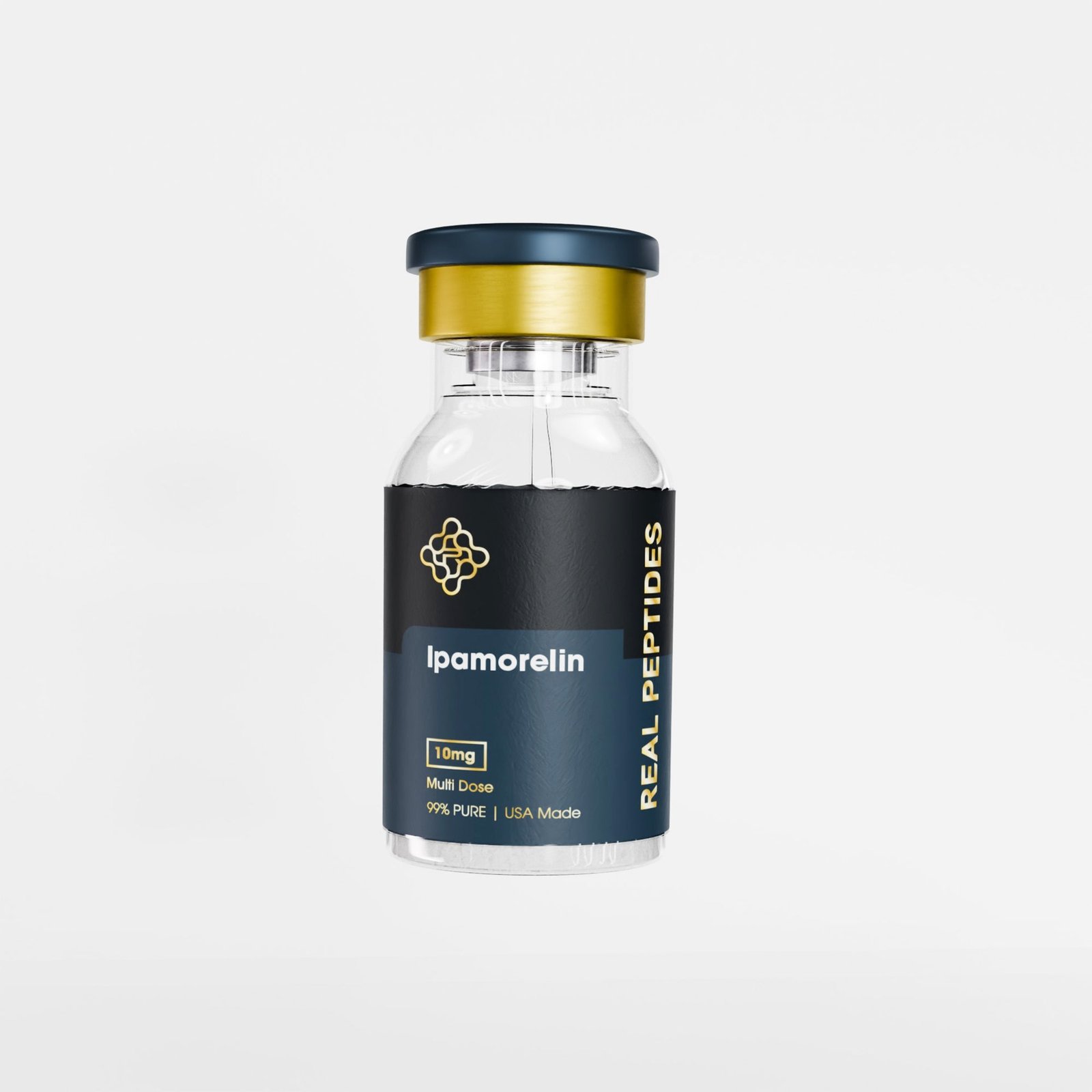
$44.99
Buy Ipamorelin Peptide 10 mg Online from SourceTides. CAS 170851-70-4 | Aib-His-D-2-Nal-D-Phe-Lys-NH₂ | MW 711.85 g/mol | ≥99% HPLC purity | Endotoxin <1 EU/mg (LAL) | Full CoA included | Lyophilised | Cold-chain dispatch. Selective GHS-R1a agonist. No cortisol or ACTH elevation. WADA S2 prohibited. For in-vitro laboratory research use only. Not for human consumption.
Buy Ipamorelin Peptide 10 mg Online | ≥99% Purity | CoA Included | SourceTides
Buy Ipamorelin Peptide 10 mg Online from SourceTides.
Ipamorelin (CAS 170851-70-4) is a synthetic five-amino-acid peptide that selectively stimulates growth hormone release.
It is the first GH secretagogue shown to raise GH without also raising cortisol or ACTH.
Every SourceTides vial is lyophilised, tested at ≥99% HPLC purity, and ships with a full Certificate of Analysis.
For in-vitro laboratory research use only. Not for human consumption.
Ipamorelin 10 mg — Technical Specifications
| Parameter | Specification |
|---|---|
| INN / Name | Ipamorelin |
| Development Code | NNC 26-0161; NNC-26-0161 |
| CAS Number | 170851-70-4 |
| Molecular Formula | C₃₈H₄₉N₉O₅ |
| Molecular Weight | 711.85 g/mol |
| Peptide Length | 5 amino acids (pentapeptide); C-terminal amide |
| Sequence | Aib-His-D-2-Nal-D-Phe-Lys-NH₂ |
| Structural Notes | Contains alpha-aminoisobutyric acid (Aib) at position 1; D-2-naphthylalanine (D-2-Nal) at position 3; D-phenylalanine (D-Phe) at position 4 — all non-natural residues for receptor selectivity and stability |
| Derived From | GHRP-1 (Growth Hormone-Releasing Peptide-1); developed by Novo Nordisk A/S |
| Receptor Target | GHS-R1a (ghrelin receptor) on anterior pituitary somatotrophs |
| Selectivity | GH release only; no significant ACTH, cortisol, prolactin, FSH, LH, or TSH elevation even at 200× the GH-releasing ED50 (Raun et al. 1998) |
| Plasma Half-Life | ~2 hours (human IV PK study; Gobburu et al. 1999) |
| GH Peak | ~40 minutes post-dose in human PK-PD study |
| Clearance / Vd | CL: 0.078 L/h/kg; Vd(ss): 0.22 L/kg (Gobburu et al. 1999) |
| Solubility | Freely soluble in sterile water; soluble in PBS pH 7.4 and DMSO; 1 mg/mL stock in water recommended |
| Physical Form | White lyophilised powder |
| Purity | ≥99% (RP-HPLC); identity confirmed by ESI-MS |
| Endotoxin | <1 EU/mg (LAL chromogenic assay) |
| Storage — Lyophilised | −20°C long-term; 2–8°C short-term (up to 4 weeks); protect from light and moisture |
| Storage — Reconstituted | 2–8°C for up to 7 days; −20°C for longer storage; avoid freeze-thaw cycles |
| Certificate of Analysis | Lot-specific CoA with every order; includes HPLC chromatogram, MS data, and endotoxin result |
| Regulatory Status | Not FDA, EMA, TGA, or Health Canada approved; research compound only; placed on FDA 503B Category 2 list (2023) for compounded preparations |
| WADA Status | Prohibited — listed as a Growth Hormone Releasing Peptide under the WADA Prohibited List (S2 category) |
What Is Ipamorelin?
Ipamorelin is a synthetic five-amino-acid peptide. It belongs to the growth hormone secretagogue (GHS) class. GHS compounds trigger the pituitary gland to release growth hormone (GH). Ipamorelin was discovered by Novo Nordisk A/S in Denmark and first described by Raun et al. in 1998.
What makes Ipamorelin stand out is its selectivity. Most GH secretagogues also raise cortisol, ACTH, and prolactin. Ipamorelin does not. Even at doses more than 200 times the effective GH-releasing dose, it does not raise cortisol or ACTH above baseline. This makes it a precise research tool for studying GH axis signalling in isolation.
Ipamorelin works by binding the ghrelin receptor (GHS-R1a) on pituitary cells. This triggers a short, clean pulse of GH — similar to the natural GH pulses the body produces. Researchers use it to study the GH axis, bone growth, gastric motility, and body composition. Its small size (711.85 g/mol) and well-defined pharmacokinetics make it easy to work with in both cell culture and animal models.
When you buy Ipamorelin Peptide 10 mg from SourceTides, you get ≥99% HPLC-verified purity with a full Certificate of Analysis on every order.
How Ipamorelin Works — Mechanism of Action
Ipamorelin acts through three well-defined steps. Each step has been confirmed in peer-reviewed studies.
Step 1: GHS-R1a Receptor Binding
Ipamorelin binds the GHS-R1a receptor. This receptor sits on the surface of somatotroph cells in the anterior pituitary. It is the same receptor that the hunger hormone ghrelin activates. When Ipamorelin binds, it acts as a selective agonist — it activates the receptor cleanly and specifically.
The non-natural amino acids in Ipamorelin’s sequence (Aib, D-2-Nal, D-Phe) are key to this selectivity. They lock the peptide into the receptor’s binding pocket in a way that activates GH release pathways but not the stress hormone pathways that other GHRPs trigger. This was the main finding of the landmark 1998 Raun et al. paper in the European Journal of Endocrinology (PMID: 9849822).
Step 2: cAMP Cascade and GH Pulse
After GHS-R1a activation, the cell runs a cAMP signalling cascade. This is a standard Gs-protein pathway. Adenylate cyclase converts ATP to cAMP. cAMP then activates protein kinase A (PKA). PKA triggers the exocytosis of GH-containing vesicles. The result is a single, clear GH pulse.
In the human PK-PD study by Gobburu et al. (1999), this GH pulse peaked at around 40 minutes after IV infusion. It then declined exponentially. Ipamorelin itself had a half-life of about 2 hours in that study. The GH pulse was dose-proportional. Higher doses produced larger GH peaks.
Step 3: Preserved Feedback and No Cortisol Spike
After Ipamorelin triggers a GH pulse, the body’s own negative feedback kicks in. Rising GH and IGF-1 levels stimulate somatostatin release from the hypothalamus. Somatostatin then quiets further GH release. This keeps GH levels in a physiological range. It prevents the runaway GH elevation seen with direct GH injections.
Critically, Ipamorelin does not activate the hypothalamic-pituitary-adrenal (HPA) axis. GHRP-2 and GHRP-6 both raise cortisol and ACTH. Ipamorelin does not — even at very high doses. This is because Ipamorelin’s unique structure steers it away from the ACTH-releasing pathway entirely. For researchers, this means any cortisol changes seen in an experiment are not caused by Ipamorelin. That keeps the data clean.
Step 4: Downstream IGF-1 Effects
The GH pulse triggered by Ipamorelin travels to the liver. There, GH binds the GH receptor and activates the JAK2-STAT5 pathway. This drives IGF-1 production and secretion. IGF-1 then acts on muscle, bone, and fat cells through its own receptor (IGF-1R). It stimulates protein synthesis, bone mineralisation, and fat breakdown. These downstream effects are the biological basis for Ipamorelin’s use in bone, body composition, and recovery research.
Ipamorelin Research Evidence
| Research Area | Evidence Level | Key Finding | Source |
|---|---|---|---|
| GH Selectivity | In vivo (rat); first published characterisation | Ipamorelin raised GH without raising ACTH or cortisol, even at 200× the GH-releasing ED50. First selective GHRP-receptor agonist reported. | Raun et al. 1998 — Eur J Endocrinol (PubMed) |
| Human Pharmacokinetics | Randomised, placebo-controlled, dose-escalation study in healthy male volunteers (n=48) | Half-life ~2 hours; GH peak at ~40 min; dose-proportional PK; clean single-episode GH pulse confirmed in humans | Gobburu et al. 1999 — Pharm Res (PubMed) |
| Longitudinal Bone Growth | In vivo (adult female rats); 15-day SC dosing | Dose-dependent increase in bone growth rate (42→52 µm/day, p<0.0001); body weight gain also increased; no change in IGFBPs or bone resorption markers | Johansen et al. 1999 — Growth Horm IGF Res (PubMed) |
| Bone Mineral Content | In vivo (adult female rats) | Ipamorelin and GHRP-6 both increased bone mineral content; Ipamorelin-treated animals showed improved bone density parameters | Svensson et al. 2000 — J Endocrinol (PubMed) |
| Glucocorticoid-Induced Bone Loss | In vivo (adult female rats; 3 months) | Ipamorelin reversed glucocorticoid-induced decreases in bone formation and muscle tetanic tension; periosteal bone formation rate increased 4-fold vs GC alone | Andersen et al. 2001 — Growth Horm IGF Res (PubMed) |
| Postoperative Ileus (GI Motility) | Phase 2 RCT in humans (n=114; bowel resection patients) | Well tolerated at 0.03 mg/kg IV twice daily for 7 days; median time to first solid meal: 25.3 h (Ipamorelin) vs 32.6 h (placebo); difference not statistically significant (p=0.15) | Beck et al. 2014 — Int J Colorectal Dis (PubMed) |
| Body Composition / Hypogonadal Males | Review of clinical evidence (2020) | GH secretagogues including Ipamorelin improve lean mass and reduce fat in hypogonadal men; useful complement to testosterone replacement therapy | Sinha et al. 2020 — Transl Androl Urol (PMC) |
| GI Motility Mechanism | In vivo (rodent postoperative ileus model) | Ipamorelin accelerated gastric emptying via GHS-R1a on cholinergic excitatory neurons in the gut; dose-dependent effect on gastric contractility | Beck et al. 2014 (PubMed) |
Ipamorelin GH Selectivity: The Key Research Advantage
Selectivity is the most important property that sets Ipamorelin apart from other GH secretagogues. Here is why it matters for research.
Earlier GHRPs like GHRP-2 and GHRP-6 activate the pituitary to release GH, but they also activate the hypothalamic-pituitary-adrenal (HPA) axis. This raises cortisol and ACTH at the same time. When you use these peptides in an experiment, you cannot be sure which effects come from GH and which come from cortisol. Cortisol is catabolic. It breaks down muscle, suppresses immune function, and raises blood glucose. Any experiment using GHRP-2 or GHRP-6 has to account for these confounding hormonal changes.
Ipamorelin solves this problem. In the pivotal 1998 Raun study, rat plasma ACTH and cortisol levels did not rise above baseline even when Ipamorelin was dosed at more than 200 times the amount needed to trigger GH release. This was confirmed in the human PK-PD study by Gobburu et al. (1999). The GH pulse was clean and isolated.
This matters practically. A researcher studying the effect of GH on muscle protein synthesis can use Ipamorelin and be confident that any changes in protein synthesis come from the GH pulse — not from a simultaneous cortisol spike. This level of experimental precision is what makes Ipamorelin the preferred tool compound for GH axis research.
Ipamorelin vs Other GH Secretagogues — Selectivity Comparison
| Compound | Receptor | Raises GH? | Raises Cortisol/ACTH? | Raises Prolactin? | SourceTides |
|---|---|---|---|---|---|
| Ipamorelin | GHS-R1a | Yes | No | No | Buy Ipamorelin |
| GHRP-2 | GHS-R1a | Yes | Yes | Yes | Buy GHRP-2 |
| GHRP-6 | GHS-R1a | Yes | Yes | No | Buy GHRP-6 |
| Sermorelin | GHRH-R | Yes | No | No | Buy Sermorelin |
| CJC-1295 | GHRH-R | Yes (sustained) | No | No | Buy CJC-1295 |
| MK-677 | GHS-R1a (oral) | Yes (sustained) | Mild increase | Mild increase | Buy MK-677 |
What Is Ipamorelin Used for in Research?
| Research Field | Application | Why Ipamorelin |
|---|---|---|
| Endocrinology | GHS-R1a signalling; pituitary GH secretion assays; cAMP dose-response | Cleanest GHS-R1a agonist available; no cortisol confounding; ideal positive control |
| Bone Biology | Longitudinal bone growth; bone mineral density; glucocorticoid bone-loss models | Published dose-response data for bone growth in rats; shown to reverse steroid-induced bone loss |
| GI / Surgery Research | Postoperative ileus; gastric motility; GHS-R1a in gut tissue | Phase 2 human trial data published (Beck et al. 2014); GHS-R1a expression in gut well-documented |
| Ageing Research | Somatopause; age-related GH decline; body composition in aged models | Restores GH pulsatility without HPA activation; well-suited to ageing study designs needing clean hormonal readouts |
| Body Composition | Lean mass vs fat mass; GH-driven lipolysis; IGF-1-mediated protein synthesis | GH pulse drives lipolysis in adipocytes and protein synthesis in muscle via IGF-1; no cortisol interference with results |
| Drug Combination Studies | Synergistic GH release when paired with GHRH agonists (Sermorelin, CJC-1295) | Acts on GHS-R1a; GHRH agonists act on GHRH-R; dual-axis stimulation is additive; a standard pairing in research protocols |
| Peptide Pharmacology | Non-natural amino acid effects on receptor selectivity; structure-activity relationships | Aib, D-2-Nal, and D-Phe residues are classic non-natural modifications; Ipamorelin is a teaching model for how structure drives selectivity |
Ipamorelin Pharmacokinetics
| Parameter | Value | Research Implication |
|---|---|---|
| Half-Life (IV, human) | ~2 hours (terminal half-life; Gobburu et al. 1999) | Short half-life means plasma levels fall quickly; GH response window is the key measurement period (0–120 min post-dose) |
| GH Peak Timing | ~40 minutes post-dose (human) | Blood samples for GH assay should be collected at 15, 30, 45, 60, 90, and 120 minutes post-administration |
| PK Dose-Proportionality | Confirmed across 5 dose levels in human study | Doubling the dose doubles the exposure; linear PK simplifies dose-response experiment design |
| Clearance (CL) | 0.078 L/h/kg | Moderate clearance; primarily via peptidase degradation and renal filtration |
| Volume of Distribution (Vd,ss) | 0.22 L/kg | Low Vd; largely confined to the plasma compartment; limited tissue distribution |
| Nasal Bioavailability | Low (studied by Novo Nordisk; not viable route) | SC or IV routes are standard for in-vivo models; nasal route not recommended for research protocols |
| In-Vitro Working Range | 0.1 nM – 100 nM (cell-based GH secretion assays) | Start with a 10-point dose-response curve (0.1 nM – 10 µM) to establish full GHS-R1a cAMP activation curve in your cell model |
| In-Vivo Animal Dose | 18–450 µg/day SC (rat; Johansen et al. 1999); 0.03 mg/kg IV (human Phase 2 trial) | Published dose-response data for rat bone growth experiments; Phase 2 human data at 0.03 mg/kg IV twice daily provides validated clinical reference dose |
Ipamorelin Side Effects and Safety Data
| Adverse Event | Reported Rate | Source | Protocol Note |
|---|---|---|---|
| Any treatment-emergent AE (human Phase 2) | 87.5% Ipamorelin vs 94.8% placebo — AE rate was lower with Ipamorelin than placebo | Beck et al. 2014 | The study population was post-surgical; the high AE rate reflects surgery, not the peptide |
| Injection site reactions | Mild; transient | Clinical experience; preclinical data | Rotate injection sites in animal studies; standard SC monitoring applies |
| Headache / mild dizziness | Occasional; mild; transient | Post-market data | Not reported at elevated rates vs placebo in Phase 2; likely GH-mediated vasodilatory effect |
| No cortisol / ACTH elevation | Confirmed absent even at 200× GH ED50 | Raun et al. 1998; Gobburu et al. 1999 | Key safety differentiator vs GHRP-2 and GHRP-6; no HPA axis activation |
| No prolactin / FSH / LH / TSH elevation | Confirmed absent in preclinical studies | Raun et al. 1998 | Unlike GHRP-6 (prolactin rise) and GHRP-2 (ACTH/cortisol rise) |
| Theoretical IGF-1-related risks (at high chronic doses) | Theoretical; no direct Ipamorelin evidence; class-level GH concern | GH-class literature | Monitor IGF-1 as a pharmacodynamic readout in chronic in-vivo experiments; pulsatile GH limits but does not eliminate this risk |
| WADA prohibition | Prohibited in-competition and out-of-competition (S2) | WADA Prohibited List 2024 | Sport science researchers must account for this in study design |
Ipamorelin Quality Control at SourceTides
Every batch of Ipamorelin Peptide 10 mg from SourceTides goes through the following tests before release.
| Test | Method | Specification | Why It Matters |
|---|---|---|---|
| Purity | RP-HPLC (C18 column; UV 220 nm) | ≥99% | Impurities at this structural level can activate GHS-R1a partially or differently; ≥99% ensures clean pharmacology |
| Identity | ESI-MS (expected MW 711.85 Da) | Confirmed [M+H]⁺ = 712.86 Da | Confirms all five residues are correct, including D-configured amino acids |
| Endotoxin | LAL chromogenic assay | <1 EU/mg | LPS contamination activates inflammatory pathways that confound GH secretion and pituitary cell assay data |
| Appearance | Visual inspection | White powder; no clumping or discolouration | Any yellowing or caking can indicate degradation |
| Moisture | Karl Fischer titration | <5% w/w | Low moisture extends shelf life and prevents hydrolytic degradation in storage |
| Cold-Chain Shipping | Dry-ice; temperature-logged transit | ≤−20°C throughout | Maintains lyophilised peptide integrity from dispatch to your lab |
| Certificate of Analysis | Lot-specific PDF document | HPLC trace + MS data + endotoxin result + dates | Required for journal submission traceability and GLP research environments |
Ipamorelin Regulatory Status
| Jurisdiction | Status | Notes |
|---|---|---|
| USA (FDA) | Not approved; Category 2 list (503B compounding; 2023); research chemical status | Not a DEA controlled substance. FDA placed Ipamorelin on the 503B Category 2 list in October 2023, restricting compounded preparations. Research-grade supplied for laboratory use only. |
| Australia (TGA) | Not listed on ARTG; unapproved therapeutic good | Research laboratory access only. Not for personal importation as a therapeutic product. |
| United Kingdom (MHRA) | Unlicensed; not a controlled drug; research compound | No MHRA marketing authorisation. Not listed under the Misuse of Drugs Act 1971. Research compound status applies. |
| Canada (Health Canada) | Unapproved new drug; research access only | Not a CDSA controlled substance. Not authorised for sale as a supplement or drug. |
| European Union (EMA) | No EMA marketing authorisation; research use | No authorised medicinal product in any EU member state. Research compound status. |
| WADA | Prohibited — S2 (Growth Hormone Releasing Peptides); banned in-competition and out-of-competition | Ipamorelin is explicitly prohibited under the WADA Prohibited List. Sport scientists must account for this status. Research laboratory use does not constitute a doping violation, but supply to athletes does. |
Peer-Reviewed References
| # | Citation | Link |
|---|---|---|
| 1 | Raun K et al. (1998). Ipamorelin, the first selective growth hormone secretagogue. Eur J Endocrinol. 139(5):552–561. PMID: 9849822. | PubMed PMID: 9849822 |
| 2 | Gobburu JVS et al. (1999). Pharmacokinetic-pharmacodynamic modelling of Ipamorelin in human volunteers. Pharm Res. 16(9):1412–1416. PMID: 10496658. | PubMed PMID: 10496658 |
| 3 | Johansen PB et al. (1999). Ipamorelin, a new growth-hormone-releasing peptide, induces longitudinal bone growth in rats. Growth Horm IGF Res. 9(2):106–113. PMID: 10373343. | PubMed PMID: 10373343 |
| 4 | Svensson J et al. (2000). GH secretagogues Ipamorelin and GHRP-6 increase bone mineral content in adult female rats. J Endocrinol. 165(3):569–577. PMID: 10828840. | PubMed PMID: 10828840 |
| 5 | Andersen NB et al. (2001). Ipamorelin counteracts glucocorticoid-induced decrease in bone formation of adult rats. Growth Horm IGF Res. 11(5):266–272. PMID: 11735244. | PubMed PMID: 11735244 |
| 6 | Beck DE et al. (2014). Proof-of-concept phase 2 RCT of Ipamorelin for postoperative ileus. Int J Colorectal Dis. 30(4):475–482. PMID: 25331030. | PubMed PMID: 25331030 |
| 7 | Sinha DK et al. (2020). Growth hormone secretagogues in body composition management of hypogonadal males. Transl Androl Urol. 9(Suppl 2):S149–S159. PMC7108996. | PMC7108996 |
| 8 | Ishida J et al. (2020). Growth hormone secretagogues: history, mechanism, and clinical development. JCSM Rapid Commun. Wiley. | Wiley JCSM 2020 |
| 9 | PubChem. Ipamorelin. Compound CID 9831659. National Library of Medicine. | PubChem CID 9831659 |
Frequently Researched Alongside Ipamorelin
These SourceTides peptides are commonly paired with Ipamorelin in GH axis research:
- Sermorelin 10 mg — GHRH-R agonist; paired with Ipamorelin for dual-axis GH stimulation (GHRH-R + GHS-R1a together)
- CJC-1295 — Long-acting GHRH analog; paired with Ipamorelin for sustained GH elevation studies
- GHRP-2 — GHS-R1a agonist like Ipamorelin but with cortisol/ACTH elevation; used as a selectivity comparator
- GHRP-6 — GHS-R1a agonist with prolactin elevation; another common selectivity comparator for Ipamorelin studies
- MK-677 — Oral GHS-R1a agonist; compared with Ipamorelin for pulsatile vs sustained GH models
- BPC-157 — Tissue repair peptide; studied alongside Ipamorelin in recovery and musculoskeletal research models
Frequently Asked Questions — Buy Ipamorelin Peptide 10 mg Online
Where can I buy Ipamorelin Peptide 10 mg with a Certificate of Analysis?
You can buy Ipamorelin Peptide 10 mg directly from SourceTides. Every order ships with a lot-specific Certificate of Analysis. The CoA includes the HPLC chromatogram (≥99% purity), ESI-MS identity data, and the LAL endotoxin result (<1 EU/mg). All vials are lyophilised and dispatched on dry-ice cold chain.
What purity do I need for GHS-R1a receptor and pituitary cell assays?
For cell-based GHS-R1a assays and pituitary somatotroph experiments, use ≥99% HPLC purity. Lower-purity batches may contain structurally similar by-products from synthesis. These can partially activate or block GHS-R1a and skew your dose-response data. SourceTides supplies Ipamorelin 10 mg at ≥99%, with MS confirmation that the D-configured amino acids (D-2-Nal and D-Phe) are correctly incorporated. Endotoxin testing (<1 EU/mg) is also essential for cell culture work.
How do I store Ipamorelin to keep it stable?
Store lyophilised Ipamorelin at −20°C for long-term use (stable for 24+ months from manufacture date). Short-term storage at 2–8°C is fine for up to 4 weeks. Once reconstituted, store at 2–8°C and use within 7 days. For longer storage after reconstitution, freeze in aliquots at −20°C. Avoid repeated freeze-thaw cycles. All SourceTides Ipamorelin vials ship on dry-ice cold chain.
Is Ipamorelin legal for research in the USA, UK, Australia, and Canada?
Ipamorelin can be purchased as a research compound in all major Western jurisdictions. In the USA, it is not a DEA scheduled substance, but the FDA placed it on the 503B Category 2 list in 2023, restricting use in compounded preparations. In the UK, it is not a controlled drug. In Australia and Canada, it is an unapproved therapeutic good available for laboratory research. However, Ipamorelin is WADA-prohibited (S2 category) in sport. SourceTides supplies for laboratory research use only. See the SourceTides shipping policy for jurisdiction-specific dispatch details.
What does the research show about Ipamorelin?
The strongest evidence for Ipamorelin covers four areas. First, its selectivity: Raun et al. (1998) showed it raises GH without raising cortisol or ACTH, even at very high doses. Second, its human PK profile: Gobburu et al. (1999) confirmed a clean, dose-proportional GH pulse in healthy volunteers. Third, bone biology: Johansen et al. (1999) showed dose-dependent bone growth rate increases in rats; Andersen et al. (2001) showed it reversed glucocorticoid-induced bone loss. Fourth, GI motility: a Phase 2 RCT (Beck et al. 2014) confirmed safety and tolerability in post-surgical patients, though it did not meet its efficacy endpoint. All references are listed on the SourceTides Ipamorelin product page.
What are the side effects of Ipamorelin?
In the Phase 2 human trial, the rate of any adverse event was actually lower with Ipamorelin (87.5%) than with placebo (94.8%) — the high overall rate reflected the post-surgical patient population, not the peptide. Mild, transient injection site reactions and occasional headache are reported. Importantly, Ipamorelin does not raise cortisol or ACTH — the HPA-axis side effects seen with GHRP-2 and GHRP-6 are absent. At high chronic doses, theoretical IGF-1-related effects (fluid retention, joint symptoms) are possible, as with all GH-stimulating compounds. Ipamorelin is WADA-prohibited. All SourceTides Ipamorelin is supplied for in-vitro research use only.
How does Ipamorelin compare to Sermorelin for GH research?
Ipamorelin and Sermorelin act on different receptors and produce different GH pulse profiles. Ipamorelin acts on GHS-R1a (the ghrelin receptor). Sermorelin acts on the GHRH receptor. Both raise GH without raising cortisol or ACTH. The key difference is mechanism: Ipamorelin mimics ghrelin signalling; Sermorelin mimics the hypothalamic GHRH signal. Many research protocols use both together for additive GH stimulation. SourceTides supplies both Ipamorelin 10 mg and Sermorelin 10 mg.
What payment methods does SourceTides accept?
SourceTides accepts Visa, Mastercard, American Express, cryptocurrency, and bank transfers for institutional orders. All payments are processed through secure, encrypted gateways. For bulk procurement or institutional purchase orders, contact the team via the SourceTides contact page.
How do I reconstitute Ipamorelin 10 mg for in-vitro experiments?
Dissolve the lyophilised powder in sterile water or PBS (pH 7.4) to make a stock solution at 1 mg/mL. For cell-based assays, dilute further in your assay buffer with 0.1% BSA to prevent adsorption to plasticware. The validated in-vitro concentration range for GHS-R1a activation is 0.1 nM – 100 nM. Filter through a 0.22 µm syringe filter before adding to cell culture. Use fresh dilutions for each experiment where possible. Full reconstitution notes are included in the CoA provided with every SourceTides Ipamorelin order.
Research Use Only
All SourceTides products, including Ipamorelin Peptide 10 mg (CAS 170851-70-4), are for in-vitro laboratory research use only. They are not approved by the FDA, EMA, TGA, or Health Canada for therapeutic use. They are not for human consumption. Ipamorelin is WADA-prohibited under the S2 category. By purchasing, the buyer confirms they are an authorised researcher and accepts responsibility for compliance with all applicable regulations.
| Purity | ≥99% (HPLC-verified) |
|---|---|
| Strength | 10 mg |
| Form | Lyophilised Powder |
| CAS Number | 170851-70-4 |
Related products
Cognitive & Mood Support
Pinealon Peptide 10 mg Online | EDR Tripeptide | ≥99% Purity | CoA | SourceTides
Muscle Growth & Performance Peptides
PT-141 Peptide (Bremelanotide) 10 mg | ≥99% Purity Cyclic Heptapeptide | SourceTides
Cognitive & Mood Support
DSIP Peptide | Delta Sleep-Inducing Peptide | ≥99% Purity | CoA | SourceTides
Growth Hormone Modulators Peptides
Tesamorelin Peptide 10 mg | GHRH Analog ≥99% Purity | SourceTides
Healing & Recovery Peptides
TB-500 Online | Research-Grade Thymosin Beta-4 Fragment ≥99% Purity
Immune & Antimicrobial Peptides
Thymalin Peptide 10 mg Online | Thymic Bioregulator | ≥99% Purity | CoA | SourceTides
Fat Loss & Metabolic Support Peptides
MOTS-c Peptide Online | 10 mg Research Grade ≥99% Purity | SourceTides