
$49.99
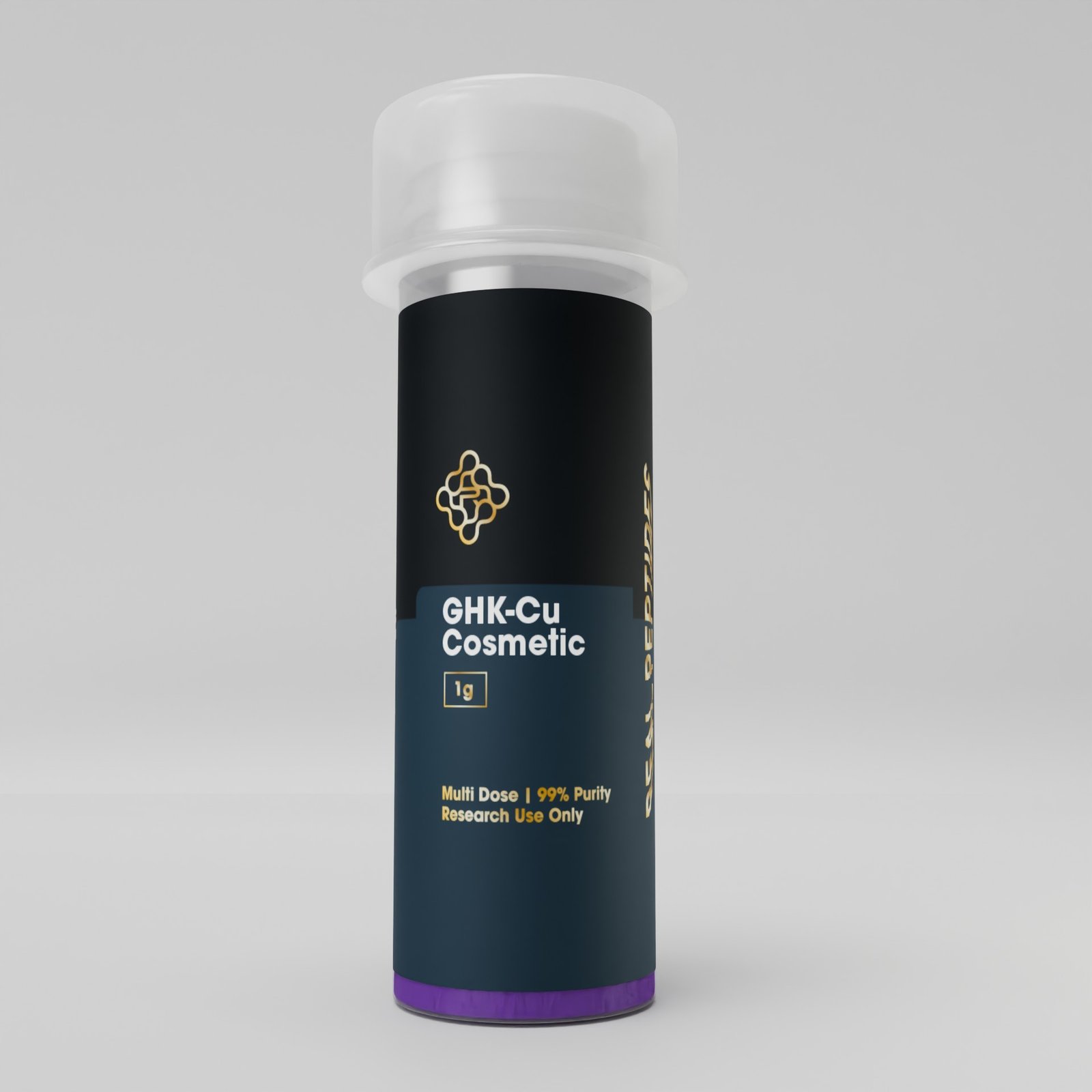
Buy GHK-Cu Cosmetic Peptide Online from SourceTides. INCI: Copper Tripeptide-1 | CAS 49557-75-7 | MW 403.93 g/mol | C₁₄H₂₂CuN₆O₄ | ≥99% HPLC + copper content confirmed | Endotoxin <1 EU/mg (LAL) | Full CoA | Blue-green lyophilised powder | Dry-ice cold chain. EU CosIng listed ingredient. 0.1–1% for topical formulation research. 4,000+ genes modulated (Pickart 2018). 28% dermal collagen increase in human IRB trial (2023). Compatible with HA, niacinamide, retinol. Avoid high-dose vitamin C. Not WADA-prohibited. For in-vitro laboratory and topical research use only.
Buy GHK-Cu Cosmetic Peptide Online | Copper Tripeptide-1 | Topical Skin & Hair Research Grade | ≥99% Purity | CoA | SourceTides
Buy GHK-Cu Cosmetic Peptide Online from SourceTides.
GHK-Cu (Glycyl-L-Histidyl-L-Lysine Copper(II) Complex; CAS 49557-75-7; INCI: Copper Tripeptide-1) is the most extensively validated copper peptide in cosmetic and dermatological research.
This cosmetic-grade formulation is supplied as a lyophilised powder specifically suited for topical application research: formulation development, dermal penetration studies, fibroblast and keratinocyte cell culture assays for skin biology endpoints, and ex-vivo skin tissue research.
The cosmetic-grade designation reflects the application context — this same molecule is the active ingredient in thousands of validated cosmetic and topical skincare formulations sold globally as Copper Tripeptide-1 — not a different compound.
Both the injectable research vial and this cosmetic-grade powder are identical in chemical identity (CAS 49557-75-7; MW 403.93 g/mol; ≥99% HPLC); the distinction is vial sizing and the intended application context.
GHK-Cu at nanomolar concentrations stimulates collagen synthesis in dermal fibroblasts (Maquart et al. 1988), modulates over 4,000 human genes toward youthful regenerative expression patterns (Pickart & Margolina 2018), upregulates VEGF-driven angiogenesis, activates hair follicle dermal papilla cells (Pyo et al. 2007), suppresses inflammatory gene expression, and reverses the molecular signatures of skin ageing and COPD-like fibrosis.
Plasma GHK-Cu declines approximately 60% between age 20 and age 60 — from ~200 ng/mL to ~80 ng/mL — directly correlating with the reduction in skin regenerative capacity and wound healing speed that characterises biological ageing.
Every SourceTides vial is lyophilised, tested at ≥99% HPLC purity with copper content confirmed, and ships with a full lot-specific Certificate of Analysis.
For in-vitro laboratory and topical research use only. Not for human consumption.
GHK-Cu Cosmetic Peptide — Technical Specifications
| Parameter | Specification |
|---|---|
| INCI Name | Copper Tripeptide-1 |
| Common Names | GHK-Cu; Copper Tripeptide-1; GHK Copper; Glycyl-L-Histidyl-L-Lysine Copper; Prezatide Copper Acetate |
| CAS Number | 49557-75-7 (Cu complex); 89030-95-5 (acetate form) |
| Molecular Formula (Cu complex) | C₁₄H₂₂CuN₆O₄ |
| Molecular Weight | 403.93 g/mol |
| PubChem CID | 378611 (Cu complex) |
| Peptide Sequence | H-Gly-His-Lys-OH; Cu(II) chelated via histidine imidazole nitrogen; square planar coordination geometry |
| Application Context | Cosmetic formulation research; topical delivery studies; dermal penetration assays; fibroblast/keratinocyte skin biology; ex-vivo skin tissue models; hair follicle research; white-label cosmetic ingredient development |
| Physical Form | Blue to blue-green lyophilised powder (characteristic Cu(II) complex colour); hygroscopic |
| Purity | ≥99% (RP-HPLC); copper content confirmed (stoichiometric 1:1 Cu:GHK); identity by ESI-MS (MW 403.93 Da) |
| Endotoxin | <1 EU/mg (LAL chromogenic assay) |
| Water Solubility | Freely soluble (~130 mg/mL in water); dissolves readily in aqueous cosmetic vehicles (serums, hydrogels, toners); no organic solvent required |
| Recommended Use Concentration | 0.1–1% (w/v) in topical formulations (industry-validated cosmetic range); 1–100 nM for cell culture fibroblast/keratinocyte assays; 1–10 µM for ex-vivo skin tissue experiments |
| pH Compatibility | Stable across pH 4.0–8.0; optimal activity at pH 5.5–7.0; compatible with most cosmetic formulation pH ranges (5.0–6.5 for skin-compatible serums) |
| Incompatibilities | Avoid high-concentration ascorbic acid (>1% w/v) — reduces Cu(II) to Cu(I); avoid strong chelating agents (EDTA >0.5%) — strips copper; avoid DTT, β-ME, TCEP; compatible with hyaluronic acid, niacinamide, peptide actives, retinol (when pH-balanced) |
| Storage — Lyophilised Powder | −20°C long-term (24 months); 2–8°C short-term (4 weeks); room temperature: weeks (sealed, desiccated); protect from light and moisture; equilibrate sealed vial to room temperature before opening |
| Storage — Dissolved in Formulation | Formulations containing GHK-Cu: 2–8°C; 3–6 months stability typical in well-formulated aqueous systems; amber packaging recommended |
| Appearance Quality Indicator | Blue-green powder / blue-green solution = active Cu(II) complex ✓; white powder / colourless solution = free GHK (copper absent or reduced) — verify CoA |
| Certificate of Analysis | Lot-specific CoA with every order; HPLC + copper content + ESI-MS + endotoxin + appearance |
| Regulatory / INCI Status | Listed as Copper Tripeptide-1 in EU CosIng database; permitted cosmetic ingredient in USA (FDA cosmetic), EU, UK, Australia, Canada; not a controlled substance in any jurisdiction; WADA not prohibited |
What Is GHK-Cu Cosmetic Peptide?
The molecule is the same. The application context is different. GHK-Cu (Glycyl-L-Histidyl-L-Lysine Copper(II)) as a cosmetic ingredient and GHK-Cu as a research injectable are identical in chemical structure — both are CAS 49557-75-7, both are the copper(II) complex of the GHK tripeptide, both activate lysyl oxidase, both modulate 4,000+ human genes at nanomolar concentrations. What distinguishes cosmetic-grade GHK-Cu is the intended application context: topical delivery research, cosmetic formulation development, skin and hair biology assays, and the fibroblast and keratinocyte cell culture work that underpins cosmetic ingredient validation.
GHK-Cu is the single most extensively published copper peptide in cosmetic dermatology. It has been listed in the EU CosIng database as Copper Tripeptide-1, appears in thousands of licensed cosmetic products globally, and has generated a 50-year body of published skin biology research stretching from Pickart’s original 1973 plasma isolation through Maquart’s 1988 FEBS Letters landmark collagen study, through the 2018 Connectivity Map gene expression analysis revealing modulation of 4,000+ human genes, through a 2023 IRB-approved human clinical trial showing 28% average dermal collagen increase from 3-month topical application.
For cosmetic researchers and formulation scientists, this established literature base — all from the same molecule they are working with — means GHK-Cu is unique among cosmetic actives: you are not extrapolating from structurally similar compounds or relying on preliminary in-vitro data alone. The mechanism is characterised. The gene expression profile is documented. The human clinical data exists. When you buy GHK-Cu Cosmetic Peptide from SourceTides, you access the same molecule that generated this research body, at ≥99% HPLC purity with copper content confirmed, ready for topical formulation or cell-based skin biology research.
GHK-Cu in Cosmetic Research: The Five Core Applications
Application 1 — Collagen Synthesis Stimulation in Fibroblast Assays
The foundational skin biology mechanism of GHK-Cu is direct stimulation of collagen synthesis in dermal fibroblasts. Maquart et al. (1988; FEBS Lett; PMID: 3169264) established that GHK-Cu at 1–10 nanomolar concentrations selectively doubled collagen synthesis rates in human fibroblast cultures — doubling collagen specifically without proportionate increase in non-collagen protein production. This collagen-selective stimulation is the primary endpoint for cosmetic ingredient validation studies. GHK-Cu simultaneously stimulates type I and type III collagen (the principal structural collagens), elastin (the elastic protein), and the small proteoglycans decorin and versican that organise the collagen network architecture.
The copper ion drives this through lysyl oxidase activation. Lysyl oxidase (LOX) is the copper-dependent enzyme responsible for crosslinking newly synthesised collagen and elastin fibrils into mechanically stable fibres — the step that gives skin its structural firmness and elasticity. Without functional LOX, collagen is synthesised but never properly organised into load-bearing matrix. GHK-Cu’s copper delivery to LOX, combined with its transcriptional upregulation of collagen genes, makes it a dual-mechanism collagen stimulator operating at both the substrate (copper delivery) and transcription levels simultaneously.
Application 2 — Skin Ageing and Dermal Regeneration Research
Plasma GHK-Cu declines ~60% between age 20 and age 60. The skin consequences are well-documented: declining fibroblast activity, reduced collagen synthesis rate, thinning dermis, loss of skin elasticity, impaired wound healing, and reduced antioxidant defence. Each of these correlates mechanistically with the known functions of GHK-Cu — making declining GHK-Cu one of the most biochemically grounded explanations for skin ageing phenotypes available.
The Connectivity Map gene expression data (Pickart & Margolina 2018; PMID: 29986520) provided the genomic framework: GHK-Cu shifts gene expression from aged-tissue profiles toward youthful-tissue profiles systematically across 4,000+ genes. Upregulated gene clusters include tissue remodelling enzymes, fibroblast proliferation and survival genes, mitochondrial function genes, antioxidant defence enzymes (SOD1, SOD2, catalase, GPX), VEGF-driven angiogenesis genes, and BDNF/NGF neurotrophic factors. Downregulated clusters include inflammatory cytokines (TNF-α, IL-1β, IL-6, NF-κB targets), fibrosis drivers (TGF-β1, CTGF), and cellular senescence pathways.
The human clinical validation: a 2023 IRB-approved trial (21 women; 3 months daily topical GHK-Cu application) measured dermal collagen density by objective imaging. Average increase: 28%. Top quartile: 51% increase. This represents one of the strongest quantitative collagen increase results published for any topically applied cosmetic active. Cosmetic researchers validating GHK-Cu formulations can benchmark against these published results.
Application 3 — Wound Healing and Skin Repair Formulations
GHK-Cu is the best-published topically-applied wound healing compound in biology. Fifty years of published animal and human wound data demonstrate acceleration of all three wound healing phases: inflammatory, proliferative, and remodelling. The inflammatory phase — GHK-Cu reduces excess TNF-α and IL-1β production while preserving the controlled inflammatory response needed for repair. The proliferative phase — GHK-Cu drives fibroblast migration, endothelial cell proliferation, VEGF-mediated angiogenesis, and keratinocyte migration for re-epithelialisation. The remodelling phase — balanced MMP-TIMP activity produces organised new collagen rather than disorganised scar tissue.
A distinguishing feature of GHK-Cu wound healing biology is its anti-fibrotic remodelling. Unlike pro-collagen agents that stimulate synthesis without controlling degradation — producing hypertrophic, raised scars — GHK-Cu simultaneously upregulates MMPs (to degrade damaged matrix and excess collagen) and collagen synthesis (to deposit new organised matrix). The net result in published wound models is flatter, less pigmented scars with normal tissue architecture. For cosmetic formulation researchers working on post-procedure recovery products, scar minimisation serums, or wound repair creams, this anti-fibrotic balance is the mechanistic property that differentiates GHK-Cu from simpler collagen-stimulating actives.
Application 4 — Hair Follicle and Scalp Biology
GHK-Cu stimulates human hair follicle elongation ex vivo and increases dermal papilla cell (DPC) proliferation while preventing DPC apoptosis in vitro — confirmed by Pyo et al. (2007; Arch Pharm Res; PMID: 17580544). Dermal papilla cells are the specialised fibroblasts that control hair follicle cycling — their proliferation and survival are the primary determinants of active hair growth. The GHK-Cu hair mechanism is multi-factorial: direct DPC stimulation + VEGF-driven scalp angiogenesis (improved nutrient and oxygen delivery to follicles) + collagen matrix remodelling around follicles + antioxidant protection of follicle cells.
The Connectivity Map gene data extends the hair biology rationale: GHK-Cu upregulates stem cell activation genes, growth factor receptors, and survival kinases — the molecular tools DPCs require to maintain active follicle cycling. For cosmetic researchers formulating hair serums, scalp treatments, or post-DHT-treatment recovery products, GHK-Cu addresses multiple parallel mechanisms rather than a single pathway like finasteride (5α-reductase) or minoxidil (KATP channel). This multi-mechanism profile is standard in the best-performing cosmetic hair biology actives.
Application 5 — Antioxidant Defence and Anti-Pollution Skin Research
GHK-Cu delivers bioavailable copper(II) to Cu/Zn-superoxide dismutase (SOD1) — the primary cytoplasmic antioxidant enzyme — while simultaneously upregulating SOD1, SOD2, catalase, and glutathione peroxidase gene expression. This dual enzymatic + transcriptional antioxidant enhancement makes GHK-Cu fundamentally different from antioxidant molecules like vitamin C or vitamin E that provide exogenous radical scavenging. GHK-Cu makes cells better at defending themselves by enhancing the enzymatic machinery that dismutates superoxide — a more durable antioxidant strategy than supplemental scavenger delivery.
This antioxidant mechanism is particularly relevant for anti-pollution skin formulations and UV-stress recovery products. Particulate matter, UV radiation, ozone, and blue light all generate reactive oxygen species in skin that damage collagen, lipids, and DNA. By upregulating SOD1/SOD2 and delivering copper for immediate enzyme activation, GHK-Cu addresses environmental oxidative stress at the cellular defence level. Combined with its collagen repair properties, this makes GHK-Cu a logical active for anti-pollution, post-UV recovery, and environmental defence cosmetic formulations.
Formulating with GHK-Cu: Research and Development Guidelines
| Parameter | Recommendation | Notes |
|---|---|---|
| Use concentration (topical) | 0.1–1.0% (w/v) in final formulation | 0.1% is the industry-standard validated minimum; 0.5–1.0% provides stronger signal in research formulations; above 1% offers diminishing returns and increases formulation cost without proportionate benefit in published studies |
| Addition stage | Cool-down phase (<40°C); after heat-sensitive actives | GHK-Cu is heat-stable relative to proteins, but adding at cool-down preserves copper chelation integrity and prevents any temperature-driven conformational changes; dissolve in a small amount of the aqueous phase first, then incorporate |
| pH range | 5.0–7.0 (optimal); stable 4.0–8.0 | Skin-compatible pH 5.0–6.5 is ideal; GHK-Cu maintains Cu(II) binding and peptide integrity across the cosmetic pH range; above pH 8.0 — copper hydrolysis can occur; below pH 3.5 — peptide bond protonation may reduce activity |
| Compatibility — High Vitamin C | Avoid co-formulating with >1% L-ascorbic acid; use ascorbic acid derivatives (ascorbyl glucoside, sodium ascorbyl phosphate) instead if vitamin C is required in the same formulation | L-ascorbic acid at >1% reduces Cu(II) to Cu(I), stripping the biological activity of the GHK-Cu complex; ascorbate derivatives are stable with GHK-Cu because they release ascorbic acid slowly and in limited amounts |
| Compatibility — Niacinamide | Compatible; no antagonism at typical cosmetic concentrations (2–10% niacinamide) | Niacinamide and GHK-Cu address complementary mechanisms (niacinamide: NADH/NAD⁺ ratio; GHK-Cu: copper-dependent enzyme activation and collagen synthesis); can be co-formulated effectively |
| Compatibility — Retinol/Retinoids | Compatible in pH-matched formulations; separate application (AM/PM) preferred for sensitive skin research protocols | Both GHK-Cu and retinoids stimulate collagen synthesis and matrix remodelling; not chemically incompatible, but the combined collagen-stimulating and MMP-activating signals may be too aggressive for sensitive subjects in clinical research protocols |
| Compatibility — Hyaluronic acid | Excellent; preferred carrier for GHK-Cu topical formulations | Hyaluronic acid serum base dissolves GHK-Cu readily, provides humectant effect, enhances epidermal penetration, and does not interfere with copper chelation or peptide activity |
| Compatibility — EDTA (preservative chelator) | Limit EDTA to ≤0.1% (w/v) in GHK-Cu formulations; avoid disodium EDTA at standard cosmetic preservative concentrations (>0.5%) | EDTA is a broad metal chelator that can competitively strip copper from GHK-Cu complex; phenoxyethanol or ethylhexylglycerin-based preservatives are preferred in GHK-Cu formulations |
| Penetration enhancement | Sodium hyaluronate (as carrier base); liposomal encapsulation; microneedle pre-treatment; iontophoresis; ethanol 5–10% as co-solvent in penetration research designs | GHK-Cu’s small MW (403.93 g/mol) and high water solubility allow reasonable transepidermal penetration via both transcellular and paracellular routes; liposomal encapsulation significantly increases epidermal depth and fibroblast delivery in published studies |
| Formulation types | Aqueous serums; hydrogels; emulsions (O/W); micellar toners; liposomal formulations; microneedle-compatible solutions; scalp serums; post-procedure recovery gels | Aqueous serum bases (hyaluronic acid, glycerin, aloe) provide the simplest and most stable GHK-Cu vehicle; oil-rich emulsions require partition coefficient consideration for the hydrophilic Cu complex |
GHK-Cu Cosmetic Research Evidence
| Research Domain | Evidence Level | Key Finding | Source |
|---|---|---|---|
| Dermal collagen increase (human clinical trial) | IRB-approved human trial (n=21; 3-month topical) | 28% average dermal collagen density increase; top quartile 51%; objective imaging measurement; 3 months daily topical GHK-Cu application; strongest published human collagen increase result for any topical peptide active | IRB Trial — EurekAlert 2023 |
| Collagen synthesis in fibroblasts (foundational) | In vitro (human dermal fibroblasts) | 1–10 nM GHK-Cu selectively doubled collagen synthesis rate vs non-collagen proteins; most cited cosmetic peptide collagen study; the mechanistic basis for all subsequent GHK-Cu collagen claims | Maquart et al. 1988 — PMID: 3169264 |
| 4,000+ gene modulation (anti-ageing gene profile) | Bioinformatics (Broad Institute Connectivity Map) + in vitro validation | GHK-Cu modulates ~4,000 human genes toward youthful regenerative expression patterns; upregulates collagen, antioxidant, VEGF, BDNF gene sets; downregulates inflammatory, fibrotic, and ageing gene signatures; unique profile in Connectivity Map database | Pickart & Margolina 2018 — PMID: 29986520 |
| GAG and proteoglycan synthesis (wound tissue) | In vivo (rat wound) + in vitro (fibroblasts) | GHK-Cu stimulated dermatan sulfate, chondroitin sulfate, and decorin synthesis; complete extracellular matrix package beyond collagen; tissue remodelling toward normal architecture | Simeon et al. 2000 — PMID: 11121126 |
| Hair follicle elongation and DPC proliferation | Ex vivo (human hair follicles) + in vitro (DPCs) | GHK-Cu stimulated human hair follicle elongation; increased DPC proliferation; prevented DPC apoptosis; multi-mechanism hair growth biology (DPC survival + VEGF angiogenesis + matrix remodelling) | Pyo et al. 2007 — PMID: 17580544 |
| Wound healing acceleration (multiple animal models) | In vivo (rabbits, rats, mice, pigs) | Accelerated wound closure; increased VEGF-driven angiogenesis; elevated antioxidant enzyme activity; immune and endothelial cell recruitment to injury sites; anti-fibrotic remodelling producing normal tissue architecture | PMC4508379 — Skin regeneration review |
| Age-related plasma decline correlation | Human plasma data (Pickart; longitudinal) | ~200 ng/mL at age 20 → ~80 ng/mL at age 60; 60% decline correlates with decreased skin repair, collagen synthesis, and wound healing speed; provides endocrinological rationale for topical GHK-Cu replacement | PMC4508379 — Pickart 2015 |
GHK-Cu Cosmetic Ingredient Regulatory Status
| Jurisdiction | Cosmetic Status | Notes |
|---|---|---|
| USA (FDA) | Permitted cosmetic ingredient; not a drug; not a DEA controlled substance; available in licensed 503A compounding pharmacies by Rx | GHK-Cu used in cosmetic products is regulated as a cosmetic under the FD&C Act, not as a drug. Claims of collagen synthesis and wound healing are cosmetic structure/function claims. SourceTides supplies research-grade for laboratory formulation research and skin biology assays — not finished cosmetic products. |
| European Union | Approved cosmetic ingredient — listed in EU CosIng database as Copper Tripeptide-1; compliant with EU Cosmetics Regulation 1223/2009 | GHK-Cu is formally listed as a permitted cosmetic ingredient in the EU cosmetics ingredient database. This makes it one of the very few peptide actives with explicit EU cosmetic regulatory recognition. No restrictions on use concentration in cosmetics. |
| United Kingdom | Permitted cosmetic ingredient; not a controlled drug; used in licensed UK cosmetic products | Post-Brexit UK retains EU cosmetic ingredient framework for CosIng-listed substances. Copper Tripeptide-1 is used in numerous licensed UK cosmetic products. |
| Australia | Permitted cosmetic ingredient (not scheduled); research use | Not a scheduled substance. Used in licensed cosmetics. Laboratory research access for formulation work. |
| Canada | Permitted cosmetic ingredient; not CDSA controlled; research use | Not a controlled substance. Used in licensed Canadian cosmetics. Research access. |
| WADA | Not listed on 2024–2025 WADA Prohibited List; endogenous metabolite; not prohibited | Endogenous molecule. Not prohibited. Verify at wada-ama.org annually. |
GHK-Cu vs Other Cosmetic Copper Peptide Formats
| Format | Best For | Evidence Base | SourceTides |
|---|---|---|---|
| GHK-Cu Cosmetic Peptide (this product) | Topical formulation development; skin biology cell culture; dermal penetration studies; cosmetic ingredient validation; hair serum research; fibroblast/keratinocyte assays | 50 years; human IRB trial (2023); EU CosIng listed; thousands of published cosmetic studies | Buy GHK-Cu Cosmetic |
| GHK-Cu Injectable Research Vial (50 mg) | In-vivo wound healing animal models; long-duration systemic ageing protocols; COPD lung fibroblast studies; Connectivity Map gene expression replication; transcriptomics | Same evidence base; 50 mg large-format vial for extended studies | Buy GHK-Cu 50 mg Injectable |
Quality Control at SourceTides
Every batch of GHK-Cu Cosmetic Peptide undergoes these tests. The copper content confirmation is the defining QC step — a white (not blue-green) powder indicates the free GHK tripeptide rather than the active copper complex.
| Test | Method | Specification | Why It Matters |
|---|---|---|---|
| Purity | RP-HPLC (C18; UV 220 nm) | ≥99% peak area | Confirms absence of free GHK and synthesis by-products; ≥99% ensures the active copper complex form dominates |
| Copper Content | ICP-MS or atomic absorption spectroscopy | Stoichiometric 1:1 Cu:GHK confirmed; MW 403.93 Da by ESI-MS | The single most important QC test for GHK-Cu — without confirmed copper content, you cannot be certain you have the active complex rather than free GHK; blue-green colour is visual confirmation |
| Endotoxin | LAL chromogenic assay | <1 EU/mg | Essential for fibroblast and keratinocyte cell culture assays; LPS confounds inflammatory and wound healing gene expression endpoints |
| Appearance | Visual inspection | Blue to blue-green lyophilised powder; blue-green solution on reconstitution | Colour is the simple visual QC for copper complex integrity |
| Certificate of Analysis | Lot-specific PDF | HPLC + copper content + MS + endotoxin + dates | Copper content data is the unique field distinguishing GHK-Cu CoA from standard peptide CoAs; required for cosmetic formulation research documentation |
Peer-Reviewed References
| # | Citation | Link |
|---|---|---|
| 1 | Maquart FX, Pickart L et al. (1988). Stimulation of collagen synthesis in fibroblast cultures by the tripeptide-copper complex GHK-Cu²⁺. FEBS Lett. 238(2):343–346. PMID: 3169264. | PubMed PMID: 3169264 |
| 2 | Pickart L, Margolina A. (2018). Regenerative and Protective Actions of GHK-Cu in the Light of New Gene Data. Int J Mol Sci. 19(7):1987. PMID: 29986520. | PubMed PMID: 29986520 |
| 3 | Simeon A, Wegrowski Y, Bontemps Y, Maquart FX. (2000). Expression of glycosaminoglycans and small proteoglycans in wounds: modulation by GHK-Cu²⁺. J Invest Dermatol. 115:962–968. PMID: 11121126. | PubMed PMID: 11121126 |
| 4 | Pyo HK et al. (2007). The effect of tripeptide-copper complex on human hair growth in vitro. Arch Pharm Res. 30(7):834–839. PMID: 17580544. | PubMed PMID: 17580544 |
| 5 | Pickart L, Vasquez-Soltero JM, Margolina A. (2015). GHK Peptide as a Natural Modulator of Multiple Cellular Pathways in Skin Regeneration. Biomed Res Int. PMC4508379. | PMC4508379 |
| 6 | IRB-Approved Human Trial (2023). 28% average dermal collagen density increase with 3-month topical GHK-Cu. EurekAlert. | EurekAlert 2023 |
| 7 | EU CosIng Database. Copper Tripeptide-1 listing under EU Cosmetics Regulation 1223/2009. | EU CosIng — Copper Tripeptide-1 |
Frequently Researched Alongside GHK-Cu Cosmetic Peptide
These compounds are commonly paired with GHK-Cu in cosmetic formulation research and skin biology assay panels:
- GHK-Cu Peptide 50 mg (Injectable Research Vial) — The same molecule in 50 mg large-format vial for extended in-vivo wound healing, COPD fibroblast, and transcriptomics protocols; use the cosmetic-grade format for topical assays and formulation work, the 50 mg format for sustained animal studies
- BPC-157 Capsules — Gastric peptide with GI cytoprotection and tissue repair via VEGFR2/NO; studied alongside GHK-Cu in combined wound healing and skin repair panels where vascular repair (BPC-157) and collagen matrix synthesis (GHK-Cu) are both endpoints
- TB-500 (Thymosin Beta-4) — Actin cytoskeleton repair; keratinocyte and fibroblast migration in wound closure; studied with GHK-Cu in wound healing research combining cell migration (TB-500) and ECM synthesis (GHK-Cu)
- Epithalon 10 mg — Khavinson pineal bioregulator; telomere biology and melatonin restoration; studied alongside GHK-Cu in anti-ageing protocols combining cellular telomere longevity (Epithalon) with gene expression rejuvenation and collagen synthesis (GHK-Cu)
- Thymalin 10 mg — Thymic immune bioregulator; immune ageing; studied with GHK-Cu in multi-system ageing panels where immune restoration (Thymalin) and tissue regenerative capacity (GHK-Cu) both decline with age
- NAD⁺ Injectable — Sirtuin substrate; mitochondrial metabolism; NAD⁺ and GHK-Cu both upregulate mitochondrial function genes; studied together in comprehensive metabolic and cellular longevity research
- Melanotan-1 10 mg — MC1R agonist; melanogenesis and UV-NER DNA repair; studied alongside GHK-Cu in skin research panels combining UV-photoprotection and DNA repair (Melanotan-1) with collagen synthesis and antioxidant defence (GHK-Cu)
- KPV Peptide 10 mg — α-MSH C-terminal NF-κB inhibitor; anti-inflammatory; studied with GHK-Cu in skin inflammation and repair panels combining active inflammation suppression (KPV) with collagen and ECM rebuilding (GHK-Cu)
- LIPO-C Injectable — Multi-nutrient lipotropic complex containing methionine, choline, B vitamins; methionine feeds glutathione synthesis that works synergistically with GHK-Cu’s copper-mediated SOD activation for comprehensive antioxidant skin research
Frequently Asked Questions
You can buy GHK-Cu Cosmetic Peptide (Copper Tripeptide-1; CAS 49557-75-7) directly from SourceTides. Every order includes a lot-specific Certificate of Analysis with RP-HPLC chromatogram (≥99% purity), copper content confirmation (stoichiometric 1:1 Cu:GHK; MW 403.93 Da by ESI-MS), and the LAL endotoxin result (<1 EU/mg). All vials are lyophilised blue-green powder and dispatched on dry-ice cold chain. See the SourceTides shipping policy for dispatch details.
The molecule is identical — both are CAS 49557-75-7, both are the copper(II) complex of the GHK tripeptide, both carry the same purity specification (≥99% HPLC; copper content confirmed). The difference is vial sizing and intended application context:
GHK-Cu Cosmetic Peptide (this product): Sized and priced for topical formulation research, cell culture skin biology assays (fibroblast collagen synthesis, keratinocyte migration, hair follicle elongation), dermal penetration studies, and cosmetic ingredient validation. The formulation guidelines section above covers how to incorporate it into aqueous serums, emulsions, and hydrogels at cosmetic use concentrations (0.1–1%).
GHK-Cu 50 mg Injectable Research Vial: 50 mg large-format vial for extended in-vivo animal wound healing protocols (4–12 week rodent studies), systemic ageing biology research, COPD lung fibroblast Connectivity Map replication studies, and transcriptomics/proteomics panels requiring single-lot consistency across many experiments. Use this format when study duration or experimental scale exceeds what smaller vials can efficiently support.
L-ascorbic acid (vitamin C) is a strong reducing agent. At concentrations above approximately 1% (w/v) in an aqueous formulation, it reduces the copper(II) ion in GHK-Cu to copper(I) — Cu(II) → Cu(I). This changes the oxidation state of the copper atom and disrupts the square planar coordination geometry of the GHK-Cu complex, altering its biological activity profile.
Cu(I) can still bind GHK but with different affinity and geometry. More significantly, Cu(I) can participate in Fenton-like chemistry generating hydroxyl radicals — the opposite of the antioxidant protection GHK-Cu is supposed to provide. The solution is either to separate GHK-Cu and L-ascorbic acid into different formulations (morning/evening routine in research protocols), or to substitute L-ascorbic acid with stable vitamin C derivatives: sodium ascorbyl phosphate, ascorbyl glucoside, or magnesium ascorbyl phosphate. These derivatives release ascorbic acid slowly and in limited concentrations that do not reduce GHK-Cu at typical formulation pH. The visual indicator: if a blue-green GHK-Cu formulation turns colourless over days or weeks, the copper has been reduced — investigate your vitamin C interaction. All SourceTides GHK-Cu Cosmetic CoAs confirm Cu(II) complex integrity before dispatch.
Industry-validated cosmetic concentration for GHK-Cu is 0.1–1.0% (w/v) in the final formulation. Here is the research rationale for different concentrations within this range:
0.1% (1 mg/mL): The minimum validated effective concentration in published cosmetic studies; appropriate for stability and tolerance research protocols; provides ~600 µM in the formulation, well above the nanomolar active range confirmed in cell culture.
0.5–1.0% (5–10 mg/mL): Stronger signal in short-duration studies; preferred for wound healing and scar minimisation research formulations; more appropriate when the study endpoint is objective collagen measurement by ultrasound or confocal reflectance microscopy (as in the 2023 IRB trial).
Above 1%: Diminishing returns in published studies; formulation cost increases without proportionate efficacy benefit; may introduce blue-green colour visible in the final product which affects consumer cosmetic acceptance.
For cell culture fibroblast and keratinocyte assays, use a different scale entirely: 1–100 nM for collagen synthesis and gene expression endpoint studies (Maquart 1988 reference range), 1–10 µM for wound healing migration assays. Contact us via the SourceTides contact page for protocol guidance.
GHK-Cu as Copper Tripeptide-1 is listed in the EU CosIng cosmetics ingredient database and is a permitted cosmetic ingredient under EU Cosmetics Regulation 1223/2009 — one of the very few peptide actives to have explicit EU cosmetic regulatory listing. In the USA, the UK, Australia, and Canada, it is legally used in licensed cosmetic products without restriction. Thousands of cosmetic products containing Copper Tripeptide-1 are sold globally in serum, cream, and toner formats.
SourceTides supplies research-grade GHK-Cu Cosmetic Peptide for laboratory formulation research and skin biology assays — not as a finished consumer cosmetic product. Researchers and cosmetic formulators using this material to develop finished products must independently comply with the cosmetic product regulatory requirements in their target markets (EU Cosmetics Regulation, US FDA cosmetics regulations, TGA therapeutic goods vs cosmetics classification, etc.). See the SourceTides shipping policy for research use conditions.
SourceTides accepts Visa, Mastercard, American Express, cryptocurrency, and bank transfers for institutional orders. All payments go through secure, encrypted gateways. For institutional purchase orders, bulk research procurement, or custom quantities, contact the team via the SourceTides contact page. Orders are reviewed for research compliance before dispatch.
Research Use Only
All SourceTides products, including GHK-Cu Cosmetic Peptide (CAS 49557-75-7; Copper Tripeptide-1), are for in-vitro laboratory and topical research use only. They are supplied as raw research-grade ingredients — not as finished cosmetic or pharmaceutical products. Not for human consumption. By purchasing, the buyer confirms authorised researcher or formulation researcher status and accepts responsibility for compliance with all applicable regulations.
| Weight | 0.01 lbs |
|---|---|
| Dimensions | 5 × 5 × 5 in |
| Purity | ≥99% HPLC + Copper Content Confirmed (CAS 49557-75-7; MW 403.93 Da) |
| INCI Name | |
| Form | Lyophilised Blue-Green Powder (Cu(II) complex) |
| Use Concentration |
You may also like…
Healing & Recovery Peptides
BPC-157 500 mcg Capsules Online | ≥99% Purity | CoA Included | SourceTides
Related products
Immune & Antimicrobial Peptides
Thymalin Peptide 10 mg Online | Thymic Bioregulator | ≥99% Purity | CoA | SourceTides
Muscle Growth & Performance Peptides
PT-141 Peptide (Bremelanotide) 10 mg | ≥99% Purity Cyclic Heptapeptide | SourceTides
Cognitive & Mood Support
DSIP Peptide | Delta Sleep-Inducing Peptide | ≥99% Purity | CoA | SourceTides
Immune Support & Inflammation Peptides
KPV Peptide 10 mg (Lys-Pro-Val; α-MSH C-Terminal Tripeptide)
Cognitive & Mood Support
Selank Amidate Peptide 10 mg Online | ≥99% Purity | CoA Included | SourceTides
Fat Loss & Metabolic Support Peptides
Survodutide Peptide | BI 456906 | ≥98% Purity | CoA Included | SourceTides
Cognitive & Mood Support
Pinealon Peptide 10 mg Online | EDR Tripeptide | ≥99% Purity | CoA | SourceTides
Fat Loss & Metabolic Support Peptides
AOD-9604 Peptide Online | HGH Fragment 176-191 | ≥99% Purity | CoA Included | SourceTides