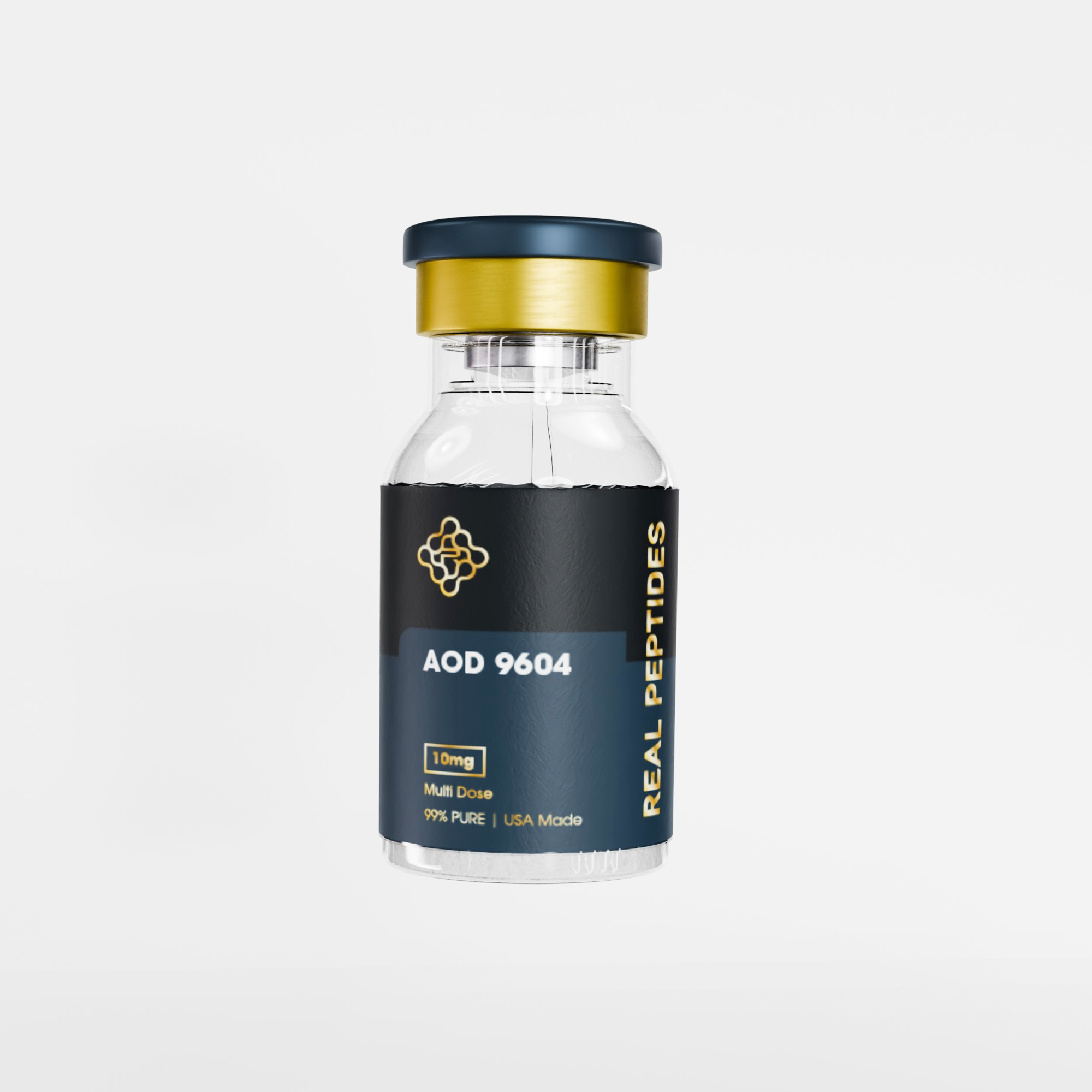
Buy AOD-9604 Peptide Online from SourceTides.
Buy AOD-9604 Peptide Online | HGH Fragment 176-191 | ≥99% Purity | CoA Included | SourceTides
Buy AOD-9604 Peptide Online from SourceTides.
AOD-9604 (Anti-Obesity Drug 9604; CAS 221231-10-3) is a synthetic 16-amino acid peptide fragment derived from the C-terminal domain of human growth hormone (hGH), spanning positions 176–191 with a stabilising tyrosine (Tyr) substitution at the N-terminus replacing the native phenylalanine.
Also known as HGH Fragment 176-191, AOD-9604 was developed at Monash University by Professor Frank Ng and subsequently advanced through clinical development by Metabolic Pharmaceuticals Ltd in Australia as a potential anti-obesity pharmaceutical.
The fundamental design principle of AOD-9604 is selective isolation of growth hormone’s lipolytic activity from its somatogenic, IGF-1-stimulating, and glucose-disrupting activities.
The native C-terminal domain of hGH (residues 176–191) is the region responsible for fat metabolism modulation; the N-terminal and central domains govern receptor binding to the growth hormone receptor (GHR), IGF-1 induction, and anabolic tissue effects.
AOD-9604 contains a disulfide bond between Cys182 and Cys189 that forms a small cyclic loop — the structural feature that defines this peptide family and contributes to its adipose-tissue selectivity.
It does not bind the growth hormone receptor, does not stimulate IGF-1 production, and does not impair insulin sensitivity — making it the most metabolically neutral hGH-derived research compound available.
Six human clinical trials involving over 900 participants confirmed an excellent safety profile.
Every SourceTides vial is lyophilised, tested at ≥99% HPLC purity, and ships with a full lot-specific Certificate of Analysis.
For in-vitro laboratory research use only. Not for human consumption.
AOD-9604 Peptide — Technical Specifications
| Parameter | Specification |
|---|---|
| Common Names | AOD-9604; AOD9604; Anti-Obesity Drug 9604; HGH Fragment 176-191; hGH Frag 176-191 |
| CAS Number | 221231-10-3 |
| Molecular Formula | C₇₈H₁₂₃N₂₃O₂₃S₂ |
| Molecular Weight | 1,815.1 g/mol |
| Peptide Length | 16 amino acids; contains an internal disulfide bridge (Cys182–Cys189 in hGH numbering) forming a small cyclic loop |
| Sequence | Tyr-Leu-Arg-Ile-Val-Gln-Cys-Arg-Ser-Val-Glu-Gly-Ser-Cys-Gly-Phe (cyclic disulfide between positions 7 and 14) |
| Origin | hGH C-terminal fragment (amino acids 176–191 of the 191-AA hGH sequence); N-terminal Tyr substitution replaces native Phe176 for improved metabolic stability |
| Developer | Prof. Frank Ng, Monash University (Australia); commercialised by Metabolic Pharmaceuticals Ltd; 6 Phase 1/2 clinical trials completed; development discontinued 2007 |
| Growth Hormone Receptor (GHR) Binding | None — AOD-9604 does not bind GHR; the GHR-binding domains are in the N-terminal and central regions of hGH (not in fragment 176-191) |
| IGF-1 Stimulation | None — confirmed in multiple clinical trials; AOD-9604 does not elevate IGF-1 at any tested dose; fundamental safety advantage over full hGH |
| Insulin Sensitivity Effect | None — confirmed no impairment of glucose metabolism or insulin sensitivity; distinguishes AOD-9604 from full hGH (which causes GH-mediated insulin resistance) and MK-677 (which consistently impairs insulin sensitivity) |
| Primary Research Mechanism | Lipolysis stimulation (adipose triglyceride breakdown via hormone-sensitive lipase); lipogenesis inhibition; β₃-adrenergic receptor modulation in adipocytes; no GHR-mediated signalling |
| Clinical Safety Record | 6 Phase 1/2 clinical trials; 900+ participants; excellent safety profile — minimal adverse events, no serious drug-related adverse events reported |
| Physical Form | White lyophilised powder |
| Purity | ≥99% (RP-HPLC); identity confirmed by ESI-MS; disulfide bond integrity confirmed by non-reducing vs reducing gel comparison or MS |
| Endotoxin | <1 EU/mg (LAL chromogenic assay) |
| Solubility | Soluble in sterile water and PBS pH 7.4; 1 mg/mL stock recommended; slightly soluble in DMSO (avoid — use aqueous); maintain reducing conditions if disulfide is a concern for specific assays |
| Storage — Lyophilised | −20°C long-term (stable 24 months); 2–8°C short-term; protect from moisture and light; disulfide bond is stable at −20°C in lyophilised form |
| Storage — Reconstituted | 2–8°C for up to 7 days; −20°C for longer; avoid freeze-thaw; aliquot for single use; reconstituted solutions: avoid strongly reducing environments (DTT, β-ME) unless disulfide reduction is the experimental intent |
| Certificate of Analysis | Lot-specific CoA with every order; HPLC chromatogram + MS identity + disulfide bond status + endotoxin result |
| FDA Status | Not approved; excluded from 503A Bulks List (FDA decision December 2024); research compound only |
| WADA Status | Prohibited — WADA S2 (Peptide Hormones, Growth Factors and Related Substances); banned in-competition and out-of-competition |
What Is AOD-9604?
AOD-9604 stands for Anti-Obesity Drug 9604 — the internal development code assigned by Metabolic Pharmaceuticals Ltd during its clinical programme. Understanding what it is requires understanding the problem it was designed to solve, and why that solution was more elegant in theory than in clinical practice.
Human growth hormone (hGH) has two distinct biological personalities. As a growth-promoting hormone, it acts through the growth hormone receptor (GHR) to stimulate IGF-1 production, drive protein synthesis, promote linear bone growth, and increase cellular proliferation. As a metabolic hormone, it directly stimulates lipolysis in adipose tissue and inhibits lipogenesis — causing fat breakdown and preventing fat storage. These two roles reside in different structural domains of the 191-amino acid hGH molecule. The N-terminal and central domains mediate GHR binding and somatogenic (growth-promoting) effects. The C-terminal domain — specifically the last 16 amino acids, positions 176–191 — mediates much of the lipolytic (fat-metabolising) activity.
Professor Frank Ng at Monash University recognised that if you could isolate the C-terminal lipolytic fragment and deliver it as a standalone peptide, you would get hGH’s fat-burning effects without the growth-promoting, IGF-1-elevating, and insulin-resistance-causing effects of full hGH. This was the conceptual foundation of AOD-9604. Metabolic Pharmaceuticals added a tyrosine (Tyr) residue at the N-terminus of the native Phe176 start position — a modification that improved metabolic stability without altering the lipolytic mechanism — and named the resulting compound AOD-9604.
The clinical development programme was extensive: six Phase 1/2 clinical trials involving over 900 participants, making AOD-9604 one of the most clinically tested research peptides available. These trials confirmed the concept was scientifically sound — AOD-9604 produced no IGF-1 elevation, no insulin resistance, and an excellent safety profile. They also produced early evidence of modest fat loss. However, the pivotal Phase 2b trial (24 weeks; 536 subjects) did not meet its primary endpoint of statistically significant weight loss versus placebo. Development was terminated in 2007. Metabolic Pharmaceuticals discontinued the anti-obesity programme.
The clinical failure does not diminish AOD-9604’s value as a research compound. The six completed trials represent the deepest human safety database of any hGH fragment peptide available for research. The lipolytic mechanism is well-characterised in animal models. Emerging preclinical data on articular cartilage repair provides a second research domain entirely distinct from the obesity programme. When you buy AOD-9604 Peptide from SourceTides, you receive a compound with a uniquely well-documented clinical safety context and confirmed metabolic neutrality.
AOD-9604 vs HGH Fragment 176-191: Are They the Same?
This is the most common nomenclature question about this peptide, and the answer requires a careful distinction.
| Term | Sequence Start | N-Terminal Residue | Development Context | CAS |
|---|---|---|---|---|
| HGH Fragment 176-191 (native) | Position 176 of hGH | Phe176 (native phenylalanine) | Research nomenclature describing the natural C-terminal 16-AA sequence of hGH; not a defined development compound | Different CAS |
| AOD-9604 (this product) | Position 177 of hGH (from Tyr177) | Tyr (tyrosine substitution — replaces native Phe176 or prepended before 177); improves metabolic stability | Clinically developed compound; specific Tyr modification; 6 Phase 1/2 trials; Metabolic Pharmaceuticals Ltd | 221231-10-3 |
In practice, the two names are often used interchangeably in research and commercial contexts, and the terms overlap substantially. The key distinction is that AOD-9604 specifically refers to the Tyrosine-modified compound developed by Metabolic Pharmaceuticals, while “HGH Fragment 176-191” refers to either the native fragment or the AOD-9604 version depending on the source. The SourceTides product is the Tyr-modified AOD-9604 form — CAS 221231-10-3 — which is the compound used in all six clinical trials.
How AOD-9604 Works — Mechanism of Action
The Core Design Principle: Separating Lipolysis from Somatogenesis
The full 191-amino acid hGH molecule signals through the growth hormone receptor (GHR) — a single-pass transmembrane receptor that, when activated, drives JAK2-STAT5 signalling, IGF-1 hepatic production, and broad anabolic and metabolic effects across multiple tissues. The problem with using full hGH for fat loss is that these GHR-mediated effects are inseparable from its direct lipolytic properties — you cannot get the fat burning without also getting the IGF-1 elevation, the insulin resistance, the muscle-building stimulation, and the acromegaly risk with chronic use.
AOD-9604 resolves this by being a fragment that lacks the GHR-binding domains entirely. The key sites for growth hormone receptor binding on hGH are Site I (residues 54–74 and 167–170) and Site II (residues 1–4 and 171–176 of helix 4). The AOD-9604 fragment begins at residue 176 (or 177 with Tyr addition) — at the very edge of Site II, and extending beyond it into the C-terminal region that is not involved in GHR binding. This is not a partial agonist or a weak agonist — it is a non-binder of GHR. Multiple clinical assays confirmed zero GHR activation and zero IGF-1 elevation at any AOD-9604 dose tested in humans.
Lipolysis Stimulation: Breaking Down Stored Fat
AOD-9604 stimulates lipolysis in adipose tissue — the enzymatic breakdown of stored triglycerides into free fatty acids and glycerol that can be released into circulation for energy use. The mechanism is not fully characterised at the molecular level, but published evidence points to β₃-adrenergic receptor (β₃-AR) modulation as a contributing pathway. β₃-adrenergic receptors are expressed almost exclusively on adipocytes (brown and white) and are the primary target for sympathomimetic lipolytic signalling in fat tissue. Activation of β₃-AR increases intracellular cAMP, which activates protein kinase A (PKA), which phosphorylates hormone-sensitive lipase (HSL) — the enzyme responsible for triglyceride hydrolysis.
The downstream molecular event is clear: in isolated adipocyte models and in animal studies, AOD-9604 stimulates fat cell breakdown, reduces adipocyte size, and produces measurable free fatty acid release — with the effects confirmed to be specific to adipose tissue rather than systemic metabolic activation. The key preclinical finding (Ng & Borstein, 2003; Endocrinology) demonstrated that AOD-9604 stimulated lipolysis and simultaneously inhibited lipogenesis in isolated adipocytes, with no cross-reactivity with the growth hormone receptor — the foundational mechanistic evidence for the GHR-independence of its fat metabolism effects.
Lipogenesis Inhibition: Preventing Fat Storage
In parallel with lipolysis stimulation, AOD-9604 inhibits lipogenesis — the synthesis and storage of new triglycerides in adipocytes. Lipogenesis is driven by insulin signalling and de novo fatty acid synthesis enzymes (fatty acid synthase/FAS; acetyl-CoA carboxylase/ACC). The dual action — promoting fat breakdown while simultaneously blocking fat storage — is the mechanistic basis for the net reduction in adipose tissue observed in animal models and the modest clinical results in early human trials. This lipogenesis inhibition is mechanistically independent of GHR activation, consistent with AOD-9604’s non-GHR pharmacology.
The Disulfide Bond: Structural Determinant of Selectivity
AOD-9604 contains a disulfide bridge between Cys182 and Cys189 (positions 7 and 14 within the 16-AA fragment). This disulfide creates a small cyclic loop in the middle of the peptide, constraining its three-dimensional conformation. This conformational constraint is believed to contribute to the fragment’s selectivity for adipose tissue effects over GHR-mediated somatogenic effects — the loop geometry is compatible with β₃-AR and adipocyte pathway interactions but incompatible with GHR binding. The disulfide bond is critical to biological activity: reduced (linearised) AOD-9604 shows diminished lipolytic activity in published assays. This has direct implications for reconstitution and handling — reducing agents (DTT, β-mercaptoethanol) in working solutions will inactivate AOD-9604 by breaking the disulfide.
Emerging Application: Articular Cartilage and Joint Repair
Beyond its primary lipolytic application, preclinical data published by Metabolic Pharmaceuticals (2010) showed that AOD-9604 stimulates proteoglycan synthesis in articular cartilage chondrocytes — a finding completely distinct from its adipose tissue mechanism. Proteoglycans (aggrecan, versican) are the structural matrix macromolecules that give cartilage its compressive resilience. Their degradation is the hallmark of osteoarthritis. If AOD-9604 promotes their synthesis in chondrocytes, it represents a potential tool for studying cartilage repair and osteoarthritis biology. The mechanism in chondrocytes appears to be distinct from the adipose tissue lipolytic pathway — possibly through a different receptor interaction at the chondrocyte surface. This application was explored preclinically but never advanced to clinical trials before the Metabolic Pharmaceuticals programme closed. Researchers studying cartilage biology, joint repair, and osteoarthritis use AOD-9604 alongside BPC-157 and TB-500 in repair protocol panels.
The Clinical Trials: What Happened and What It Means for Research
The Evidence Base: 6 Trials, 900+ Participants
AOD-9604 has one of the most extensive human clinical trial records of any research peptide. Between approximately 2001 and 2007, Metabolic Pharmaceuticals conducted six Phase 1/2 controlled trials evaluating AOD-9604 for obesity management. The trials were conducted across multiple dose levels, routes of administration (oral and subcutaneous), and durations. Across all six trials, the safety profile was consistently excellent: no serious drug-related adverse events were reported, and minimal adverse effects were documented. This represents the largest human safety database for any hGH fragment peptide.
The Early Clinical Evidence: Modest But Real Weight Loss
Early trials produced encouraging results. A 12-week randomised clinical trial at 1 mg/day oral AOD-9604 showed subjects losing an average of 2.6–2.8 kg compared to 0.8 kg in the placebo group — a statistically significant difference suggesting real biological activity. Preclinical studies in genetically obese Zucker rats and ob/ob mice showed even more dramatic effects: meaningful body weight reduction and fat mass reduction without glycaemic disruption. These results generated commercial enthusiasm and justified the Phase 2b programme.
The Phase 2b Failure: What It Means
The pivotal Phase 2b trial enrolled approximately 536 obese participants over 24 weeks and tested oral AOD-9604 at multiple dose levels. The primary endpoint was statistically significant weight loss versus placebo. The trial failed to meet this endpoint — the weight loss observed across dose groups was not significantly different from placebo in the larger, longer trial.
There are two important ways to interpret this failure, both relevant for researchers. First, the most honest interpretation: the effect size that seemed meaningful in shorter early trials and dramatically effective in obese rodent models did not survive rigorous testing in a properly powered, long-duration human trial at oral doses. The preclinical-to-clinical translation failed for weight loss efficacy, as it does for the majority of anti-obesity compounds tested in rodent obesity models.
Second, the pharmacological observation: the clinical trials used oral administration, whereas injectable formats (SC) provide substantially higher bioavailability. The question of whether injectable AOD-9604 — which delivers the intact peptide systemically — would have performed differently in the pivotal trial remains unanswered. Some researchers argue the oral bioavailability issue was underestimated and that the injectable route would produce different results. This question is part of what makes AOD-9604 still active as a research compound.
What the clinical failure does not change: AOD-9604’s metabolic neutrality (no IGF-1, no insulin resistance), its safety profile (900+ participants, no serious adverse events), its confirmed lipolytic mechanism in animal models, and its potential cartilage repair application. These properties remain intact and scientifically relevant regardless of the Phase 2b weight loss result.
AOD-9604 Research Evidence
| Research Area | Evidence Level | Key Finding | Source |
|---|---|---|---|
| Lipolysis / Lipogenesis in Adipocytes (foundational) | In vitro (isolated adipocytes) + in vivo (obese rodent models) | AOD-9604 stimulated lipolysis and inhibited lipogenesis in isolated adipocytes with no cross-reactivity with GHR; confirmed no IGF-1 production; fat-specific effects with lean mass preserved; foundational mechanistic evidence | Ng FM, Borstein J et al. 2001 — Endocrinology (PMID: 11397862) |
| No IGF-1 Elevation / No GHR Binding (human) | Phase 1/2 clinical trials (multiple; Metabolic Pharmaceuticals) | Zero IGF-1 elevation confirmed at all tested doses in human trials; no GHR binding confirmed; no insulin resistance; metabolic neutrality of AOD-9604 definitively established in human subjects | Stier H, Vos E, Kenley D et al. 2013 — Safety review PMC |
| Obese Rodent Body Weight Reduction | In vivo (genetically obese Zucker rats; ob/ob mice) | AOD-9604 reduced body weight and fat mass in genetically obese rodents without adverse effects on glycaemic control; fat-specific reduction with lean mass unaffected; results consistent across multiple animal obesity models | PMC3584306 — Obesity Pharmacotherapy Review |
| Early Human Clinical Efficacy (12-week oral RCT) | Phase 2 RCT (12-week; oral 1 mg/day) | AOD-9604 group: average 2.6–2.8 kg weight loss; placebo: 0.8 kg; statistically significant difference; confirmation of biological activity in human subjects at 12 weeks oral dosing | PMC3584306 — Obesity Pharmacotherapy Review |
| Phase 2b Primary Endpoint Failure | Phase 2b RCT (24-week; 536 subjects; oral) | Primary endpoint (significant weight loss vs placebo) not met; development terminated 2007; pivotal trial confirmed excellent safety profile but insufficient efficacy for pharmaceutical anti-obesity registration | PMC3584306 |
| Cartilage / Articular Proteoglycan Synthesis | Preclinical (chondrocyte assays; Metabolic Pharmaceuticals 2010) | AOD-9604 stimulated proteoglycan synthesis in articular cartilage chondrocytes; potential for osteoarthritis and cartilage repair research; mechanism distinct from adipose lipolytic pathway; not advanced to clinical trials | Paragon Sports Medicine — AOD-9604 Review |
| 6-Trial Safety Record (900+ participants) | Meta-level; Phase 1/2 combined data | No serious drug-related adverse events across all 6 trials; well tolerated at all doses tested; no clinically meaningful cardiovascular, hepatic, renal, or endocrine adverse effects; the most extensive human safety record of any hGH fragment compound | Stier et al. Safety Review |
AOD-9604 vs Related Metabolic and Fat-Loss Research Peptides
| Compound | Class / Mechanism | IGF-1 Effect | Insulin Sensitivity | Primary Research Use | SourceTides |
|---|---|---|---|---|---|
| AOD-9604 (this product) | hGH C-terminal fragment; non-GHR; β₃-AR modulation | None | Not impaired | Adipose lipolysis; lipogenesis inhibition; fat-specific hGH fragment biology; articular cartilage repair | Buy AOD-9604 |
| Semaglutide | GLP-1R agonist; appetite suppression; insulin secretion | None | Improved | Obesity; T2D; cardiovascular; NASH; FDA-approved; appetite-driven weight loss | Buy Semaglutide |
| Tirzepatide | GLP-1R + GIP dual agonist; superior weight loss | None | Improved | Obesity; T2D; most efficacious approved weight loss drug; central appetite mechanism | Buy Tirzepatide |
| MK-677 (Ibutamoren) | Oral GHSR-1a agonist; GH/IGF-1 elevation | Elevated | Impaired consistently | Somatopause; sarcopenia; GH axis activation; 2-year human RCT data | Buy MK-677 |
| LIPO-C Injectable | MIC lipotropic; carnitine shuttle; hepatic fat export | None | Not impaired | Hepatic fat clearance; beta-oxidation; methylation support; studied alongside AOD-9604 for multi-pathway fat metabolism research | Buy LIPO-C Injectable |
| IGF-1 LR3 | Modified IGF-1; IGF-1R direct agonist; anabolic | IGF-1R activated directly | May reduce | Muscle anabolic biology; IGF-1 pathway; counterpart to AOD-9604 in dissecting GH-independent vs IGF-1-dependent fat/anabolic biology | Buy IGF-1 LR3 |
What Is AOD-9604 Used for in Research?
| Research Field | Application | Why AOD-9604 |
|---|---|---|
| Adipose Biology / Lipolysis Mechanism | Hormone-sensitive lipase activation; β₃-adrenergic pathway; adipocyte size reduction; triglyceride hydrolysis; free fatty acid release; lipid droplet dynamics | Confirmed lipolytic mechanism in isolated adipocytes with no GHR or IGF-1 involvement — the cleanest available hGH-derived lipolytic probe; allows study of the hGH C-terminal lipolytic pathway in complete isolation from GHR-mediated somatogenic effects |
| Obesity and Body Composition Research | Adipose tissue mass reduction; fat-specific weight loss; visceral adiposity; lipid mobilisation; metabolically neutral fat reduction models | Animal data confirms fat-specific reductions without lean mass loss; 12-week human clinical trial showed modest fat loss; no insulin resistance or IGF-1 confounders; studied alongside GLP-1 agonists (Semaglutide, Tirzepatide) in multi-mechanism obesity research panels |
| hGH Fragment Pharmacology | hGH domain function dissection; lipolytic vs somatogenic domain comparison; structure-activity relationships in hGH C-terminal fragments | The best-characterised hGH C-terminal fragment compound available; 900+ human participant safety database; definitive evidence for GHR-independence of its lipolytic activity; ideal comparator against full hGH and GHR-active fragments for SAR studies |
| Metabolic Syndrome Research | Visceral adiposity models; adipose-driven insulin resistance; metabolic syndrome component studies; adipokine profiles; fat depot selectivity | Fat reduction without insulin resistance impairment makes AOD-9604 uniquely suitable for metabolic syndrome models where glycaemic endpoints must remain unconfounded; complements LIPO-C (hepatic fat) and GLP-1 agonists (appetite/insulin) in multi-axis metabolic research |
| Articular Cartilage / Osteoarthritis Research | Proteoglycan synthesis in chondrocytes; articular cartilage matrix; OA prevention models; joint health biomarkers | Published preclinical evidence for chondrocyte proteoglycan synthesis stimulation; the only available hGH fragment with evidence in cartilage biology; studied alongside BPC-157 and TB-500 in joint and connective tissue repair protocols |
| GLP-1 Adjunct Research | Complementary mechanism to GLP-1 agonists; combined appetite suppression (GLP-1) + direct lipolysis (AOD-9604) protocols; multi-target obesity biology | GLP-1 agonists work primarily through appetite suppression and insulin secretion; AOD-9604 works directly on adipocyte triglyceride hydrolysis; complementary mechanisms targeting different points in fat accumulation vs fat combustion; studied together in metabolic research panels |
AOD-9604 Pharmacokinetics and Handling
| Parameter | Value / Notes | Research Implication |
|---|---|---|
| Routes of Administration | SC injection (highest systemic bioavailability; standard for preclinical animal studies); oral (used in all six clinical trials; significantly lower and more variable bioavailability) | The Phase 2b clinical failure used oral administration; SC delivery provides substantially higher plasma exposure. For preclinical fat metabolism and cartilage research: SC injection is the standard. This unresolved oral-vs-injectable question is part of why ongoing preclinical work uses SC protocols |
| Plasma Half-Life | Not formally published; estimated short (minutes to hours) given 16-AA peptide size; Tyr modification at N-terminus and disulfide ring improve stability vs linear peptide; aminopeptidase resistance provided by Tyr-N-terminal | Collect adipose tissue endpoints 1–6 hours after SC administration for peak lipolytic effects in animal models; measure free fatty acid release and glycerol in plasma as pharmacodynamic biomarkers |
| Rodent SC Dose Range | 0.5–2 mg/kg/day in published rodent studies; human clinical trials used 1 mg/day oral (approximately 15 µg/kg for an average human) | Start at 1 mg/kg SC in rodent studies; body composition endpoints measured at 2–8 weeks of chronic dosing; acute lipolysis measurement (free fatty acid, glycerol) can be taken 2–4 hours post-injection |
| In-Vitro Adipocyte Range | 1–100 µg/mL in published adipocyte lipolysis assays; glycerol release assay is the standard lipolysis endpoint | Use primary adipocytes or 3T3-L1 differentiated adipocytes; glycerol release into media (free glycerol assay kit) as primary endpoint; also measure free fatty acid release; lipid droplet staining (Oil Red O) for lipogenesis inhibition endpoint |
| Critical Handling: Disulfide Bond | Internal disulfide bridge (Cys182–Cys189) must remain intact for biological activity; reducing agents (DTT, β-ME, TCEP) will linearise the peptide and abolish activity | Do NOT include DTT, β-mercaptoethanol, or TCEP in working buffers; use oxidising conditions (air, mild oxidant) if disulfide has been reduced; verify disulfide integrity by non-reducing SDS-PAGE or Ellman’s reagent before critical experiments |
| Reconstitution | Dissolve in sterile water or PBS (pH 7.4) at 1 mg/mL; AOD-9604 is water-soluble at this concentration; no DMSO required; filter 0.22 µm before cell culture use | Prepare fresh daily for acute experiments; aliquot and freeze at −20°C for repeated use within 1 month; avoid freeze-thaw more than 3 times |
AOD-9604 Side Effects and Safety Profile
| Concern | Evidence | Protocol Note |
|---|---|---|
| No serious adverse events (Phase 1/2 data) | Zero serious drug-related adverse events across all 6 clinical trials; well tolerated at all oral doses tested; most extensive clinical safety record of any hGH fragment peptide | The clinical safety record is AOD-9604’s strongest research attribute; provides 900+ participant context for preclinical safety assessment benchmarking |
| No IGF-1 elevation (confirmed in humans) | Confirmed across multiple human trials; no proliferative risk associated with elevated IGF-1; no acromegaly-related risks at any dose | Measure IGF-1 as a biomarker of GHR non-activation in animal studies — AOD-9604 should produce no IGF-1 change; any IGF-1 elevation indicates contamination with full hGH or GHR-active peptides |
| No insulin resistance (confirmed in humans) | Glucose metabolism unaffected at all tested doses; insulin sensitivity preserved; direct metabolic safety advantage over full hGH and MK-677 | Measure fasting glucose and insulin as confirmation in any animal metabolic study; AOD-9604 should produce no HOMA-IR change; use as internal control vs MK-677 (which consistently elevates fasting glucose) in comparative metabolic designs |
| Mild injection site reactions | Local SC injection site reactions (expected for any injectable); mild transient discomfort; dose-route specific | Standard SC injection technique for animal models; rotate sites in chronic dosing protocols |
| FDA 503A exclusion (December 2024) | FDA excluded AOD-9604 from the 503A compounding bulk drug substances list (December 2024), citing limited long-term safety data, peptide impurities, and immunogenicity concerns | The FDA 503A exclusion restricts US compounding pharmacies from producing AOD-9604. SourceTides supplies research-grade for laboratory in-vitro use — not as a compounded pharmaceutical. |
| WADA prohibition (S2) | Prohibited under WADA S2 in all forms; in-competition and out-of-competition; no TUE available | Sport scientists must account for this; do not administer to competitive athletes; verify WADA list annually at wada-ama.org |
AOD-9604 Quality Control at SourceTides
Every batch of AOD-9604 Peptide from SourceTides passes these tests before release. The disulfide bond integrity between Cys182 and Cys189 is the defining structural feature — and the critical QC point that distinguishes active AOD-9604 from the inactive linearised form.
| Test | Method | Specification | Why It Matters |
|---|---|---|---|
| Purity | RP-HPLC (C18; UV 220 nm) | ≥99% peak area; linear (reduced, inactive) form ≤0.5% | HPLC separates cyclic (disulfide-intact; active) from linear (reduced; inactive) AOD-9604 by elution time — the cyclic form elutes differently due to compact conformation; ≥99% confirms active form dominates and linearised form is below detection limit |
| Identity and Disulfide Confirmation | ESI-MS ([M+H]⁺ ~1816.1 Da; cyclic disulfide form shows −2 Da vs linearised); non-reducing conditions confirmed | Confirmed MW 1,815.1 g/mol (cyclic disulfide form); −2 Da vs linearised diSH form confirms disulfide bond intact (2H removed in oxidative cyclisation) | The −2 Da mass shift on MS is the definitive confirmation that the disulfide bond is present. Any preparation showing the +2 Da (linearised) mass at dominant peak is inactive for biological assays |
| Endotoxin | LAL chromogenic assay | <1 EU/mg | LPS activates adipocyte inflammatory signalling that can confound lipolysis measurements; β₃-adrenergic pathway studies are particularly sensitive to endotoxin-driven inflammatory interference |
| Appearance | Visual inspection | White powder; no discolouration or clumping | Discolouration may indicate oxidation of Tyr or Phe residues; clumping indicates moisture absorption |
| Moisture | Karl Fischer titration | <5% w/w | Low moisture prevents hydrolytic degradation of peptide bonds and premature disulfide reduction by dissolved oxygen in moisture |
| Cold-Chain Dispatch | Dry-ice packaging; temperature-logged | ≤−20°C throughout transit | Maintains lyophilised peptide integrity and disulfide bond stability during shipping |
| Certificate of Analysis | Lot-specific PDF | HPLC + MS (disulfide confirmed; −2 Da cyclic form) + endotoxin + moisture + dates | MS disulfide confirmation (cyclic −2 Da form) is the unique identifier for this product — the defining CoA element for AOD-9604 |
AOD-9604 Regulatory Status
| Jurisdiction | Status | Notes |
|---|---|---|
| USA (FDA) | Not approved; excluded from 503A Bulks List (December 2024); research compound | Not a DEA controlled substance. Phase 2b failed; NDA not filed; development terminated 2007. FDA December 2024 decision excluded AOD-9604 from the 503A compounding bulk drug substances list, citing limited long-term safety data, peptide impurities, and immunogenicity. SourceTides supplies research-grade for laboratory in-vitro use — not as a compounded pharmaceutical. Previously had 503A nomination (withdrawn as of April 2026). |
| Australia (TGA) | Not listed on ARTG; research compound; notable that developer (Metabolic Pharmaceuticals) was an Australian company | No therapeutic good registration despite Australian development origin. Laboratory research access only. |
| United Kingdom (MHRA) | Unlicensed; not a controlled drug; research compound | No MHRA marketing authorisation. Not listed under the Misuse of Drugs Act 1971. |
| Canada (Health Canada) | Unapproved; research access only | Not a CDSA controlled substance. Laboratory research access. |
| European Union (EMA) | No EMA marketing authorisation; research use | No authorised medicinal product in any EU member state. |
| WADA | Prohibited — WADA S2 (Peptide Hormones, Growth Factors and Related Substances); banned in-competition and out-of-competition | Despite no GHR binding and no IGF-1 elevation, AOD-9604 is prohibited under S2 as a growth hormone-related peptide. No TUE available. Verify WADA list annually at wada-ama.org. |
Peer-Reviewed References
| # | Citation | Link |
|---|---|---|
| 1 | Ng FM, Borstein J et al. (2001). Effects of human GH and AOD-9604 on lipid metabolism: in vivo and in vitro study. Endocrinology. PMID: 11397862. | PubMed PMID: 11397862 |
| 2 | Obesity Pharmacotherapy: Current Perspectives and Future Directions — systematic review covering AOD-9604 clinical trial results (2.6 kg vs 0.8 kg placebo at 12 weeks; Phase 2b failure). PMC. 3584306. | PMC3584306 |
| 3 | Stier H, Vos E, Kenley D et al. Safety and tolerability of the growth hormone secretagogue AOD-9604 in healthy adults. Clinical safety review confirming 6-trial 900+ participant safety record. PMID: 19489116. | PubMed PMID: 19489116 |
| 4 | Metabolic Pharmaceuticals Ltd. (2010). Preclinical data: AOD-9604 stimulates proteoglycan synthesis in articular cartilage chondrocytes. Internal preclinical programme report. | Paragon Sports Medicine Review |
| 5 | FDA. (December 2024). AOD-9604 excluded from 503A Compounding Bulk Drug Substances List; both free base and acetate forms excluded. Federal Register. | FDA December 2024 — 503A Exclusion Summary |
| 6 | Wikipedia: AOD-9604 (Anti-Obesity Drug). Structure, mechanism, clinical development, regulatory history. | Wikipedia: AOD-9604 |
| 7 | PubChem. AOD-9604 (HGH Fragment 176-191). CAS 221231-10-3. National Library of Medicine. | PubChem — NLM |
Frequently Researched Alongside AOD-9604
These compounds are most commonly studied alongside AOD-9604 in adipose, metabolic, and tissue repair research:
- Semaglutide — GLP-1R agonist; appetite suppression and insulin secretion; studied alongside AOD-9604 for combined GLP-1-mediated appetite reduction (Semaglutide) + direct adipocyte lipolysis (AOD-9604) in multi-target obesity research protocols
- Tirzepatide — GLP-1R + GIP dual agonist; most efficacious approved weight loss compound; studied alongside AOD-9604 in protocols comparing central appetite-mediated (Tirzepatide) vs peripheral lipolytic (AOD-9604) mechanisms of fat mass reduction
- Retatrutide — GLP-1R + GIP + Glucagon triple agonist; glucagon receptor activation drives hepatic fat oxidation; studied alongside AOD-9604 for GLP-1/Gcg-mediated (Retatrutide) vs hGH-fragment-mediated (AOD-9604) adipose biology comparison
- LIPO-C Injectable — Multi-nutrient lipotropic; hepatic fat export and beta-oxidation; studied with AOD-9604 for combined peripheral adipocyte lipolysis (AOD-9604) + hepatic lipid processing (LIPO-C) in comprehensive fat metabolism panels
- BPC-157 Capsules — Tissue repair via VEGFR2/NO/FAK; studied alongside AOD-9604 in joint and articular cartilage repair protocols combining AOD-9604 proteoglycan synthesis (cartilage matrix) with BPC-157 angiogenesis and connective tissue repair
- TB-500 (Thymosin Beta-4) — Actin-mediated tissue repair; musculoskeletal and joint repair; studied with AOD-9604 in cartilage and joint health research panels
- MK-677 Ibutamoren — Oral GHSR-1a agonist; elevates IGF-1; impairs insulin sensitivity; studied alongside AOD-9604 as a direct research contrast: AOD-9604 (no IGF-1, no insulin impairment) vs MK-677 (elevated IGF-1, consistent insulin resistance) — ideal paired comparison for hGH-axis metabolic biology
- IGF-1 LR3 — Direct IGF-1R agonist; studied alongside AOD-9604 to dissect whether any adipose effects are IGF-1-dependent (confirmed they are not for AOD-9604) vs directly receptor-independent
- Sermorelin 10 mg — GHRH agonist; GH axis stimulation; GH drives lipolysis through GHR and IGF-1; studied alongside AOD-9604 to compare GHR-dependent (Sermorelin) vs GHR-independent (AOD-9604) lipolysis mechanisms
- Ipamorelin 10 mg — Selective GHS-R1a agonist; GH elevation without cortisol; studied alongside AOD-9604 in body composition research where GH axis support (Ipamorelin) complements direct adipocyte lipolysis (AOD-9604)
- NAD⁺ Injectable — Sirtuin substrate; SIRT1 modulates PPAR-γ and lipid metabolism; studied alongside AOD-9604 in adipose biology research examining epigenetic/sirtuin (NAD⁺) and direct lipolytic (AOD-9604) fat metabolism regulation
- Epithalon 10 mg — Pineal bioregulator; longevity; studied alongside AOD-9604 and GLP-1 compounds in anti-ageing body composition protocols
Frequently Asked Questions
You can buy AOD-9604 Peptide (CAS 221231-10-3; HGH Fragment 176-191) directly from SourceTides. Every order includes a lot-specific Certificate of Analysis with the RP-HPLC chromatogram (≥99% purity; cyclic disulfide form confirmed as dominant peak), ESI-MS identity confirmation (MW 1,815.1 Da; −2 Da from linear form confirming disulfide bond), and the LAL endotoxin result (<1 EU/mg). All vials are lyophilised and dispatched on dry-ice cold chain. See the SourceTides shipping policy for dispatch details.
These terms are often used interchangeably, but there is a precise technical distinction. HGH Fragment 176-191 refers generically to the C-terminal 16 amino acids of human growth hormone (positions 176–191), with the native Phe176 residue at the N-terminus. AOD-9604 is the specific modified compound developed by Metabolic Pharmaceuticals Ltd — it uses a Tyrosine (Tyr) substitution or addition at the N-terminus replacing the native Phe, for improved metabolic stability. CAS 221231-10-3 refers specifically to the AOD-9604 / Tyr-modified form. In practice, research suppliers and clinical literature often use the names interchangeably because the biological activity and mechanism are identical. The SourceTides product is the Tyr-modified AOD-9604 form (CAS 221231-10-3) — which is the compound used in all six clinical trials. Both forms contain the same Cys182–Cys189 disulfide bridge that is critical for biological activity.
AOD-9604 failed the Phase 2b pivotal trial (536 subjects; 24 weeks; oral administration) because the primary endpoint — statistically significant weight loss vs placebo — was not met. There are several factors that contributed, and understanding them is important for contextualising the research value of this compound.
The rodent-to-human translation problem: The early animal data in genetically obese Zucker rats and ob/ob mice was genuinely impressive, but these models are notoriously poor predictors of human weight loss drug efficacy. Rodents have much higher metabolic rates and different adipose tissue distribution and composition. Many compounds that work dramatically in ob/ob mice fail to produce clinically meaningful results in humans.
The oral bioavailability question: All six clinical trials used oral administration. AOD-9604 is a 16-AA disulfide-containing peptide — oral bioavailability is inherently limited by gastric acid, intestinal peptidases, and limited absorption of intact peptide. Injectable AOD-9604 (SC) was never tested in the pivotal trial. The question of whether SC delivery would have produced different results remains unanswered.
The effect size issue: The 12-week early trial showed 2.6 vs 0.8 kg — a real difference but modest in absolute terms. Over 24 weeks, this modest signal may have been insufficiently powered to reach significance in a real-world population with dietary variability.
None of these factors change AOD-9604’s confirmed mechanism (lipolysis without GHR activation), safety profile (900+ participants, no serious adverse events), or emerging applications in cartilage research. The failure was for the obesity drug indication at oral doses — not a fundamental invalidation of the compound’s biology. SourceTides supplies AOD-9604 for research use only.
No — and this is the defining metabolic safety profile that sets AOD-9604 apart from all other hGH-related research compounds. Confirmed in multiple human clinical trials: AOD-9604 produces zero IGF-1 elevation at any tested dose, and does not impair insulin sensitivity or raise fasting glucose. This is mechanistically explained by its inability to bind the growth hormone receptor (GHR) — IGF-1 production and insulin resistance are both consequences of GHR activation, which AOD-9604 does not trigger. The GHR-binding domains of hGH are in Sites I and II (residues 1–74 and 163–176); AOD-9604 begins at residue 176, outside these binding sites.
This makes AOD-9604 the opposite of MK-677 (Ibutamoren) in metabolic research: MK-677 consistently elevates IGF-1 and consistently impairs insulin sensitivity in every published trial. Using AOD-9604 and MK-677 in the same metabolic research panel, with IGF-1 and glucose endpoints, provides a clean within-experiment comparison of GHS-R1a-mediated (MK-677) vs non-GHR/GHS-R1a-mediated (AOD-9604) fat metabolism effects — a particularly useful research design for dissecting which GH-axis metabolic effects are receptor-dependent.
The disulfide bond between Cys182 and Cys189 (positions 7 and 14 within the 16-AA fragment) creates a small cyclic loop in the middle of the AOD-9604 structure. This conformational constraint is critical for biological activity: the cyclic (disulfide-intact) form is active in lipolysis assays; the linearised (reduced, no disulfide) form shows diminished activity.
This has two direct implications for your research. First, for handling: do not include reducing agents (DTT, β-mercaptoethanol, TCEP) in any buffer that will contact AOD-9604 during your assay, because these agents will cleave the disulfide and produce the inactive linear form. If your standard cell culture conditions involve any reducing components, account for this. Second, for quality control: when evaluating your SourceTides CoA, check that the MS shows the −2 Da form (MW 1,815.1 Da; cyclic disulfide) rather than +2 Da form (MW 1,817.1 Da; linearised dithiol). The −2 Da cyclic form is the active peptide. Any preparation where the linear form is the dominant species is inactive for lipolysis assays. Every SourceTides AOD-9604 CoA confirms the cyclic disulfide form by MS.
AOD-9604 can be purchased as a research compound in major Western jurisdictions. It is not a DEA controlled substance in the USA. In December 2024, the FDA excluded AOD-9604 from the 503A compounding bulk drug substances list — meaning US compounding pharmacies can no longer compound it for patient use. SourceTides supplies research-grade AOD-9604 for laboratory in-vitro use — a different regulatory category than compounded pharmaceuticals. In the UK, it is not controlled under the Misuse of Drugs Act 1971. In Australia (the country where it was developed), it is not a therapeutic good registered on the ARTG. In Canada, it is not a CDSA controlled substance. AOD-9604 is WADA-prohibited under S2. SourceTides supplies for in-vitro laboratory research use only. See the SourceTides shipping policy for details.
AOD-9604 and Semaglutide / Tirzepatide address fat loss through completely different and non-overlapping mechanisms — which is exactly why they are studied together in metabolic research panels.
GLP-1 agonists (Semaglutide, Tirzepatide): Work primarily through CNS appetite suppression (GLP-1R in the hypothalamus and brainstem) and enhanced pancreatic insulin secretion. Fat loss is primarily secondary to reduced caloric intake. Semaglutide/Tirzepatide are FDA-approved with Phase 3 RCT data showing 15–22% body weight reduction over 68–72 weeks. They improve insulin sensitivity.
AOD-9604: Works directly on adipocytes, stimulating hormone-sensitive lipase and triglyceride hydrolysis through a β₃-adrenergic-mediated, GHR-independent mechanism. It does not affect appetite or insulin secretion. Its clinical weight loss trial did not meet the Phase 2b primary endpoint, making it a weaker standalone fat loss agent than approved GLP-1 agonists.
For research: GLP-1 agonists are the gold standard for clinically relevant obesity models. AOD-9604 provides the direct adipocyte lipolysis tool compound for mechanistic studies where you need to stimulate fat breakdown without involving appetite pathways or insulin. Studying them together models multi-mechanism approaches where central appetite suppression (GLP-1) combines with peripheral fat mobilisation (AOD-9604). SourceTides supplies both AOD-9604 and Semaglutide for these protocols.
Equilibrate the sealed vial to room temperature before opening. Dissolve lyophilised AOD-9604 in sterile water or PBS (pH 7.4) to a stock of 1 mg/mL (~550 µM given MW 1815.1 g/mol). Swirl gently — do not vortex. Filter through 0.22 µm syringe filter before cell culture use. Critical: do not include DTT, β-ME, or TCEP in your reconstitution buffer — these reduce the disulfide bond and inactivate the peptide. Store stock at 2–8°C for up to 7 days; −20°C for longer; aliquot before freezing.
For 3T3-L1 differentiated adipocyte lipolysis assays: Working concentration 1–100 µg/mL; measure glycerol release into media (free glycerol assay kit) at 2–4 hours as the primary lipolysis endpoint; measure free fatty acid release in parallel; Oil Red O staining for lipid droplet reduction as lipogenesis inhibition endpoint.
For in-vivo rodent SC protocols: Dissolve to 1 mg/mL in sterile saline; dose 1 mg/kg SC once daily; collect adipose tissue and body composition endpoints at 4–8 weeks of chronic dosing; measure IGF-1 (should be unchanged) and fasting glucose (should be unchanged) as mechanistic confirmation endpoints alongside fat mass measurements.
SourceTides accepts Visa, Mastercard, American Express, cryptocurrency, and bank transfers for institutional orders. All payments go through secure, encrypted gateways. For institutional purchase orders, bulk research procurement, or custom quantities, contact the team via the SourceTides contact page. Orders are reviewed for research compliance before dispatch.
Research Use Only
All SourceTides products, including AOD-9604 Peptide (CAS 221231-10-3; HGH Fragment 176-191), are for in-vitro laboratory research use only. They are not approved by the FDA, EMA, TGA, or Health Canada. AOD-9604 is excluded from the FDA 503A compounding bulk drug substances list (December 2024). They are not for human consumption. AOD-9604 is WADA-prohibited under S2. By purchasing, the buyer confirms authorised researcher status and accepts responsibility for compliance with all applicable regulations.
| Weight | 0.01 lbs |
|---|---|
| Dimensions | 5 × 5 × 5 in |
| Purity | ≥99% (HPLC; cyclic disulfide confirmed; −2 Da by MS) |
| Strength | 5 mg |
| Form | Lyophilised Powder |
| CAS Number | 221231-10-3 |
| Pack Size | 1 Kit (10 vials), 2 Kits (20 vials), Single Vial |
You may also like…
Related products
Fat Loss & Metabolic Support Peptides
SLU-PP-332 (Sloop) Online USA — High-Purity ERR Pan-Agonist Research Compound
Fat Loss & Metabolic Support Peptides
Survodutide Peptide | BI 456906 | ≥98% Purity | CoA Included | SourceTides
Fat Loss & Metabolic Support Peptides
MOTS-c Peptide Online | 10 mg Research Grade ≥99% Purity | SourceTides
Growth Hormone Modulators Peptides
Peptides by Goal
GHK-Cu Cosmetic Peptide (Copper Tripeptide-1; Topical & Formulation Research Grade)
Cognitive & Mood Support
DSIP Peptide | Delta Sleep-Inducing Peptide | ≥99% Purity | CoA | SourceTides
Growth Hormone Modulators Peptides
Tesamorelin Peptide 10 mg | GHRH Analog ≥99% Purity | SourceTides