
Uncategorized
exercise mimetic compounds research
May
Exercise mimetic compounds research
Last updated: May 2026 · Reviewed for accuracy against current published literature
Exercise mimetic compounds are research-use-only chemicals that pharmacologically reproduce specific gene-expression and metabolic adaptations normally triggered by aerobic exercise. The current research landscape contains roughly seven actively studied compound classes, each engaging a different upstream pathway: ERR agonists (SLU-PP-332), PPARδ agonists (GW501516/Cardarine), AMPK activators (AICAR), Rev-Erb agonists (SR9009), NNMT inhibitors (5-Amino-1MQ), urolithin metabolites (Urolithin A) and mitochondrial-derived peptides (MOTS-c). They are not interchangeable. This guide covers the mechanism behind each pathway, when each compound is the right research tool, how they compare on potency and pharmacokinetics, and what serious laboratories should require from a research-chemical supplier.
All compounds discussed are supplied for laboratory research use only and are not for human or veterinary consumption.
Table of Contents
- What Are Exercise Mimetic Compounds?
- The Science of Exercise Adaptation — What Mimetics Actually Mimic
- The ERR/PGC-1α Pathway — SLU-PP-332
- The PPARδ Pathway — GW501516 (Cardarine)
- The AMPK Pathway — AICAR and Metformin
- The Rev-Erb Pathway — SR9009
- The NNMT/NAD+ Pathway — 5-Amino-1MQ
- The Urolithin Pathway — Urolithin A / Mitopure
- Mitochondrial-Derived Peptides — MOTS-c
- Side-by-Side Comparison of All Major Exercise Mimetic Compounds
- How Researchers Choose Between Exercise Mimetics
- Research Applications by Compound Class
- What to Look for When Buying Exercise Mimetic Research Compounds
- Limitations and Open Questions
- The Future of Exercise Mimetic Research
- Frequently Asked Questions
What Are Exercise Mimetic Compounds?
Exercise mimetic compounds are research-use-only small molecules and peptides that pharmacologically reproduce specific transcriptional and metabolic adaptations normally produced by aerobic exercise — without requiring physical activity itself. They are sometimes called “exercise pills” in popular media, but that framing is misleading. No exercise mimetic in current research reproduces the full physiological response to exercise, which involves mechanical loading, cardiovascular adaptation, neuroendocrine signaling and tissue-specific stress responses well beyond what any single compound can engage. What exercise mimetics do reproduce is the transcriptional component of exercise adaptation — the gene-expression changes that drive mitochondrial biogenesis, fatty-acid oxidation, oxidative-fiber adaptation and the underlying metabolic shifts associated with aerobic conditioning.
The term “exercise mimetic” was popularized by the 2008 work of Narkar and colleagues, who demonstrated that the PPARδ agonist GW501516 in combination with the AMPK activator AICAR could enhance treadmill endurance in sedentary mice and partially reproduce the muscle gene-expression signature of trained animals. That paper established the conceptual framework for the field and triggered roughly fifteen years of expanding research into pharmacological tools that engage individual nodes of the exercise transcriptional network.
The class has expanded substantially since then. The 2023 publication of SLU-PP-332 by the Burris laboratory at Saint Louis University introduced the first well-characterized pan-ERR agonist, opening the ERR/PGC-1α axis — the central transcriptional hub of mitochondrial biogenesis — as a directly drug-engageable target for exercise-mimetic research. The 2024 follow-up work in Journal of Pharmacology and Experimental Therapeutics extended the SLU-PP-332 phenotype into models of obesity and glucose intolerance, broadening the experimental relevance of the ERR pathway. SLU-PP-332 (Sloop) from Sourcetides is now widely used as the reference ERR-pathway tool in current research. 🔗 INTERNAL LINK NEEDED: The Complete Guide to ERR Agonists in Metabolic Research — pillar P1
What “mimetic” does and does not mean
The word “mimetic” means imitating — not replacing. An exercise mimetic compound activates a downstream gene program that overlaps with the exercise-induced gene program. It does not provide the cardiovascular conditioning of training. It does not strengthen tendons and bone through mechanical loading. It does not produce the neuroendocrine adaptations of repeated aerobic stress. Researchers using these compounds use them as chemical tools to dissect the transcriptional component of exercise adaptation, isolating gene-expression effects from the confounding mechanical and physiological factors of actual exercise. This experimental design is what makes exercise mimetics scientifically useful, and it is the framing under which the entire compound class is correctly understood.
The Science of Exercise Adaptation — What Mimetics Actually Mimic
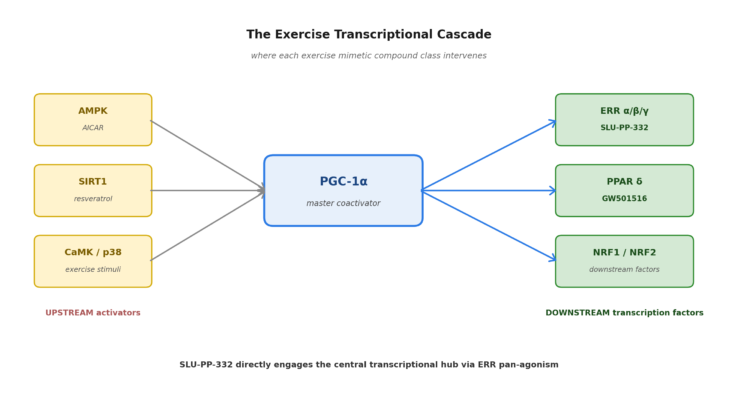
To evaluate any exercise mimetic, you need a model of what exercise adaptation actually involves at the molecular level. Endurance exercise activates several upstream signaling cascades in skeletal muscle and other metabolic tissues:
- Calcium/calmodulin signaling — activated by repeated muscle contraction, driving CaMK-dependent activation of PGC-1α
- AMP/ATP ratio shifts — energy depletion during exercise activates the AMPK kinase, which phosphorylates and activates PGC-1α
- p38 MAPK stress signaling — cellular-stress kinase activated by exercise, also converging on PGC-1α
- NAD+/NADH ratio shifts — metabolic NAD+ flux activates SIRT1, another PGC-1α activator
- Direct nuclear-receptor activation — ERRs and PPARδ are activated through both ligand-independent and putative ligand-dependent mechanisms during exercise
All of these upstream signals converge on a small number of master transcriptional regulators, with PGC-1α being the most central. PGC-1α partners with ERRs (the dominant transcription-factor partner for mitochondrial-biogenesis genes), PPARδ (for fatty-acid oxidation genes), NRF1, NRF2 and other downstream factors to drive expression of the mitochondrial-biogenesis and oxidative-metabolism gene network.
This architecture — many upstream signals converging on PGC-1α, then PGC-1α partnering with multiple transcription factors to drive a coordinated downstream program — explains why no single exercise mimetic reproduces the full exercise adaptation. Each compound class engages one node of the cascade. ERR agonists like SLU-PP-332 act directly on the ERR/PGC-1α transcriptional partnership at the most downstream point. AMPK activators like AICAR work upstream, activating PGC-1α itself but doing so alongside many AMPK-mediated effects unrelated to mitochondrial biogenesis. PPARδ agonists engage a parallel transcriptional partner of PGC-1α specialized for fatty-acid oxidation. The right tool depends on which node the experimental question targets. 🔗 INTERNAL LINK NEEDED: PGC-1 alpha — the master regulator of mitochondrial biogenesis — cluster post
The ERR/PGC-1α Pathway — SLU-PP-332
What it does
The estrogen-related receptors (ERRα, ERRβ, ERRγ) are orphan nuclear receptors that partner with PGC-1α to drive transcription of the mitochondrial-biogenesis and oxidative-metabolism gene network. They sit at the most central node of the exercise transcriptional cascade — the point where upstream signaling converges and downstream gene expression initiates. ERR agonism therefore engages the “hub” of the exercise gene program directly, without needing to activate the upstream stress-sensing pathways first.
The reference compound: SLU-PP-332
SLU-PP-332 is a synthetic small-molecule pan-ERR agonist developed at Saint Louis University by the Burris laboratory and first published in 2023 in ACS Chemical Biology. It activates ERRα with EC₅₀ ~98 nM, ERRβ ~230 nM and ERRγ ~430 nM in cell-based reporter assays. In vivo in mice, it produces increased treadmill endurance, oxidative-fiber adaptation and the transcriptional signature of acute aerobic exercise after just a few doses. Chronic dosing in obese mouse models reduced fat mass, improved glucose tolerance and increased energy expenditure without changes in food intake.
SLU-PP-332 is, as of 2026, the most direct and well-characterized chemical tool for engaging the ERR/PGC-1α transcriptional axis in research models. It is appropriate for: pan-ERR research questions, mitochondrial-biogenesis studies where ERRα engagement is the priority, exercise-mimetic studies that need clean transcriptional engagement without upstream pleiotropy, metabolic-syndrome and obesity models, and chronic-dosing protocols that require sustained receptor occupancy. Sourcetides supplies research-grade SLU-PP-332 at ≥99% verified purity with batch-specific Certificate of Analysis and same-day US dispatch.
Important caveats
SLU-PP-332 has a relatively short plasma half-life in rodents, which is why published chronic-dosing studies use twice-daily administration. There are no human clinical trials, no human pharmacokinetic data and no FDA-approved indication. Long-term safety data beyond a few-month timeframe in animals is still being generated. As with all exercise mimetics, results in research models should not be extrapolated to human physiology. Foundational paper: Billon et al. 2023 on PubMed. 🔗 INTERNAL LINK NEEDED: How does SLU-PP-332 work? The ERR mechanism explained — cluster post
The PPARδ Pathway — GW501516 (Cardarine)
What it does
PPARδ (peroxisome proliferator-activated receptor delta, also called PPARβ/δ) is a nuclear receptor that partners with PGC-1α to regulate fatty-acid oxidation gene expression. It engages a transcriptional program partially overlapping with but mechanistically distinct from the ERR program — more focused on lipid handling and fatty-acid β-oxidation enzymes, less on the broader mitochondrial-biogenesis program that ERRs control.
The reference compound: GW501516
GW501516 (commonly called Cardarine in the research-compound market) is a high-affinity PPARδ agonist developed by GlaxoSmithKline in the late 1990s. It was the foundational compound for the original 2008 Narkar exercise-mimetic paper that established the field. In rodent models, GW501516 increases fatty-acid oxidation, improves treadmill endurance, and produces metabolic shifts consistent with elevated lipid utilization.
GW501516 has a longer published track record than SLU-PP-332 because it has been studied since the early 2000s. It also has well-documented limitations: GSK terminated clinical development in the late 2000s following animal-toxicity findings (multi-organ tumor formation in long-term rodent studies), which is part of why it is now exclusively a research-use-only compound and is not progressing toward any human indication. Researchers using GW501516 in chronic-dosing protocols should be aware of these published findings and design studies accordingly.
When to use GW501516 vs SLU-PP-332
GW501516 is the appropriate research tool when the experimental question specifically targets the PPARδ transcriptional program — fatty-acid oxidation enzymology, lipid metabolism, PPARδ-driven gene expression. SLU-PP-332 is the appropriate tool when the question concerns the broader ERR/PGC-1α mitochondrial-biogenesis axis or the central hub of the exercise gene program. The two are not interchangeable, and they can be combined in research designs that need to engage both arms of the exercise transcriptional cascade. 🔗 INTERNAL LINK NEEDED: SLU-PP-332 vs Cardarine — mechanism, applications, and research differences — sub-pillar S1
The AMPK Pathway — AICAR and Metformin
What it does
AMPK (AMP-activated protein kinase) is the cellular energy-stress sensor. It is activated when the AMP/ATP ratio rises — the signature of energy depletion. Once activated, AMPK phosphorylates many downstream substrates, including PGC-1α (which it activates), and drives a broad metabolic shift toward catabolism: increased glucose uptake, increased fatty-acid oxidation, increased autophagy, and inhibition of anabolic processes like protein synthesis and lipogenesis.
From an exercise-mimetic perspective, AMPK is upstream of PGC-1α and therefore engages the entire downstream cascade — ERR signaling, PPARδ signaling, NRF1/NRF2 signaling and beyond. This makes AMPK activators broad-acting tools, but the breadth is also a limitation: AMPK activation produces many effects unrelated to mitochondrial biogenesis, and isolating ERR-specific or biogenesis-specific contributions becomes difficult.
The reference compounds: AICAR and metformin
AICAR (5-aminoimidazole-4-carboxamide ribonucleotide) is the canonical AMPK activator in research. It mimics AMP to allosterically activate AMPK, and it is the AMPK activator used in the original 2008 Narkar exercise-mimetic paper. AICAR has very poor pharmacokinetics — extremely short plasma half-life, requiring frequent or continuous infusion in chronic studies — which limits its practical usefulness for in-vivo research.
Metformin is a clinically used antidiabetic agent that activates AMPK indirectly through inhibition of mitochondrial complex I. It has decades of human and animal data and is sometimes discussed in exercise-mimetic contexts, but its primary mechanism is glycemic control rather than exercise-mimetic activity, and most metabolic researchers studying exercise mimetics use it as a comparator rather than a primary tool.
When to use AICAR or metformin vs SLU-PP-332
AICAR is the appropriate tool when the experimental question concerns AMPK signaling specifically — energy-stress sensing, autophagy regulation, the breadth of AMPK-mediated downstream effects. It is not the appropriate tool when the research question specifically concerns mitochondrial biogenesis or ERR signaling, because AICAR’s pleiotropy makes attribution difficult. SLU-PP-332 provides a much cleaner entry point into the downstream gene program without engaging the broader AMPK-mediated effects. 🔗 INTERNAL LINK NEEDED: SLU-PP-332 vs AICAR — ERR agonism vs AMPK activation — sub-pillar S4
The Rev-Erb Pathway — SR9009
What it does
Rev-Erbα and Rev-Erbβ are nuclear-receptor transcriptional repressors that link circadian-clock signaling with metabolic gene expression. They suppress expression of certain metabolic genes during specific phases of the circadian cycle, and Rev-Erb agonists shift this repressive activity in ways that produce metabolic effects with a strong circadian dependence. The pathway is biologically interesting because it integrates timing of metabolism with timing of activity, but it is mechanistically more complex than the ERR or PPARδ pathways for exercise-mimetic research.
The reference compound: SR9009
SR9009 is the most commonly used Rev-Erb agonist in research. The early work on SR9009 included a high-profile 2012 paper reporting endurance and metabolic effects in mice, which established it in the exercise-mimetic literature. The compound has well-documented pharmacokinetic limitations — very short plasma half-life and very poor oral bioavailability — that constrain its in-vivo usefulness. Some published work has also called into question whether the originally reported endurance effects were genuinely Rev-Erb-mediated or reflected off-target activity.
When to use SR9009 vs SLU-PP-332
SR9009 is the appropriate research tool when the experimental question specifically targets Rev-Erb signaling or the circadian-metabolic interface. For research questions concerning mitochondrial biogenesis, the exercise gene program more broadly, or the central transcriptional hub of metabolic adaptation, SLU-PP-332 provides cleaner pharmacology, better in-vivo behavior, and more interpretable downstream effects. 🔗 INTERNAL LINK NEEDED: SLU-PP-332 vs SR9009 — sub-pillar S2
The NNMT/NAD+ Pathway — 5-Amino-1MQ
What it does
Nicotinamide N-methyltransferase (NNMT) is an enzyme that consumes nicotinamide (a precursor of NAD+) and methyl groups (from S-adenosylmethionine, SAM) to produce 1-methylnicotinamide (1-MNA). Elevated NNMT activity in adipose tissue and other metabolic tissues effectively drains the cellular NAD+ pool and reduces SAM availability, which has been linked to metabolic dysfunction in obesity and aging. NNMT inhibition raises cellular NAD+ precursor availability and elevates SAM, with downstream effects on energy metabolism.
The reference compound: 5-Amino-1MQ
5-Amino-1MQ (5-amino-1-methylquinolinium) is a small-molecule NNMT inhibitor that has been studied in obesity and metabolic-research models, primarily for its effects on adipocyte energy metabolism. The pathway is distinct from the ERR/PGC-1α axis but is sometimes included in “exercise mimetic” discussions because of its peripheral connection to NAD+ availability and metabolic-adaptation gene expression.
When to use 5-Amino-1MQ vs SLU-PP-332
5-Amino-1MQ is appropriate when the research question concerns NNMT enzymology, NAD+ pool dynamics, or adipocyte-specific metabolism. It is not a tool for engaging the ERR/PGC-1α transcriptional program, and it should not be used as a substitute for ERR-specific research. Researchers studying mitochondrial biogenesis or the exercise gene program need a different compound class. 🔗 INTERNAL LINK NEEDED: SLU-PP-332 vs 5-Amino-1MQ — cluster post
The Urolithin Pathway — Urolithin A / Mitopure
What it does
Urolithin A is a microbiome-derived metabolite produced by gut bacteria from dietary ellagitannins (found in pomegranate and certain other plants). It has been studied for its effects on mitochondrial quality control, particularly mitophagy — the selective autophagic recycling of damaged mitochondria. Mitophagy is an important counterpart to biogenesis: maintaining mitochondrial quality requires both producing new mitochondria and selectively removing damaged ones. Urolithin A appears to enhance the mitophagy arm of this balance, distinguishing it from compounds that act primarily on biogenesis.
The reference product: Urolithin A / Mitopure
Urolithin A is unusual within this guide in that it has progressed into human clinical research and is sold as a dietary supplement (under the trade name Mitopure by Timeline Nutrition) for human consumption with regulatory clearance for that purpose. Within preclinical research, Urolithin A is used as a mitophagy-enhancing tool compound, with documented effects on mitochondrial quality and muscle function in aged research models.
When to use Urolithin A vs SLU-PP-332
Urolithin A is appropriate for research questions concerning mitochondrial quality control, mitophagy regulation, and aged or stressed mitochondrial populations. It is not a tool for inducing mitochondrial biogenesis or for engaging the ERR/PGC-1α transcriptional program. Research programs studying both arms of mitochondrial homeostasis (biogenesis and mitophagy) sometimes use both compound classes in combination. 🔗 INTERNAL LINK NEEDED: SLU-PP-332 vs Urolithin A — biogenesis vs mitophagy — cluster post
Mitochondrial-Derived Peptides — MOTS-c
What it does
MOTS-c is a 16-amino-acid peptide encoded within the mitochondrial 12S rRNA gene — one of a small family of mitochondrial-derived peptides that signal between mitochondria and the nucleus. MOTS-c has been characterized as a metabolic regulator that influences AMPK signaling and glucose metabolism. It is a true peptide (in contrast to most other compounds in this guide, which are non-peptidic small molecules) and is therefore stored, reconstituted and handled by peptide research protocols rather than small-molecule chemistry conventions.
When to use MOTS-c
MOTS-c is appropriate for research questions concerning mitochondrial-derived peptide signaling, mitonuclear communication, or AMPK-dependent metabolic regulation through this specific peptide axis. It is mechanistically distinct from ERR agonists, PPAR agonists, and other exercise mimetics in this guide. Researchers comparing MOTS-c to other exercise-mimetic compounds should account for its peptide nature, including different reconstitution requirements, storage stability and pharmacokinetic profile. 🔗 INTERNAL LINK NEEDED: SLU-PP-332 vs MOTS-c — small molecule vs mitochondrial peptide — cluster post
Side-by-Side Comparison of All Major Exercise Mimetic Compounds
| Compound | Class | Primary target | Position in cascade | Best research application | Practical PK |
|---|---|---|---|---|---|
| SLU-PP-332 | Small-molecule pan-agonist | ERRα/β/γ | Central transcriptional hub | Mitochondrial biogenesis, exercise gene program, metabolic syndrome | Short half-life; BID dosing |
| GW501516 (Cardarine) | Small-molecule agonist | PPARδ | Parallel branch of cascade | Fatty-acid oxidation; lipid metabolism research | Reasonable; chronic toxicity in animals documented |
| AICAR | Nucleoside analog | AMPK (indirect) | Upstream energy sensor | AMPK signaling; energy-stress research | Very short half-life; PK-limited |
| Metformin | Biguanide | Complex I → AMPK | Upstream (indirect) | Comparator; glycemic-research tool | Established human PK |
| SR9009 | Small-molecule agonist | Rev-Erbα/β | Circadian-metabolic interface | Chronobiology; circadian metabolism | Very short half-life; poor oral bioavailability |
| 5-Amino-1MQ | Small-molecule inhibitor | NNMT | NAD+ pool peripheral | Adipocyte metabolism; NAD+ research | Limited published in-vivo PK |
| Urolithin A | Microbiome metabolite | Mitophagy regulators | Quality control (not biogenesis) | Mitophagy, aged-tissue research | Established; available as supplement |
| MOTS-c | Mitochondrial peptide | AMPK pathway (peptide-mediated) | Mitonuclear signaling | Mitonuclear communication research | Peptide PK considerations |
The compounds in this table are not interchangeable. Each engages a different node of the metabolic-adaptation network, and the right tool depends on which specific transcriptional or signaling question your research is targeting.
How Researchers Choose Between Exercise Mimetics
The selection question is rarely “which is best” in absolute terms — it is “which is the right tool for this experiment.” A working framework:
If the research question concerns mitochondrial biogenesis or the central exercise gene program
SLU-PP-332 is the appropriate first-line tool. It engages the ERR/PGC-1α transcriptional partnership directly at the most central node of the cascade, with relatively clean pharmacology and documented in-vivo efficacy. Research-grade SLU-PP-332 from Sourcetides with verified purity and batch documentation is the supply path for this work. 🔗 INTERNAL LINK NEEDED: Mitochondrial Biogenesis Pathways, Markers and Research Compounds — pillar P3
If the research question concerns fatty-acid oxidation or PPARδ biology specifically
GW501516 is the established research tool, with awareness of the documented animal-toxicity profile that constrains chronic-dosing study design.
If the research question concerns AMPK signaling or energy-stress sensing
AICAR is the canonical research tool, with planning for the PK constraints that complicate in-vivo work.
If the research question concerns circadian-metabolic interaction
SR9009 is the available Rev-Erb tool, with appropriate awareness of published concerns about off-target activity and PK limitations.
If the research question concerns mitophagy or mitochondrial quality control
Urolithin A is the appropriate tool. This is a different research question from mitochondrial biogenesis, and the two tools should not be substituted for each other.
If the research question concerns NAD+ pool dynamics or adipocyte metabolism
5-Amino-1MQ engages the NNMT pathway. This is peripheral to the core exercise transcriptional cascade and serves a different research purpose.
If the research question concerns mitochondrial-derived peptide signaling
MOTS-c is the relevant tool, with peptide-handling protocols appropriate to its chemical class.
Common combinations
Some research designs use multiple compounds in combination to engage parallel arms of the cascade simultaneously. The 2008 Narkar paper used GW501516 + AICAR. Modern studies sometimes combine SLU-PP-332 with PPARδ agonism for studies engaging both downstream branches of the PGC-1α-coordinated transcriptional response. Combination work requires more careful experimental design but can produce more complete recapitulation of the exercise transcriptional response than single-compound treatment.
Research Applications by Compound Class
Mitochondrial biogenesis research
The flagship application of exercise mimetics, focused on the ERR/PGC-1α pathway. Standard endpoints: mitochondrial DNA copy number, citrate synthase activity, OXPHOS protein expression by Western blot, mitochondrial membrane potential, Seahorse XF respirometry. SLU-PP-332 is the primary tool. 🔗 INTERNAL LINK NEEDED: SLU-PP-332 in mitochondrial biogenesis cell-culture protocols — methods cluster post
Endurance and treadmill performance studies
In-vivo characterization of exercise-mimetic compound classes typically uses mouse treadmill time-to-exhaustion as a primary endpoint, with secondary readouts of muscle fiber-type composition, mitochondrial density and gene expression. Both ERR agonists and PPARδ agonists have published data in this paradigm. 🔗 INTERNAL LINK NEEDED: Using SLU-PP-332 in mouse treadmill endurance studies — methods cluster post
Metabolic syndrome and obesity research
Diet-induced obese (DIO) and ob/ob mouse models test whether exercise mimetic compounds can reverse fat accumulation and glucose intolerance pharmacologically. SLU-PP-332 has the most recent published data in this paradigm (Banerjee 2024); GW501516 also has documented effects. Endpoints: body composition by EchoMRI, glucose tolerance, insulin tolerance, energy expenditure by indirect calorimetry. SLU-PP-332 in obesity models — Banerjee et al. 2024.
Aging and senescence research
Mitochondrial dysfunction is a hallmark of aged cells, and exercise mimetics are tested as tools to restore mitochondrial function in aged tissues. Both biogenesis-focused tools (SLU-PP-332) and mitophagy-focused tools (Urolithin A) have research applications in this context. 🔗 INTERNAL LINK NEEDED: ERR agonists in aging research — cluster post
Cardiac and renal research
ERRγ expression in the heart and the published kidney-aging data on ERR-agonist activity have established cardiac and renal applications for SLU-PP-332 specifically. PPARδ agonists have separate cardiac applications focused on lipid metabolism.
Methods and biomarker validation
Across all applications, validation that an exercise mimetic compound is actually engaging its intended pathway requires standard biomarker readouts. For ERR agonists: DDIT4, TFAM, NRF1, CPT1b mRNA by qPCR; OXPHOS protein by Western blot; Seahorse XF for functional confirmation. For PPARδ agonists: PDK4, ANGPTL4, CPT1b. For AMPK activators: phospho-ACC, phospho-AMPKα, phospho-Raptor. The validation panel differs by compound class. 🔗 INTERNAL LINK NEEDED: qPCR biomarker panel for SLU-PP-332 activity validation — cluster post
What to Look for When Buying Exercise Mimetic Research Compounds
The research-chemical market quality spectrum is wide. The differences between high-quality and low-quality supply matter most for compounds where wrong identity, low purity or unknown contaminants would invalidate experimental data — which is essentially every exercise-mimetic compound class. The minimum quality criteria for any serious research-chemical supplier:
Verified purity by HPLC
Research-grade compounds should be supplied at ≥99% purity, demonstrated by reverse-phase HPLC analysis with the underlying chromatographic data accessible. Self-reported purity without analytical documentation is meaningless. 🔗 INTERNAL LINK NEEDED: SLU-PP-332 purity standards — how to verify what you are buying — sub-pillar S6
Identity confirmation by mass spectrometry
HPLC purity confirms the dominant peak is a single compound; mass spectrometry confirms which compound. Both are required for credible research-grade supply. Suppliers providing only HPLC without MS confirmation are providing incomplete data.
Batch-specific COA
The Certificate of Analysis should reference the exact lot in your bottle, not a generic template reused across multiple batches. Lot-specific COAs are required for research reproducibility documentation.
Independent third-party testing
Self-testing on in-house instruments is subject to obvious conflict-of-interest concerns. Independent third-party laboratory analysis — with the testing lab named on the COA — is the standard for credible supply.
Correct chemical classification
Most exercise mimetics in this guide are small molecules, not peptides. Suppliers who classify SLU-PP-332, GW501516, AICAR, SR9009 or 5-Amino-1MQ as “peptides” are technically incorrect and frequently provide handling guidance derived from peptide protocols rather than small-molecule chemistry. (MOTS-c is a true peptide; Urolithin A is a microbiome metabolite; the rest are small molecules.) Correct classification is a basic competency signal. 🔗 INTERNAL LINK NEEDED: Why SLU-PP-332 is not a peptide — cluster post
US-based dispatch
For US-based researchers, US-based dispatch eliminates customs risk, longer transit times and the possibility of seizure on international shipments — a research-program disruption with no relationship to the supplier’s compound quality. Sourcetides dispatches research compounds same-day from a US facility on orders before 12:00 PM EST.
Specialist support
Research-grade suppliers respond to COA copy requests, batch-documentation queries and technical questions through teams that understand research-chemical supply — not generic e-commerce support. The quality of post-order support is part of what separates research-grade from commodity supply. 🔗 INTERNAL LINK NEEDED: Where to buy SLU-PP-332 online — quality-first buyer’s guide — sub-pillar S5
Limitations and Open Questions
No exercise mimetic reproduces full exercise adaptation
This is the most important limitation of the entire compound class and bears repeating. Exercise produces mechanical loading, cardiovascular conditioning, neuroendocrine adaptations, tendon and bone strengthening, and tissue-specific stress responses well beyond what any pharmacological tool engages. Exercise mimetics reproduce the transcriptional and metabolic component of adaptation in research models. They do not replace exercise.
No human pharmacokinetic data on most compounds
SLU-PP-332, AICAR, SR9009 and 5-Amino-1MQ have no human PK characterization. GW501516 has limited human data from terminated clinical development. Metformin and Urolithin A have established human PK because they have other approved or supplement uses. Researchers using compounds with no human PK should not extrapolate rodent dosing to human-equivalent estimates — this is bad pharmacology and outside research-use-only supply terms.
Pharmacokinetic limitations across the class
Most exercise-mimetic small molecules have pharmacokinetic constraints that complicate in-vivo work. AICAR and SR9009 have very short half-lives. SLU-PP-332 has a manageable but short rodent half-life requiring twice-daily dosing for chronic studies. Improving the PK profiles of exercise-mimetic compounds is an active medicinal-chemistry area.
Long-term safety profiles incomplete
Most exercise-mimetic compounds have limited long-term toxicity data in animals. GW501516 has documented chronic-toxicity findings that ended its clinical development. Long-term consequences of sustained pharmacological activation of these pathways — particularly nuclear-receptor pathways like ERR and PPARδ — remain incompletely characterized.
Off-target activity
All small-molecule research compounds have potential off-target binding partners. Research designs should include appropriate controls (vehicle, where possible genetic knockouts or knockdowns of the intended target) to attribute experimental effects specifically to the intended pathway rather than off-target activity.
The Future of Exercise Mimetic Research
Several near-term directions are likely to shape the next phase of the field:
Improved selectivity and PK. Medicinal-chemistry programs are producing analogues of leading scaffolds (including the SLU-PP-332 series) with improved isoform selectivity and longer half-lives. The Okda et al. 2026 work on SLU-PP-332 analogues is one example. Recent SAR work on the SLU-PP-332 series.
Combination approaches. Engaging multiple parallel arms of the exercise cascade (ERR + PPARδ, for example) may produce more complete transcriptional recapitulation than single-compound treatment. This research direction is expanding.
Biomarker validation work. Standardizing the validation panels used to confirm pathway engagement across compound classes is improving experimental reproducibility.
Disease-model expansion. Beyond skeletal-muscle metabolism and obesity, current research is extending exercise-mimetic compound work into cardiac, renal, hepatic, neurological and aging models. The breadth of pathway expression across tissues means each compound class has applications well beyond the original endurance-research context. 🔗 INTERNAL LINK NEEDED: 2026 metabolic research compound trends — cluster post
Frequently Asked Questions
What is an exercise mimetic compound?
An exercise mimetic compound is a research-use-only small molecule or peptide that pharmacologically reproduces specific transcriptional and metabolic adaptations normally produced by aerobic exercise. The most-studied current example is SLU-PP-332, a pan-ERR agonist that engages the central transcriptional hub of mitochondrial biogenesis.
What is the best exercise mimetic for research?
There is no single best exercise mimetic — the right choice depends on the research question. For studies of mitochondrial biogenesis or the exercise gene program more broadly, SLU-PP-332 is the leading current tool. For PPARδ-specific research, GW501516. For AMPK signaling, AICAR. For mitophagy, Urolithin A.
Are exercise mimetics safe?
Exercise mimetic research compounds are research-use-only and have not been evaluated for human safety. Most have no human pharmacokinetic data. They should be used only by qualified researchers in compliant laboratory settings, in accordance with research-use-only supply terms.
Can exercise mimetics replace exercise?
No. Exercise mimetics reproduce the transcriptional component of exercise adaptation in research models but do not reproduce the mechanical loading, cardiovascular conditioning, neuroendocrine adaptations or tissue-specific stress responses that real exercise produces. They are research tools, not exercise replacements.
How do exercise mimetics differ from each other?
Each compound class engages a different node of the exercise transcriptional cascade. SLU-PP-332 acts on the central ERR/PGC-1α transcriptional hub; GW501516 engages PPARδ for fatty-acid oxidation; AICAR acts upstream on AMPK energy-stress signaling; SR9009 targets the circadian Rev-Erb pathway; Urolithin A enhances mitophagy rather than biogenesis.
What does “exercise in a pill” refer to?
The phrase popularized after the 2008 Narkar paper showing that GW501516 plus AICAR could enhance endurance in sedentary mice. The phrase oversimplifies what exercise mimetics actually do — they reproduce the transcriptional component of exercise adaptation in research models, not the full physiological response to exercise.
Is SLU-PP-332 better than Cardarine?
They engage different pathways and answer different research questions. SLU-PP-332 is the appropriate tool for ERR/PGC-1α mitochondrial-biogenesis research. Cardarine (GW501516) is the appropriate tool for PPARδ fatty-acid oxidation research. They are not interchangeable.
How are exercise mimetics dosed in research models?
Dosing varies by compound. SLU-PP-332 is typically dosed 30–50 mg/kg intraperitoneally twice daily in mouse studies. GW501516 in rodent studies has used 1–10 mg/kg orally. AICAR requires high doses (often 250–500 mg/kg) due to short half-life. Researchers should follow current published protocols.
Where can researchers buy exercise mimetic compounds in the USA?
Research-grade exercise mimetic compounds are supplied by specialized research-chemical companies. Sourcetides supplies SLU-PP-332 (Sloop) at ≥99% verified purity with batch-specific Certificate of Analysis and same-day US dispatch. View the SLU-PP-332 product page.
Are exercise mimetics legal in the United States?
Most exercise mimetics in current research (SLU-PP-332, GW501516, AICAR, SR9009, 5-Amino-1MQ) are not scheduled controlled substances under US federal law and can be sold for research use only. They are not approved for human consumption and are not legal as dietary supplements. Researchers should verify current regulatory status in their specific jurisdiction.
What biomarkers should I measure to confirm exercise mimetic activity?
The biomarker panel depends on the pathway. For ERR agonists: DDIT4, TFAM, NRF1, CPT1b mRNA by qPCR plus OXPHOS proteins by Western blot. For PPARδ: PDK4, ANGPTL4, CPT1b. For AMPK: phospho-ACC, phospho-AMPKα. Pathway-specific validation is required for credible attribution of experimental effects.
Can I combine multiple exercise mimetics in one study?
Yes — combination treatments engaging multiple parallel arms of the exercise cascade (e.g., ERR + PPARδ) are an active research direction and can produce more complete transcriptional recapitulation than single-compound treatment. Combination designs require more careful experimental controls.
Final Thoughts: Choosing the Right Exercise Mimetic for Your Research
The exercise-mimetic compound class is more diverse and more mechanistically heterogeneous than its popular framing “exercise in a pill” suggests. Each compound engages a different node of the metabolic-adaptation network, and the right tool for your research depends entirely on which transcriptional or signaling question you are asking. SLU-PP-332 is currently the most direct and well-characterized chemical tool for engaging the central ERR/PGC-1α transcriptional hub of the exercise gene program, making it the default starting point for laboratories working on mitochondrial biogenesis, exercise transcriptional adaptation or metabolic-syndrome research. Compounds engaging other nodes — PPARδ, AMPK, Rev-Erb, NNMT, mitophagy regulators, mitochondrial peptides — have their own appropriate research applications and should be selected based on experimental fit, not on which has the most marketing visibility.
For all of these compounds, the practical priorities are the same: source from suppliers with verified-purity material and batch-matched analytical documentation; validate compound activity using a pathway-specific biomarker panel before drawing experimental conclusions; design appropriate controls; and stay strictly within research-use-only supply terms.
Buy Research-Grade SLU-PP-332 (Sloop) from Sourcetides USA
Sourcetides supplies SLU-PP-332 — the leading current ERR-pathway exercise-mimetic research compound — at ≥99% verified purity by independent HPLC and mass spectrometry, with a batch-specific Certificate of Analysis included with every order and same-day US dispatch on orders placed before 12:00 PM EST. For laboratory research use only.
- The Complete Guide to ERR Agonists in Metabolic Research — pillar P1
- PGC-1 alpha — the master regulator of mitochondrial biogenesis — cluster post
- How does SLU-PP-332 work? The ERR mechanism explained — cluster post
- SLU-PP-332 vs Cardarine — mechanism, applications, and research differences — sub-pillar S1
- SLU-PP-332 vs AICAR — ERR agonism vs AMPK activation — sub-pillar S4
- SLU-PP-332 vs SR9009 — sub-pillar S2
- SLU-PP-332 vs 5-Amino-1MQ — cluster post
- SLU-PP-332 vs Urolithin A — biogenesis vs mitophagy — cluster post
- SLU-PP-332 vs MOTS-c — small molecule vs mitochondrial peptide — cluster post
- Mitochondrial Biogenesis Pathways, Markers and Research Compounds — pillar P3
- SLU-PP-332 in mitochondrial biogenesis cell-culture protocols — methods cluster post
- Using SLU-PP-332 in mouse treadmill endurance studies — methods cluster post
- ERR agonists in aging research — cluster post
- qPCR biomarker panel for SLU-PP-332 activity validation — cluster post
- SLU-PP-332 purity standards — how to verify what you are buying — sub-pillar S6
- Why SLU-PP-332 is not a peptide — cluster post
- Where to buy SLU-PP-332 online — quality-first buyer’s guide — sub-pillar S5
- 2026 metabolic research compound trends — cluster post
