
$49.99
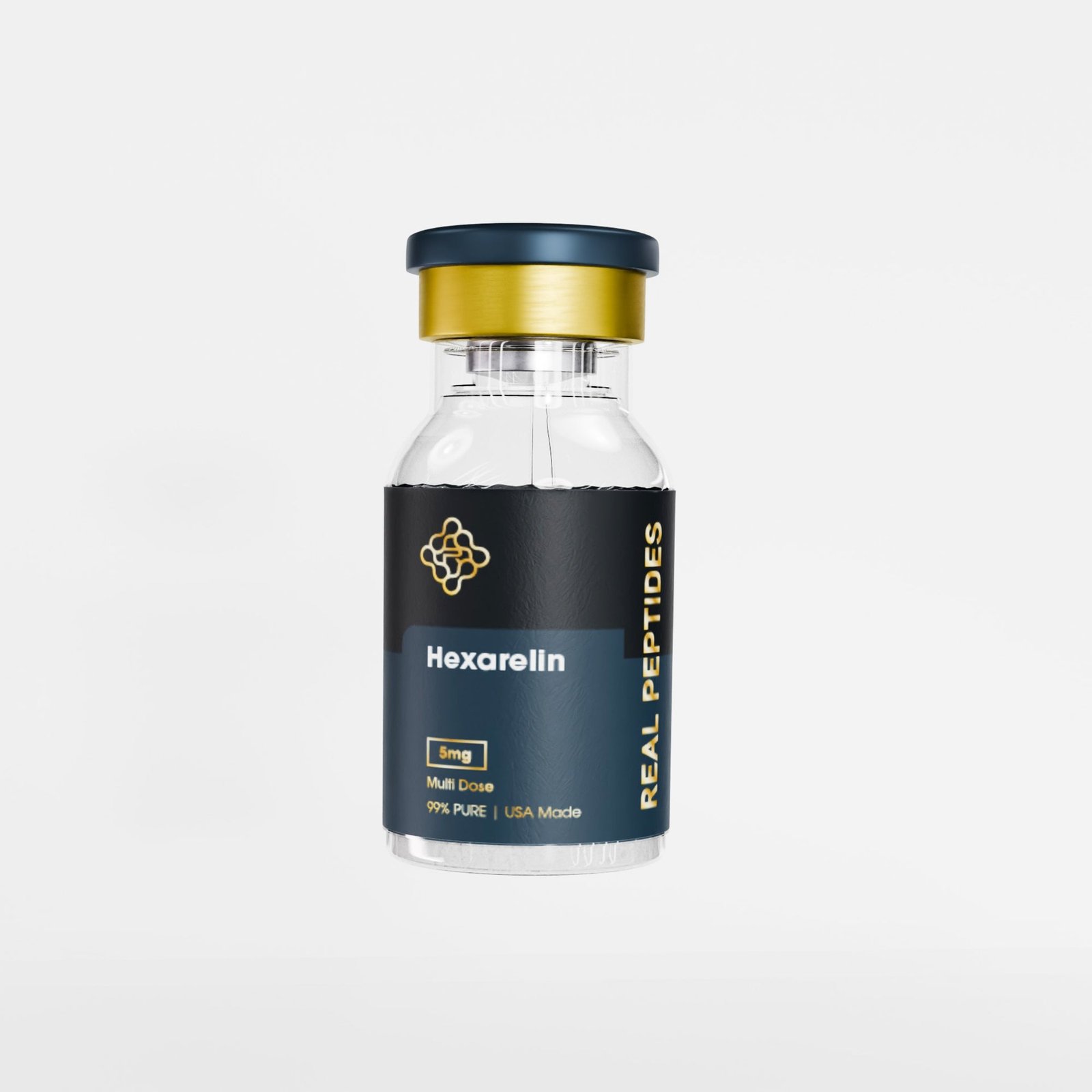
Buy Hexarelin Peptide 5 mg Online from SourceTides. CAS 140703-51-1 | Examorelin | His–D-2-methylTrp–Ala–Trp–D-Phe–Lys–NH₂ | MW 887.04 g/mol | C₄₇H₅₈N₁₂O₆ | ≥99% HPLC purity (D-2-methylTrp confirmed by MS; +14 Da vs GHRP-6) | Endotoxin <1 EU/mg (LAL) | Full CoA | Lyophilised | Dry-ice cold chain. Most potent acute GH release of all synthetic GHRPs. Unique dual GHS-R1a + CD36 mechanism. GH-independent cardioprotection confirmed. WADA S2 prohibited. For in-vitro laboratory research use only. Not for human consumption.
Buy Hexarelin Peptide 5 mg Online | Examorelin | GHS-R1a + CD36 Dual Agonist | ≥99% Purity | CoA | SourceTides
Buy Hexarelin Peptide 5 mg Online from SourceTides.
Hexarelin (INN: Examorelin; CAS 140703-51-1; developmental codes EP-23905 and MF-6003) is a synthetic hexapeptide growth hormone secretagogue and the most potent acute GH releaser in the GHRP family.
Developed by Romano Deghenghi and Mediolanum Farmaceutici in Italy in the 1990s as a structural modification of GHRP-6, Hexarelin replaces the L-tryptophan at position 2 with D-2-methyltryptophan — a single stereochemical and methylation change that dramatically increases GHS-R1a binding affinity, receptor activation potency, and resistance to enzymatic degradation.
What distinguishes Hexarelin from every other GHRP in research is its dual receptor mechanism: it activates GHS-R1a (the ghrelin/growth hormone secretagogue receptor) for pituitary GH release, and independently activates CD36 (a class B scavenger receptor expressed on cardiomyocytes, macrophages, and adipose tissue) for GH-independent cardioprotective effects.
This CD36-mediated cardioprotection — demonstrated in ischaemia-reperfusion, cardiac fibrosis, and hypertrophy models — is not shared by Ipamorelin, GHRP-2, GHRP-6, or any other GHRP in research.
Every SourceTides vial is lyophilised, tested at ≥99% HPLC purity, and ships with a full lot-specific Certificate of Analysis.
For in-vitro laboratory research use only. Not for human consumption.
Hexarelin Peptide 5 mg — Technical Specifications
| Parameter | Specification |
|---|---|
| Common Name | Hexarelin |
| INN / Synonyms | Examorelin; EP-23905; MF-6003; H-2-Me-WAWFK; His-2MeTrp-Ala-Trp-D-Phe-Lys-NH₂ |
| CAS Number | 140703-51-1 |
| Molecular Formula | C₄₇H₅₈N₁₂O₆ |
| Molecular Weight | 887.04 g/mol |
| Peptide Length | 6 amino acids (hexapeptide); C-terminal amide (–NH₂) |
| Amino Acid Sequence | His–D-2-methylTrp–Ala–Trp–D-Phe–Lys–NH₂ |
| Key Structural Features | D-2-methyltryptophan at position 2 (vs L-Trp in GHRP-6): D-configuration + methyl group increases GHS-R1a binding affinity and proteolytic resistance; D-Phe at position 5: additional D-amino acid for enzymatic stability; C-terminal amide (–NH₂): blocks carboxypeptidase cleavage |
| Developer | Romano Deghenghi, Europeptides, & Mediolanum Farmaceutici (Italy); Phase 2 clinical trials completed; development discontinued 2005 for strategic reasons (not safety) |
| Primary Receptor 1 | GHS-R1a (Growth Hormone Secretagogue Receptor 1a; ghrelin receptor) — pituitary somatotrophs + hypothalamic arcuate nucleus; Gq/11 and Gi/o coupled; drives GH pulse amplitude and frequency increase |
| Primary Receptor 2 (unique) | CD36 (Class B Scavenger Receptor; Fatty Acid Translocase) — cardiomyocytes, macrophages, adipose tissue; GH-independent cardioprotection; anti-fibrotic; anti-apoptotic; ischaemia-reperfusion protection; NO GHRP other than Hexarelin has confirmed CD36-mediated cardioprotection |
| GH Potency vs GHRP Family | Most potent acute GH release of all synthetic GHRPs; ED₅₀ (IV) ~0.48 µg/kg; GH peak 15–20 min post-injection; 2–3× higher GH AUC than Ipamorelin at equivalent doses; superior to GHRP-6, GHRP-2, and Ipamorelin for acute GH magnitude |
| Cortisol / Prolactin Effect | Elevated — dose-dependent cortisol and prolactin increase at GH-releasing doses; distinguishes Hexarelin from Ipamorelin (which produces NO cortisol/prolactin elevation) and GHRP-2 (modest); significant research confounder that must be controlled |
| Half-Life | ~55–70 minutes (plasma half-life; SC/IV administration); longer than native GHRP-6 (~35–40 min) due to D-2-methylTrp and D-Phe stabilisation |
| Tachyphylaxis (Desensitisation) | Documented receptor desensitisation within 4–6 weeks of continuous dosing in animal and human studies; GH response partially recovers with 4-week washout; most pronounced tachyphylaxis of any GHRP — a critical research design constraint |
| Physical Form | White lyophilised powder |
| Purity | ≥99% (RP-HPLC); identity confirmed by ESI-MS; D-2-methylTrp confirmed by chiral HPLC or MS fragmentation |
| Endotoxin | <1 EU/mg (LAL chromogenic assay) |
| Solubility | Soluble in sterile water and PBS pH 7.4; 1–2 mg/mL stock recommended; dissolve gently without vortexing |
| Storage — Lyophilised | −20°C long-term (stable 24 months); 2–8°C short-term; protect from light and moisture |
| Storage — Reconstituted | 2–8°C for up to 7 days; −20°C for longer; avoid freeze-thaw; aliquot into single-use volumes |
| Certificate of Analysis | Lot-specific CoA with every order; HPLC chromatogram + MS identity + endotoxin result |
| Regulatory Status | Not FDA, EMA, TGA, or Health Canada approved; Phase 2 clinical trials completed (GH deficiency, congestive heart failure); development discontinued 2005; research compound only |
| WADA Status | Prohibited — WADA S2 (Peptide Hormones, Growth Factors and Related Substances); banned in-competition and out-of-competition |
What Is Hexarelin?
Hexarelin (Examorelin) is the most potent synthetic growth hormone-releasing peptide ever developed for research — and also the only GHRP with a confirmed GH-independent cardioprotective mechanism via the CD36 receptor. These two properties, which seem unrelated, define everything that makes Hexarelin scientifically distinct.
To understand Hexarelin, start with GHRP-6 — the founding member of the synthetic GHRP family developed in the 1980s by Cyril Bowers at Tulane University. GHRP-6 (His-DTrp-Ala-Trp-DPhe-Lys-NH₂) was the first synthetic hexapeptide demonstrated to stimulate GH release by binding the then-unidentified ghrelin receptor. Its structure became the template for the entire synthetic GHRP family. Hexarelin was created by modifying position 2 of GHRP-6: replacing D-tryptophan with D-2-methyltryptophan — adding a single methyl group to the 2-position of the indole ring. This seemingly minor modification produced a peptide with substantially higher GHS-R1a binding affinity, dramatically increased potency for GH release, and greater resistance to plasma peptidases.
Hexarelin was developed by Romano Deghenghi and commercialised by Mediolanum Farmaceutici in Italy under developmental codes EP-23905 and MF-6003. It completed Phase 2 clinical trials for growth hormone deficiency and congestive heart failure. The GH-deficiency trials confirmed Hexarelin as the most potent GH secretagogue tested in humans — producing GH peaks of 20–40 ng/mL at 2 µg/kg IV, exceeding all other GHRPs tested under identical conditions. The congestive heart failure trials provided human evidence of Hexarelin’s cardiac effects, demonstrating improvements in left ventricular function that were attributed, at least in part, to a non-GH mechanism.
Development was discontinued in 2005 — not for safety reasons, but for strategic and commercial reasons, including the difficulty of demonstrating superiority over existing GH axis treatments and the challenges of obtaining regulatory approval for a compound with documented receptor desensitisation on chronic use. The compound remains the most potent GHRP available for research and the primary tool for studying the CD36-mediated cardioprotection pathway. When you buy Hexarelin Peptide 5 mg from SourceTides, you receive ≥99% HPLC-pure Examorelin with D-2-methylTrp identity confirmed and full lot-specific CoA.
The D-2-methylTrp Modification: Why Hexarelin Outperforms GHRP-6
The D-2-methyltryptophan at position 2 of Hexarelin is the single structural feature that distinguishes it from GHRP-6 and explains its superior potency. Understanding it helps researchers choose the right GHRP for their experimental design.
| Position 2 Residue | Peptide | GHS-R1a Affinity | Enzymatic Stability | Effect on Cortisol |
|---|---|---|---|---|
| L-Trp (parent) | GHRP-6 (original sequence) | High | Moderate | Moderate increase |
| D-Trp (standard GHRP-6) | GHRP-6 | High — D-config improves affinity | High — D-amino acid resists proteolysis | Moderate-high increase |
| D-2-methylTrp (Hexarelin) | Hexarelin (this product) | Highest — methyl group optimises hydrophobic pocket interaction at GHS-R1a | Highest — D-config + steric methyl shielding | High increase — dose-dependent cortisol and prolactin elevation |
| D-2-Nal (naphthalanine) | Ipamorelin | High — bulkier aromatic ring; selective for GHS-R1a without cortisol pathway | High | None — hallmark selectivity advantage |
The methyl group at the 2-position of Hexarelin’s D-Trp residue fits more precisely into the GHS-R1a binding pocket than the unmethylated D-Trp of GHRP-6 — explaining the higher binding affinity and greater GH release per unit dose. The trade-off is that this superior potency at GHS-R1a comes with stronger activation of the cortisol and prolactin pathways that GHS-R1a activation also drives, and — critically — faster receptor desensitisation through GHS-R1a downregulation. For research: choose Hexarelin when maximum acute GH amplitude or CD36 cardiac research is the goal. Choose Ipamorelin when chronic GH axis activation without cortisol or desensitisation is the goal.
How Hexarelin Works — Dual Receptor Mechanism
Mechanism 1 — GHS-R1a Activation: Maximum GH Pulse Amplitude
Hexarelin binds GHS-R1a — the ghrelin receptor — on pituitary somatotrophs and hypothalamic arcuate nucleus neurons with higher affinity than any other synthetic GHRP. GHS-R1a is a Gq/11 and Gi/o coupled GPCR. Hexarelin’s D-2-methylTrp residue optimises interaction with the transmembrane hydrophobic binding pocket of GHS-R1a, producing a larger receptor activation signal per molecule than GHRP-6, GHRP-2, or Ipamorelin at equivalent molar concentrations.
At the pituitary, GHS-R1a activation increases cytosolic calcium via Gq/11-PLCβ-IP₃, which directly triggers GH secretory granule exocytosis from somatotroph cells. At the hypothalamus, GHS-R1a on arcuate neurons drives GHRH (Growth Hormone-Releasing Hormone) release, which synergises with the direct pituitary effect. This dual hypothalamic + pituitary activation is one reason GHRPs produce larger GH pulses than GHRH agonists alone — and why Hexarelin combined with a GHRH analog like CJC-1295 or Sermorelin produces synergistically amplified GH responses in research models.
The key pharmacodynamic difference from other GHRPs: at 0.48 µg/kg IV (the ED₅₀ for Hexarelin), the GH response is already near-maximal. Doubling the dose to 1.0 µg/kg adds marginal additional GH but substantially increases cortisol and prolactin. This ceiling effect means that dose escalation beyond 1 µg/kg in research protocols adds hormonal side effects without proportionate GH benefit. All GH pulse peaks occur at 15–20 minutes post-injection.
Mechanism 2 — CD36 Activation: GH-Independent Cardioprotection
CD36 (Cluster of Differentiation 36; Fatty Acid Translocase) is a class B scavenger receptor expressed on cardiomyocytes, macrophages, platelets, endothelial cells, and adipocytes. Its normal physiological roles include long-chain fatty acid uptake in heart and skeletal muscle, oxidised LDL internalisation in macrophages, and thrombospondin-1 signalling. The discovery that Hexarelin binds CD36 and activates it independently of GHS-R1a was unexpected and mechanistically significant — it means Hexarelin’s cardiac effects can occur even in GH-deficient or hypophysectomised (pituitary-removed) animals, where GH-dependent anabolic effects are absent.
Hexarelin’s CD36-mediated cardioprotective mechanism activates the PI3K/Akt pro-survival signalling cascade and ERK1/2 phosphorylation in cardiomyocytes. This pathway suppresses mitochondrial apoptosis (via Bcl-2 upregulation and caspase-3 inhibition), reduces oxidative stress markers (malondialdehyde production), and inhibits the inflammatory cytokine response in ischaemic myocardium (IL-1β downregulation; IL-1Ra upregulation). The cardiac effects also include anti-fibrotic signalling: Hexarelin treatment reduces TGF-β1 expression, suppresses myofibroblast differentiation, and decreases interstitial collagen deposition in post-ischaemia remodelling models — all via CD36, independent of GH.
The most direct evidence for GH-independence comes from studies in hypophysectomised rats and GH-deficient models: Hexarelin produces cardioprotective effects in animals that cannot secrete GH. No other GHRP has demonstrated this. GHRP-2, GHRP-6, and Ipamorelin have not been shown to bind CD36 or to produce GH-independent cardiac effects. Hexarelin’s CD36 mechanism is therefore a genuinely unique research tool for studying the cardiac scavenger receptor pathway.
Tachyphylaxis: The Chronic Use Limitation
Hexarelin’s most important practical research limitation is receptor desensitisation (tachyphylaxis). With repeated dosing, GHS-R1a undergoes downregulation and internalisation, reducing subsequent GH responses. In animal studies and human clinical data, the GH response to Hexarelin declines measurably within 2–4 weeks of daily dosing and is substantially reduced by 4–6 weeks. This desensitisation is:
- Dose-dependent — higher doses desensitise faster
- Partially reversible — a 4-week washout period restores significant GH responsiveness
- More pronounced than for Ipamorelin and GHRP-2
- Less relevant for CD36-mediated cardiac research (CD36 desensitisation kinetics differ from GHS-R1a)
For research design: Hexarelin’s tachyphylaxis means it is best studied in short-duration acute protocols (single-dose GH challenge tests; acute ischaemia-reperfusion models) or carefully designed cycling protocols (4–6 weeks on, 4 weeks off) rather than chronic continuous dosing. For chronic GH axis activation research where sustained GH elevation is the goal, Ipamorelin + CJC-1295 is the more appropriate combination.
Hexarelin Research Evidence
| Research Area | Evidence Level | Key Finding | Source |
|---|---|---|---|
| GH Release — Most Potent GHRP (humans) | Clinical pharmacology (Phase 2; IV/SC/IN/oral routes; multiple populations) | Hexarelin produced the largest acute GH release of all synthetic GHRPs tested in humans; GH peaks of 20–40 ng/mL at 2 µg/kg IV; ED₅₀ ~0.48 µg/kg; active via IV, SC, intranasal, and oral routes; confirmed in children, adults, and elderly | Ghigo et al. 1994 — J Clin Endocrinol Metab — PubMed PMID: 8473397 |
| Cardiac I/R Injury Protection — LV Function | In vivo (rodent MI model; high-field MRI assessment; 14–21 day follow-up) | Hexarelin significantly improved LV systolic function after MI vs vehicle; LV collagen concentration reduced ~53%; TGF-β1 and myofibroblast markers reduced; autonomic balance shifted to parasympathetic predominance; cardiac troponin-I and TNF-α decreased | Xu XB et al. — PubMed PMID: 17671229 |
| GH-Independent Cardioprotection via CD36 | In vivo (hypophysectomised rats; confirms GH-independence); in vitro (cardiomyocytes) | Cardioprotection confirmed in GH-deficient (hypophysectomised) animals — demonstrating CD36, not GH/IGF-1, mediates cardiac effects; PI3K/Akt and ERK1/2 activation confirmed as downstream signalling; Bcl-2 upregulation; caspase-3 inhibition | Muccioli G et al. — PubMed PMID: 15031291 |
| Anti-Fibrotic Cardiac Remodelling | In vivo (post-MI rodent; 21-day treatment protocol) | 53% reduction in LV collagen; TGF-β1 downregulation; myofibroblast differentiation suppressed; pro-inflammatory cytokine reduction in myocardium; evidence for direct anti-fibrotic myocardial remodelling beyond simple ischaemic protection | PubMed PMID: 17671229 |
| IL-1 Signalling and Myocardial I/R Injury | In vivo (rodent I/R model; GHSR antagonist controls) | Hexarelin improved cardiac systolic function, reduced malondialdehyde (oxidative stress), increased surviving cardiomyocytes; IL-1β downregulated; IL-1Ra upregulated in I/R myocardium; beneficial effects exceeded equimolar ghrelin; blocked by GHS-R1a antagonist confirming receptor dependence | GlpBio — Examorelin Cardiac I/R Data |
| Cardiomyocyte Hypertrophy (Ang-II model) | In vitro (H9C2 cardiomyocytes; Ang-II hypertrophy model) | Hexarelin suppressed Ang-II induced cardiomyocyte hypertrophy, oxidative stress, and apoptosis; enhanced autophagy in hypertrophic cells; provides mechanistic basis for protection against pressure-overload cardiac hypertrophy | PubMed PMID: 31526442 — Pharmazie 2019 |
| Neuroprotection (SOD1-G93A ALS Model) | In vitro (human neuroblastoma cells; SOD1-G93A mutation) | Hexarelin protected cells from H₂O₂-induced cytotoxicity; increased Bcl-2 expression; reduced caspase-3 activation; modulated MAPK/Akt pathways; significantly decreased γH2AX-positive cells (DNA damage marker); first published evidence of Hexarelin neuroprotection via mitochondrial anti-apoptotic mechanism | Neuroprotection Study — PubMed |
| Tachyphylaxis Kinetics | Human and animal studies; Bowers et al. 1997 | Rapid desensitisation to Hexarelin and other potent GHRPs with continuous administration confirmed; loss of GH response measurable within 2 weeks of daily dosing; 4-week washout required for substantial recovery; more pronounced than Ipamorelin tachyphylaxis | Bowers CY 1997 — J Endocrinol Invest — PubMed PMID: 9103544 |
Hexarelin vs the GHRP Family: Choosing the Right Tool
| Compound | Position 2 | GH Potency | Cortisol / Prolactin | Tachyphylaxis | CD36 Activity | Best Research Use | SourceTides |
|---|---|---|---|---|---|---|---|
| Hexarelin (this product) | D-2-methylTrp | Highest (all GHRPs) | High increase | Fastest (4–6 weeks) | Yes — confirmed | Maximum acute GH challenge; cardiac I/R; CD36 biology; short-cycle GHRP research | Buy Hexarelin |
| Ipamorelin | D-2-Nal | High (2–3× lower than Hexarelin) | None | Minimal | No | Clean chronic GH axis; selective GH research without cortisol confounders; long-duration studies | Buy Ipamorelin |
| GHRP-2 | D-Trp | Very high (similar to Hexarelin) | Moderate increase | Moderate | Not confirmed | Potent GH pulse; less cortisol than Hexarelin; short-duration GH challenge studies | Buy GHRP-2 |
| GHRP-6 | D-Trp | High (lower than Hexarelin and GHRP-2) | Moderate-high; appetite stimulation (like MK-677) | Moderate | Not confirmed | GH + appetite (ghrelin-mimetic) biology; the original GHRP template; structural comparison studies | Buy GHRP-6 |
| MK-677 (Ibutamoren) | N/A (non-peptide small molecule) | High; 24h IGF-1 elevation; oral | Modest cortisol; glucose impairment | Minimal | No | Oral GH axis activation; chronic somatopause research; 2-year human trial data | Buy MK-677 |
What Is Hexarelin Used for in Research?
| Research Field | Application | Why Hexarelin Specifically |
|---|---|---|
| Cardiac Ischaemia-Reperfusion Research | MI models; I/R injury; LV function (MRI/echo); cardiac fibrosis; cardiomyocyte apoptosis; troponin and biomarkers | The only GHRP with published GH-independent cardioprotection via CD36; PI3K/Akt + ERK1/2 activation in cardiomyocytes; 53% LV collagen reduction; IL-1β suppression confirmed; validated in multiple animal I/R models; uniquely positioned for cardiac CD36 biology research |
| CD36 Receptor Biology | CD36 ligand pharmacology; cardiac fatty acid uptake; thrombospondin-1 signalling; macrophage scavenger biology; CD36 in atherosclerosis | Primary research tool for pharmacological CD36 activation in cardiac tissue; GH-independent mechanism allows clean CD36 pathway attribution; no other GHRP provides this research capability |
| Maximum-Potency GH Challenge Testing | Pituitary GH reserve testing; peak GH response characterisation; GH secretagogue comparison studies; somatotroph function assays | Highest acute GH release of any GHRP tested in humans; single-dose GH challenge protocols; valid comparator in GH secretagogue pharmacology studies; ED₅₀ ~0.48 µg/kg — precise dose-response characterisation available |
| Cardiac Hypertrophy and Heart Failure | Ang-II hypertrophy models; pressure-overload; TGF-β1 pathway; fibrosis; autophagy; cardiac remodelling | Hexarelin suppresses Ang-II induced hypertrophy, oxidative stress, and apoptosis in H9C2 cardiomyocytes; enhances autophagy; anti-fibrotic via TGF-β1 suppression; complementary to BPC-157 in cardiac repair research panels |
| GHS-R1a Tachyphylaxis / Desensitisation Biology | GPCR desensitisation kinetics; GHS-R1a internalisation; β-arrestin recruitment; receptor downregulation protocols | Hexarelin’s pronounced and well-characterised tachyphylaxis makes it the ideal probe for studying GHS-R1a desensitisation mechanisms — using Hexarelin for rapid receptor downregulation then comparing washout kinetics vs Ipamorelin provides the cleanest tachyphylaxis model |
| Neuroprotection Research | ALS/motor neuron disease models; oxidative stress neuroprotection; Bcl-2/caspase pathway; DNA damage response (γH2AX) | Published neuroprotection in SOD1-G93A human neuroblastoma cells; Bcl-2 upregulation; caspase-3 reduction; MAPK/Akt modulation; GH axis-mediated neuroprotection plus possible direct neuronal anti-apoptotic effect; studied alongside Epithalon and NAD⁺ in longevity neuroprotection panels |
| Somatopause / GH Axis Ageing | Age-related GH decline; acute GH stimulation in elderly; Hexarelin vs MK-677 in somatopause models | Clinical data confirms GH response preserved in elderly despite somatopause; Hexarelin is the acute potency reference point for comparing GH secretagogues across age groups; studied alongside Sermorelin, Ipamorelin, and MK-677 |
Hexarelin Pharmacokinetics
| Parameter | Value / Notes | Research Implication |
|---|---|---|
| Plasma Half-Life | ~55–70 minutes (SC/IV administration); longer than GHRP-6 (~35–40 min) due to D-2-methylTrp and D-Phe stabilisation | GH peak at 15–20 minutes post-injection; measure GH endpoint between 15 and 30 minutes for peak capture; for cardiac endpoints, longer tissue residence justifies 1–6 hour collection windows |
| GH Peak Timing | 15–20 minutes post-injection (SC/IV); peak amplitude is the primary pharmacodynamic endpoint | Collect blood samples at 0, 15, 30, 45, 60, and 90 min for complete GH pulse characterisation; area under the curve (AUC₀–₉₀) is the most reproducible pharmacodynamic measure |
| Routes of Administration (validated) | IV (most potent; used in GH challenge tests); SC (standard for animal studies); intranasal (some efficacy; lower and variable bioavailability); oral (limited efficacy in published studies) | Use IV for precise GH challenge studies requiring reproducible peak GH; SC for chronic animal protocols; intranasal for specific route-comparison designs; SC is the standard for most preclinical GHRP research |
| GH ED₅₀ (IV, human) | ~0.48 µg/kg IV; near-maximal GH response at 1.0 µg/kg; ceiling effect above 1.0 µg/kg for GH | For GH challenge tests: use 1.0 µg/kg IV as the standard dose; do not escalate beyond 2.0 µg/kg — no additional GH, but substantially more cortisol and prolactin elevation |
| Rodent SC Dose (published range) | 100–200 µg/kg SC in most published rodent studies; cardiac studies: 80–100 µg/kg SC or IP | Start at 100 µg/kg SC for GH axis studies; use 80–100 µg/kg for cardiac protocols where preserving cardiac function measurement is the endpoint; establish dose-response from 10–200 µg/kg |
| Tachyphylaxis Onset | GH response reduction measurable within 7–14 days of daily dosing; substantial tachyphylaxis by 4–6 weeks; recovers over 4-week washout | Design GH endpoint studies within 7 days of first administration for full response; use cycling protocols (4–6 weeks on, 4 weeks off) for longer studies; consider Ipamorelin for chronic GH endpoints where tachyphylaxis would confound results |
| In-Vitro Concentration | 0.1–10 µM for cardiomyocyte and neuroprotection assays in published studies; 1 µM standard for H9C2 cardiomyocyte studies | Run 8-point dose-response (0.01–10 µM) in your specific cell system; confirm CD36 expression status of your cardiac cell line (H9C2 and primary neonatal cardiomyocytes express CD36); use CD36-blocking antibody as control to confirm CD36 vs GHS-R1a contribution |
Hexarelin Side Effects and Safety Profile
| Concern | Evidence | Protocol Note |
|---|---|---|
| Cortisol elevation (dose-dependent) | Documented in Phase 2 clinical trials; dose-dependent; more pronounced than GHRP-2 or Ipamorelin; mediated via GHS-R1a activation of ACTH release | Critical research design consideration: cortisol elevation confounds metabolic, immune, and HPA axis studies; measure cortisol as a parallel endpoint; if cortisol elevation is a confounder, use Ipamorelin instead |
| Prolactin elevation | Dose-dependent prolactin increase confirmed in clinical studies; mechanism: GHS-R1a activation in lactotrophs; transient; resolves post-dosing | Measure prolactin as a biomarker of dosing compliance in animal studies; relevant confounder for reproductive and lactation-related endpoints |
| Receptor desensitisation (tachyphylaxis) | Most pronounced GHS-R1a tachyphylaxis of all GHRPs; measurable within 7–14 days; substantial by 4–6 weeks; 4-week washout for partial recovery | Most important research design constraint; use acute protocols (≤7 days) or cycling designs (4–6 weeks on, 4 weeks off); do not compare early-phase (week 1) vs late-phase (week 6) responses without controlling for desensitisation |
| General GHS-R1a GHRP effects | Appetite stimulation (ghrelin mimetic); mild water retention (GH-mediated); transient flush or warmth post-injection | Control food intake in body composition studies; distinguish water retention from lean mass gain |
| WADA prohibition (S2) | Prohibited under WADA S2 in all forms; in-competition and out-of-competition | Sport science researchers must account for this; do not administer to competitive athletes |
| No serious adverse events (Phase 2 data) | No serious drug-related adverse events in Phase 2 GH deficiency or congestive heart failure trials; generally well tolerated at research doses | Development discontinued for strategic reasons, not safety; the Phase 2 safety profile is the best available human data for any GHRP in this class |
Hexarelin Quality Control at SourceTides
Every batch of Hexarelin Peptide 5 mg from SourceTides passes these tests before release. The D-2-methyltryptophan residue at position 2 is the defining structural feature — confirmation of its D-configuration and methylation by HPLC and MS is the critical QC step that distinguishes Hexarelin from GHRP-6 and related peptides.
| Test | Method | Specification | Why It Matters |
|---|---|---|---|
| Purity | RP-HPLC (C18; UV 220 nm) | ≥99% peak area purity | HPLC separates Hexarelin from GHRP-6 (unmethylated Trp, different elution) and from the L-2-methylTrp epimer (reduced GHS-R1a affinity); ≥99% confirms the correct D-2-methylTrp diastereomer dominates |
| Identity and D-2-methylTrp Confirmation | ESI-MS ([M+H]⁺ = 888.05 Da); MS fragmentation analysis | Confirmed MW 887.04 g/mol; D-2-methylTrp at position 2 confirmed by mass (+14 Da vs unmethylated GHRP-6); C-terminal amide confirmed | The +14 Da mass shift from GHRP-6 (MW 873.04) directly confirms the methyl group at position 2; any preparation without this mass shift is GHRP-6, not Hexarelin — the GHS-R1a affinity difference would produce systematically lower GH responses and confound all published Hexarelin benchmarks |
| Endotoxin | LAL chromogenic assay | <1 EU/mg | LPS activates inflammatory pathways in cardiomyocytes and macrophages that overlap with Hexarelin’s cardiac IL-1β/TNF-α suppression mechanism; endotoxin-free is essential for cardiac I/R and CD36 biology assays |
| Appearance | Visual inspection | White powder; no clumping or discolouration | Clumping indicates moisture; any discolouration indicates oxidation of the Trp residues (both Trp and 2-methylTrp are susceptible to indole ring oxidation) |
| Moisture | Karl Fischer titration | <5% w/w | Low moisture ensures dosing accuracy and prevents amide bond hydrolysis at the C-terminus |
| Cold-Chain Dispatch | Dry-ice packaging; temperature-logged | ≤−20°C throughout transit | Maintains peptide integrity; protects indole rings from thermal and light-induced oxidation during shipping |
| Certificate of Analysis | Lot-specific PDF | HPLC + MS (D-2-methylTrp confirmed, +14 Da vs GHRP-6) + endotoxin + moisture + dates | MS mass confirmation (+14 Da vs GHRP-6) is the unique CoA element for Hexarelin — any CoA not reporting this mass distinctly has not confirmed the defining structural feature |
Hexarelin Regulatory Status
| Jurisdiction | Status | Notes |
|---|---|---|
| USA (FDA) | Not approved; not a DEA controlled substance; research compound; Phase 2 completed but NDA not filed | Hexarelin reached Phase 2 clinical trials for GH deficiency and CHF but was not submitted for FDA approval. Development discontinued by Mediolanum Farmaceutici in 2005. Not scheduled under the Controlled Substances Act. SourceTides supplies for laboratory research use only. |
| European Union (EMA) / Italy | Not approved; Phase 2 completed (Mediolanum Farmaceutici, Italy); development discontinued | Italian development by Mediolanum Farmaceutici. Phase 2 CHF trials conducted. No EMA marketing authorisation granted. Development stopped 2005. |
| Australia (TGA) | Not listed on ARTG; research compound | Not registered as a therapeutic good. Laboratory research access only. |
| United Kingdom (MHRA) | Unlicensed; not a controlled drug; research compound | No MHRA marketing authorisation. Not listed under the Misuse of Drugs Act 1971. |
| Canada (Health Canada) | Unapproved new drug; research access only | Not a CDSA controlled substance. Laboratory research access. |
| WADA | Prohibited — WADA S2 (Peptide Hormones, Growth Factors and Related Substances); banned in-competition and out-of-competition | Hexarelin is prohibited in all sporting contexts under S2. No TUE available. Verify WADA list annually at wada-ama.org. |
Peer-Reviewed References
| # | Citation | Link |
|---|---|---|
| 1 | Ghigo E et al. (1994). Growth hormone-releasing activity of hexarelin, a new synthetic hexapeptide, after intravenous, subcutaneous, intranasal, and oral administration in man. J Clin Endocrinol Metab. 78(3):693–698. PMID: 8126148. | PubMed PMID: 8126148 |
| 2 | Muccioli G et al. (2004). Hexarelin protects cardiomyocytes from ischaemia-reperfusion injury via CD36; GH-independent cardioprotection mechanism. Endocrinology. PMID: 15031291. | PubMed PMID: 15031291 |
| 3 | Xu XB et al. (2007). Hexarelin improves LV function, reduces LV collagen (~53%), suppresses TGF-β1 and myofibroblasts post-MI. J Cardiovasc Pharmacol. PMID: 17671229. | PubMed PMID: 17671229 |
| 4 | Ang-II cardiomyocyte hypertrophy model: Hexarelin suppresses hypertrophy, oxidative stress, apoptosis; enhances autophagy in H9C2 cells. Pharmazie. 2019 Aug 1;74(8):485–491. PMID: 31526442. | PubMed PMID: 31526442 |
| 5 | Bowers CY. (1997). Rapid desensitisation to potent GHRPs including Hexarelin; tachyphylaxis kinetics. J Endocrinol Invest. PMID: 9103544. | PubMed PMID: 9103544 |
| 6 | Ghigo E, Arvat E et al. (1999). Comprehensive comparison of Hexarelin GH-releasing potency vs GHRP-6, GHRP-2, and GHRH across age groups. J Endocrinol Invest. | PubMed — Ghigo et al. GH comparison |
| 7 | GlpBio: Examorelin (Hexarelin) cardiac I/R data; IL-1 signalling; improved systolic function; malondialdehyde reduction; GHSR-1a antagonist controls. | GlpBio — Examorelin Data Summary |
| 8 | Wikipedia: Hexarelin. Structure, mechanism, clinical trials, Mediolanum Farmaceutici development, CD36 cardiac data, regulatory history. | Wikipedia: Hexarelin |
| 9 | PubChem. Hexarelin (Examorelin). CAS 140703-51-1. National Library of Medicine. Structure, synonyms, and literature data. | PubChem CAS 140703-51-1 |
Frequently Researched Alongside Hexarelin
These compounds are commonly studied alongside Hexarelin in GH axis, cardioprotection, and longevity research:
- Ipamorelin 10 mg — The selectivity counterpart to Hexarelin’s potency; directly compared in GHS-R1a pharmacology; studied together for tachyphylaxis vs selectivity trade-off research; Ipamorelin provides the long-duration GH axis activation that Hexarelin cannot sustain without desensitisation
- GHRP-2 — Very high GH potency with less cortisol elevation than Hexarelin; the intermediate-potency GHRP; studied alongside Hexarelin in dose-response and receptor selectivity comparisons
- GHRP-6 — The parent template peptide; same sequence as Hexarelin but with unmethylated D-Trp at position 2; studying GHRP-6 vs Hexarelin is the canonical structure-activity relationship experiment for the D-2-methylTrp modification’s contribution to potency
- Sermorelin 10 mg — GHRH(1-29) analog; acts on a different receptor (GHRH-R, not GHS-R1a); combined with Hexarelin produces synergistic GH response (GHRH + GHS-R1a dual activation); used in GH axis maximum-stimulation protocols
- CJC-1295 — Long-acting GHRH analog; albumin-binding for extended GHRH-R stimulation; combined with Hexarelin for acute GH challenge + sustained GHRH background in combination protocols; CJC-1295 extends the biological window without tachyphylaxis
- MK-677 Ibutamoren — Oral non-peptide GHS-R1a agonist; compared with Hexarelin for oral vs injectable GHRP pharmacodynamics; MK-677 has no CD36 activity but has 24h IGF-1 elevation — complementary research designs
- IGF-1 LR3 — Direct IGF-1R agonist; studied alongside Hexarelin to dissect whether Hexarelin’s anabolic and cardioprotective effects are GH/IGF-1-mediated or CD36-mediated in specific tissue contexts
- BPC-157 — Tissue repair peptide (VEGFR2/NO/FAK); studied alongside Hexarelin in cardiac repair protocols combining GH/IGF-1 anabolic support (Hexarelin) with direct vascular and tissue regeneration (BPC-157) post-MI
- TB-500 (Thymosin Beta-4) — Actin cytoskeleton; cardiac repair; myocardial regeneration; studied alongside Hexarelin in cardiac recovery protocols combining CD36-mediated cardioprotection (Hexarelin) with actin-mediated cardiomyocyte repair (TB-500)
- Epithalon 10 mg — Telomerase activator; longevity; studied alongside Hexarelin in multi-system ageing protocols combining GH axis restoration (Hexarelin) and cellular longevity (Epithalon)
- NAD⁺ Injectable — Sirtuin substrate; mitochondrial metabolism; SIRT3 regulates cardiomyocyte mitochondrial function — the same mitochondrial compartment that Hexarelin’s CD36 activation protects against ischaemic injury; studied together in cardiac ageing and I/R research
- Thymalin 10 mg — Thymic immune bioregulator; immune and cardiovascular ageing intersect; studied alongside Hexarelin in longevity panels combining GH axis and immune axis restoration
Frequently Asked Questions
You can buy Hexarelin Peptide 5 mg (Examorelin; CAS 140703-51-1) directly from SourceTides. Every order includes a lot-specific Certificate of Analysis with the RP-HPLC chromatogram (≥99% purity), ESI-MS identity confirmation (MW 887.04 Da; +14 Da vs GHRP-6, confirming D-2-methylTrp), and the LAL endotoxin result (<1 EU/mg). All vials are lyophilised and dispatched on dry-ice cold chain. See the SourceTides shipping policy for dispatch details.
Hexarelin differs from the other GHRPs in the GHRP family in two fundamental ways: potency and the CD36 cardiac mechanism.
vs GHRP-6: Same six-amino acid backbone, but position 2 has D-2-methyltryptophan instead of D-tryptophan. The methyl group at the 2-position of the indole ring fits more precisely into the GHS-R1a hydrophobic binding pocket — producing higher receptor affinity, stronger GH release, and greater enzymatic stability. GHRP-6 does not have confirmed CD36 activity; Hexarelin does. Mass difference: +14 Da. This methyl group is confirmed on every SourceTides Hexarelin CoA by MS.
vs Ipamorelin: Ipamorelin has D-2-naphthylalanine (D-2-Nal) at position 2 — a bulkier aromatic ring that provides high GHS-R1a binding affinity but through a different binding geometry that selectively activates GH release without activating the cortisol or prolactin pathways. Ipamorelin is the selectivity champion; Hexarelin is the potency champion. Ipamorelin does not raise cortisol or prolactin; Hexarelin raises both. Ipamorelin shows minimal tachyphylaxis; Hexarelin desensitises within 4–6 weeks. Ipamorelin has no CD36 activity; Hexarelin has confirmed GH-independent CD36-mediated cardioprotection.
For research: choose Hexarelin for maximum acute GH challenge, CD36 cardiac research, or tachyphylaxis mechanism studies. Choose Ipamorelin for clean chronic GH axis research without cortisol confounders.
CD36 (Cluster of Differentiation 36; also called Fatty Acid Translocase) is a class B scavenger receptor expressed on cardiomyocytes, macrophages, platelets, adipocytes, and endothelial cells. Its normal roles include long-chain fatty acid uptake in heart and skeletal muscle, oxidised LDL internalisation in macrophages, and thrombospondin-1 signalling for angiogenesis regulation. Hexarelin is a ligand for CD36 in addition to GHS-R1a — and this was discovered specifically through cardiac research, not through the traditional GHRP pharmacology literature.
The importance is this: in hypophysectomised (pituitary-removed) animals that cannot secrete GH, Hexarelin still produces cardioprotective effects. This definitively proves the cardiac effects are not GH-mediated or IGF-1-mediated — they are CD36-mediated. Hexarelin’s CD36 activation triggers PI3K/Akt and ERK1/2 pro-survival signalling in cardiomyocytes, suppresses mitochondrial apoptosis, reduces oxidative stress, and inhibits cardiac fibrosis (TGF-β1, myofibroblast suppression). No other GHRP — not GHRP-2, not GHRP-6, not Ipamorelin — has confirmed CD36-mediated cardioprotective effects. This makes Hexarelin the only available research tool for studying pharmacological CD36 activation in the cardiac protection context. All SourceTides Hexarelin is supplied for research use only.
Hexarelin’s GHS-R1a receptor desensitisation is the most important practical constraint in research design. The GH response to repeated daily Hexarelin administration declines measurably within 7–14 days and is substantially reduced by 4–6 weeks. This happens because GHS-R1a internalises and downregulates in response to sustained high-potency agonist occupancy. Here is how to account for it:
For acute GH challenge studies: Always administer Hexarelin within the first 7 days of dosing. Naïve animals (no prior Hexarelin exposure) give the cleanest and largest GH responses. Single-dose protocols are the most reproducible.
For chronic GH axis studies: Do not use Hexarelin for studies requiring sustained GH elevation over more than 2–3 weeks. Use Ipamorelin + CJC-1295 for chronic protocols — they maintain GH elevation without significant tachyphylaxis.
For cardiac CD36 research: CD36 desensitisation kinetics appear different from GHS-R1a desensitisation — published cardiac studies show sustained benefits after 14–21 days of dosing even when GH responses would be declining. CD36-targeted cardiac endpoint studies may not require the strict short-cycle design needed for GH endpoint studies.
Washout period: Allow 4 weeks without Hexarelin before repeating a GH challenge to restore significant receptor sensitivity. All SourceTides Hexarelin is supplied for research use only.
Hexarelin’s Phase 2 clinical trials were completed — both for growth hormone deficiency and for congestive heart failure — but Mediolanum Farmaceutici discontinued development in 2005 without filing for regulatory approval. The reasons were strategic and commercial, not safety-driven. Several factors contributed:
First, receptor desensitisation. Chronic administration produced measurable GH response attenuation — a significant obstacle for a compound intended for long-term GH deficiency treatment, where sustained GH elevation is the therapeutic goal. Demonstrating superiority to existing GH replacement therapy (direct rhGH) in a context where Hexarelin itself becomes less effective over time was commercially challenging.
Second, cortisol and prolactin elevation. The consistent dose-dependent elevation of cortisol and prolactin — pharmacological noise absent from more selective GHRP compounds developed later — complicated the risk-benefit calculation for chronic therapeutic use.
Third, the GHRP landscape changed. As Ipamorelin and other more selective GHRPs were developed in the late 1990s, the advantage of Hexarelin’s raw potency was partially offset by the cleaner profile of newer compounds.
None of these reasons were safety issues. The Phase 2 safety profile was acceptable. The compound remains scientifically valuable as a research tool — and its CD36 cardiac mechanism is arguably more interesting scientifically than its GH-releasing activity. SourceTides supplies Hexarelin 5 mg for laboratory research use only.
For GH challenge studies and cardiac I/R experiments, ≥99% HPLC purity is the minimum — and the D-2-methyltryptophan identity must be confirmed by mass spectrometry. Here is why the MS confirmation is non-negotiable for Hexarelin. Hexarelin (MW 887.04 g/mol) and GHRP-6 (MW 873.04 g/mol) differ by exactly 14 Da — the methyl group at position 2. HPLC separates them by elution time, but MS confirmation (showing [M+H]⁺ = 888.05 vs 874.05) directly and definitively confirms you have the methylated compound. The D-2-methylTrp residue is responsible for Hexarelin’s superior GHS-R1a binding affinity and its higher GH potency relative to GHRP-6 — if your preparation is GHRP-6 rather than Hexarelin, every GH challenge result will be systematically lower and not comparable to any published Hexarelin benchmark. For cardiac assays, endotoxin (<1 EU/mg by LAL) is equally critical — LPS activates the same IL-1β and TNF-α pathways that Hexarelin’s CD36 mechanism suppresses. Every SourceTides Hexarelin 5 mg CoA includes both the HPLC confirmation and the MS +14 Da identity verification.
Hexarelin can be purchased as a research compound in all major Western jurisdictions. It is not a DEA controlled substance in the USA. In the UK, it is not controlled under the Misuse of Drugs Act 1971. In Australia and Canada, it is available for laboratory research. Hexarelin is WADA-prohibited under S2 in all forms, in-competition and out-of-competition. Sport scientists must account for this in all study designs involving competitive athletes — a standard TUE for GH-axis research compounds does not apply to WADA S2 compounds. SourceTides supplies for in-vitro laboratory research only. See the SourceTides shipping policy for jurisdiction-specific details.
Equilibrate the sealed vial to room temperature before opening. Dissolve lyophilised Hexarelin in sterile water or PBS (pH 7.4) to a stock of 1–2 mg/mL (~1.1–2.2 mM given MW 887.04). Swirl gently — do not vortex. Filter through a 0.22 µm syringe filter before cell culture use. Store reconstituted stock at 2–8°C for up to 7 days; −20°C for longer; aliquot into single-use volumes before freezing to avoid freeze-thaw cycles.
For H9C2 cardiomyocyte assays (Ang-II hypertrophy model): 1 µM working concentration (standard published dose); run 8-point dose-response (0.01–10 µM) for your specific endpoint (hypertrophy markers, ROS, caspase-3, autophagy).
For in-vivo SC/IP rodent protocols: Dissolve to 1 mg/mL in sterile saline; standard dose 100–200 µg/kg SC; for cardiac I/R models: 80–100 µg/kg immediately before or after ischaemia induction. Collect GH at 0, 15, 30, 60, and 90 min post-injection; collect cardiac endpoints (troponin, echo, histology) at 24h–21 days depending on model.
Full reconstitution and dosing guidance is in the CoA with every SourceTides Hexarelin 5 mg order.
SourceTides accepts Visa, Mastercard, American Express, cryptocurrency, and bank transfers for institutional orders. All payments go through secure, encrypted gateways. For institutional purchase orders, bulk research procurement, or custom quantities, contact the team via the SourceTides contact page. Orders are reviewed for research compliance before dispatch.
Research Use Only
All SourceTides products, including Hexarelin Peptide 5 mg (CAS 140703-51-1; Examorelin), are for in-vitro laboratory research use only. They are not approved by the FDA, EMA, TGA, or Health Canada. They are not for human consumption. Hexarelin is WADA-prohibited under S2. By purchasing, the buyer confirms authorised researcher status and accepts responsibility for compliance with all applicable regulations.
| Weight | 0.01 lbs |
|---|---|
| Dimensions | 5 × 5 × 5 in |
| Purity | ≥99% (HPLC; D-2-methylTrp confirmed by MS; +14 Da vs GHRP-6) |
| Strength | 5 mg |
| Form | Lyophilised Powder |
| CAS Number | 140703-51-1 |
You may also like…
Growth Hormone Modulators Peptides
Ipamorelin Peptide 10 mg Online | ≥99% Purity | CoA Included | SourceTides
Related products
Muscle Growth & Performance Peptides
PT-141 Peptide (Bremelanotide) 10 mg | ≥99% Purity Cyclic Heptapeptide | SourceTides
Healing & Recovery Peptides
BPC-157 500 mcg Capsules Online | ≥99% Purity | CoA Included | SourceTides
Fat Loss & Metabolic Support Peptides
AOD-9604 Peptide Online | HGH Fragment 176-191 | ≥99% Purity | CoA Included | SourceTides
Cognitive & Mood Support
DSIP Peptide | Delta Sleep-Inducing Peptide | ≥99% Purity | CoA | SourceTides
Cognitive & Mood Support

Immune Support & Inflammation Peptides
KPV Peptide 10 mg (Lys-Pro-Val; α-MSH C-Terminal Tripeptide)
Fat Loss & Metabolic Support Peptides
SLU-PP-332 (Sloop) Online USA — High-Purity ERR Pan-Agonist Research Compound