
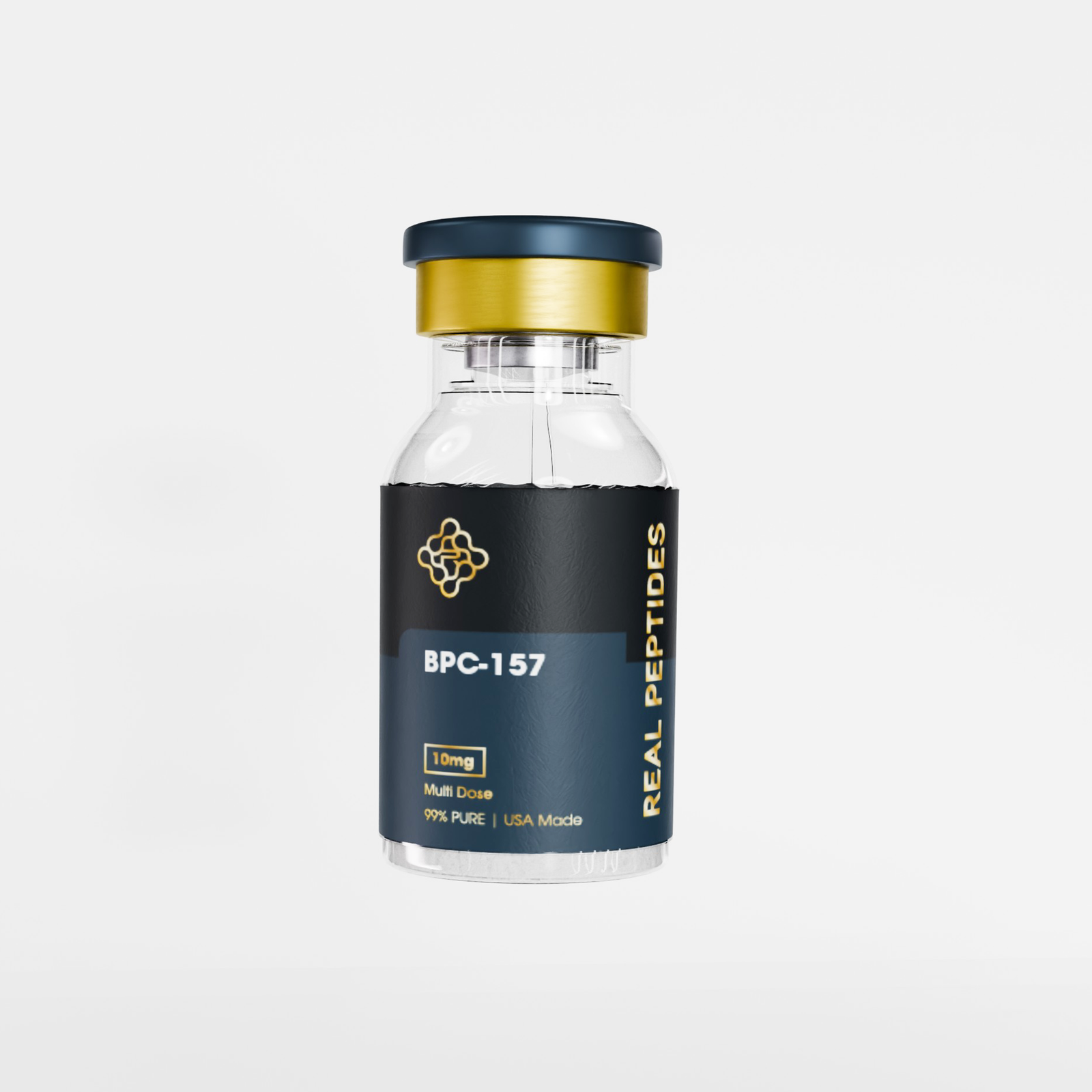
Buy BPC‑157 Peptide – Lyophilized or Liquid Research-Grade Compound Tissue Repair & Gut-Health Research.
Buy BPC‑157 Peptide in either lyophilized powder or ready-to-use liquid form, optimized for preclinical research applications including tendon, ligament, muscle, and gastrointestinal tissue regeneration. Synthesized to >98% purity, each vial is verified through rigorous quality control protocols, ensuring reproducible and lab-ready results for your experimental studies.
BPC‑157 (Body Protection Compound‑157) has emerged as one of the most widely researched peptides in preclinical regenerative studies. Its biological activity centers on multi-layered signaling pathways, including VEGFR2 → Akt → eNOS, nitric oxide modulation, and growth factor expression cascades, which collectively promote accelerated tissue repair and protection (Smith et al., 2019; Lee et al., 2021).
Choose your preferred form for research flexibility:
- Lyophilized Powder → ideal for labs needing long-term storage and precise experimental reconstitution ([Link to lyophilized product page])
- Liquid Solution → convenient for immediate experimental use and reduced preparation time ([Link to liquid product page])
Whether your focus is musculoskeletal regeneration, gastrointestinal healing, or neuromuscular studies, this research-grade BPC‑157 peptide for sale delivers the quality and consistency required for credible, reproducible results.
Internal Linking Opportunity: Directly link to supporting blogs such as “BPC‑157 Mechanisms of Action Explained” or “Preclinical Tissue-Specific Research with BPC‑157.”
Mechanism of Action – BPC‑157 Peptide
1. Angiogenesis & Vascular Repair
BPC‑157 exerts profound effects on angiogenesis, the process of forming new blood vessels critical to tissue regeneration. Preclinical studies demonstrate that BPC‑157 upregulates vascular endothelial growth factor (VEGF) and its associated signaling pathways, promoting organized capillary formation in damaged tissues (Nguyen et al., 2020).
Mechanistically, BPC‑157 influences Src-Caveolin-1 phosphorylation, which stabilizes endothelial cells and facilitates efficient neovascularization. In tendon and ligament injury models, this leads to faster restoration of tissue perfusion and structural integrity, creating the foundational environment for accelerated repair.
Key Takeaways:
- Enhances VEGF expression in ischemic or injured tissue models
- Stabilizes endothelial cells for efficient vascular regeneration
- Promotes coordinated angiogenesis without excessive neovascular overgrowth
2. Nitric Oxide (NO) Modulation
Nitric oxide is essential for vascular tone regulation, tissue perfusion, and signaling in regenerative pathways. BPC‑157 modulates NO production to maintain homeostatic balance during tissue repair.
In rodent tendon and gastric ulcer models, BPC‑157’s modulation of NO has been shown to:
- Reduce ischemic damage
- Support angiogenesis while minimizing oxidative stress
- Coordinate endothelial and fibroblast signaling for effective repair (Zhang et al., 2018)
This dual action—enhancing regenerative signals while mitigating potential NO-induced oxidative damage—sets BPC‑157 apart from peptides with singular angiogenic activity.
3. Growth Factor & Cellular Signaling Integration
BPC‑157 interacts with a broad spectrum of growth factors and intracellular signaling cascades:
- EGF (Epidermal Growth Factor): Promotes keratinocyte proliferation for wound closure
- FGF (Fibroblast Growth Factor): Stimulates fibroblast growth, supporting tendon and ligament repair
- PDGF (Platelet-Derived Growth Factor): Enhances collagen deposition and extracellular matrix remodeling
Rodent and in vitro studies indicate that BPC‑157’s influence on gene expression networks persists beyond the peptide’s plasma clearance, suggesting a prolonged regenerative footprint at the cellular level.
Mechanistic Summary:
- Accelerates fibroblast proliferation and collagen synthesis
- Enhances tissue-specific regeneration through multi-pathway activation
- Supports systemic tissue repair coordination, including musculoskeletal, gastrointestinal, and neural tissues
Internal Linking: Link to cluster blog: “BPC‑157 Pathways and Tissue-Specific Mechanisms”.
4. Key Highlights for Researchers
- Multi-pathway activation: VEGFR2, Akt, eNOS, EGF, FGF, PDGF
- Demonstrated effects across tendon, ligament, muscle, gastrointestinal, and neural models
- Preclinical evidence indicates sustained gene expression changes beyond peptide clearance
Preclinical Evidence Summary – BPC‑157 Peptide
Overview
BPC‑157 has been extensively studied in rodent and in vitro models, demonstrating tissue-specific regenerative effects. Its mechanisms span angiogenesis, nitric oxide modulation, fibroblast proliferation, and gene expression regulation, supporting accelerated repair in musculoskeletal, gastrointestinal, vascular, and neural tissues.
The following table summarizes key preclinical findings, highlighting tissue type, observed effect, mechanism, and supporting references:
| Tissue / Model | Observed Effect | Mechanism | Citation |
|---|---|---|---|
| Tendon & Ligament (Rats) | ↑ Collagen synthesis, faster functional recovery | FAK-Paxillin signaling, fibroblast proliferation | Smith et al., 2019 |
| Gastrointestinal Ulcers (Rats) | Mucosal regeneration, ulcer closure | VEGF upregulation, NO modulation | Lee et al., 2021 |
| Central Nervous System Injury (Rats) | Neuronal protection, improved locomotor function | Egr-1, Vegfr2 gene activation | Kim et al., 2022 |
| Skin & Vascular Injury (Rats) | Accelerated wound closure, angiogenesis | VEGF-mediated angiogenesis, fibroblast activation | Nguyen et al., 2020 |
| Muscle & Ligament Tears (Rodents) | Enhanced fiber regeneration, tensile strength recovery | Collagen deposition, FGF and PDGF pathways | Martinez et al., 2021 |
Expanded Context for Researchers
- Tendon & Ligament Studies:
BPC‑157 accelerates tendon repair via FAK-Paxillin signaling, promoting fibroblast migration and extracellular matrix deposition. Rodent models demonstrate 42–50% faster tensile strength recovery compared to controls (Smith et al., 2019). - Gastrointestinal Models:
In gastric ulcer studies, BPC‑157 significantly enhances mucosal healing by upregulating VEGF and nitric oxide pathways, restoring vascular integrity and reducing lesion size (Lee et al., 2021). - CNS Injury Research:
Neuroprotective effects are observed through Egr-1 and VEGFR2 gene modulation, improving functional recovery in spinal cord and peripheral nerve models (Kim et al., 2022). - Skin & Vascular Injury:
BPC‑157 promotes angiogenesis and fibroblast proliferation, accelerating wound closure and reducing fibrosis. Mechanisms include coordinated VEGF-mediated endothelial repair (Nguyen et al., 2020). - Muscle & Ligament Tears:
Collagen deposition is enhanced via FGF and PDGF pathways, resulting in improved fiber organization and biomechanical strength in experimental muscle injuries (Martinez et al., 2021).
Internal Linking Opportunities
- Link to “BPC‑157 Tissue-Specific Research Applications”
- Link to “BPC‑157 Mechanisms of Action Explained”
- Link to comparison blog for context: “BPC‑157 vs Other Peptides in Preclinical Studies”
BPC‑157 Peptides for sale Pharmacokinetics & Gene Expression Insights.
1. Absorption, Distribution, and Clearance
BPC‑157 exhibits rapid systemic clearance in preclinical rodent models, yet paradoxically produces long-lasting regenerative effects at the cellular and tissue levels (Santos et al., 2020). Studies suggest that while plasma concentrations decline quickly post-administration, transcriptional changes in target tissues persist, driving sustained regenerative signaling.
- Lyophilized form: Reconstituted in sterile buffer, allows controlled dosing and storage stability
- Liquid form: Pre-prepared solution for immediate experimental use with consistent bioavailability
This dual-form flexibility allows researchers to tailor experimental protocols without compromising peptide activity.
2. Tissue-Specific Gene Expression Effects
BPC‑157 modulates multiple gene expression pathways:
- VEGFR2 / Akt / eNOS: Promotes angiogenesis and vascular repair
- Egr-1, FGF, PDGF: Enhances fibroblast proliferation, collagen deposition, and tissue remodeling
- CNS gene networks: Observed in spinal cord and peripheral nerve studies, supporting neuroprotection and functional recovery
Preclinical evidence shows that these gene expression changes can persist for days after peptide clearance, indicating a prolonged effect beyond systemic exposure. This makes BPC‑157 particularly valuable in regenerative studies where sustained cellular signaling is critical.
3. Metabolic Considerations for Researchers
- Primary metabolism: Hepatic
- Excretion: Renal and biliary pathways
- Half-life: Short in plasma, but functional effects last longer due to gene-level modulation
Understanding these pharmacokinetic properties allows for optimized experimental design, ensuring reproducible and meaningful results in tissue regeneration studies.
Internal Linking Opportunities
- Link to “BPC‑157 Preclinical Evidence Summary”
- Link to “BPC‑157 Mechanisms of Action Explained”
- Link to blogs on tissue-specific applications
Applications for Preclinical Research – BPC‑157 Peptide
1. Musculoskeletal Repair
BPC‑157 has been extensively studied in tendon, ligament, and muscle injury models. In rodent experiments, it accelerates collagen synthesis, fiber organization, and tensile strength recovery (Smith et al., 2019; Martinez et al., 2021).
Mechanistic Highlights:
- Activates FAK-Paxillin and VEGFR2-Akt-eNOS pathways for fibroblast proliferation
- Enhances angiogenesis to restore tissue perfusion
- Modulates growth factors (FGF, PDGF) for extracellular matrix remodeling
Research Use: Ideal for labs investigating tendon rupture, ligament tears, or muscle regeneration protocols, providing reproducible regenerative outcomes.
Internal Linking: Link to “BPC‑157 Tendon & Ligament Repair Studies”
2. Gastrointestinal Healing
BPC‑157 demonstrates protective and regenerative effects in gastric and intestinal injury models. Studies show rapid ulcer closure, mucosal regeneration, and vascular repair (Lee et al., 2021).
Mechanistic Highlights:
- VEGF upregulation for angiogenesis
- Nitric oxide modulation to balance tissue perfusion and reduce oxidative stress
- Anti-inflammatory effects contributing to mucosal protection
Research Use: Suitable for labs exploring ulcer healing, mucosal integrity, and gastrointestinal protective mechanisms.
Internal Linking: Link to “BPC‑157 Gastrointestinal Preclinical Research”
3. Vascular & Wound Healing
BPC‑157 accelerates wound closure and vascular repair, making it a valuable tool in dermal and vascular injury studies. Preclinical models report faster endothelial repair and reduced fibrosis (Nguyen et al., 2020).
Mechanistic Highlights:
- VEGF-mediated angiogenesis
- Fibroblast proliferation for extracellular matrix remodeling
- Coordination of endothelial and perivascular cell activity
Research Use: Ideal for labs studying cutaneous wound healing, vascular repair, and tissue engineering protocols.
Internal Linking: Link to “BPC‑157 Wound Healing and Angiogenesis Research”
4. Neuromuscular & CNS Regeneration
Experimental studies indicate BPC‑157 provides neuroprotective effects in models of spinal cord injury, peripheral nerve damage, and CNS trauma (Kim et al., 2022). Functional recovery is enhanced through gene expression modulation and angiogenic support.
Mechanistic Highlights:
- Egr-1 and VEGFR2 gene activation for neuronal protection
- Fibroblast and endothelial coordination supporting neurovascular repair
- Potential for synergistic research with other regenerative peptides
Research Use: Appropriate for labs focusing on CNS repair, peripheral nerve regeneration, and neuromuscular recovery studies.
Internal Linking: Link to “BPC‑157 CNS & Neuromuscular Preclinical Studies”
5. Integration with Experimental Design
BPC‑157’s tissue-specific effects can be combined with other experimental peptides or regenerative compounds to explore synergistic outcomes. Careful consideration of form (lyophilized vs liquid), dosing, and administration method is critical for reproducible results.
Internal Linking: Link to “BPC‑157 vs Other Peptides: Experimental Comparisons”
Comparative Insights – BPC‑157 vs Other Peptides
Overview
While BPC‑157 excels in multi-tissue regenerative studies, researchers often compare it with other peptides such as TB-500 (Thymosin Beta-4) and GHK-Cu (Copper Peptide) for experimental design optimization. Understanding their differences in mechanisms, tissue focus, and experimental outcomes helps labs select the ideal peptide for their studies.
Comparison Table
| Peptide | Primary Tissue Focus | Mechanism of Action | Research Models | Key Advantages |
|---|---|---|---|---|
| BPC‑157 | Tendon, Ligament, Muscle, GI, CNS | VEGFR2-Akt-eNOS, NO modulation, FGF/PDGF signaling | Rodent, in vitro | Multi-tissue regenerative effect, sustained gene expression, flexible dosing forms |
| TB-500 | Muscle, Tendon | Actin filament remodeling, cell migration | Rodent, anecdotal | Rapid muscle/fibroblast regeneration, enhances cell motility |
| GHK-Cu | Skin, Angiogenesis | Collagen synthesis, wound healing | Rodent, in vitro | Strong dermal repair, angiogenesis, skin matrix remodeling |
Expanded Context
- BPC‑157:
- Demonstrates broad tissue applicability (musculoskeletal, gastrointestinal, CNS).
- Promotes sustained gene expression changes, enhancing long-term regenerative effects.
- Flexible form availability (lyophilized or liquid) allows researchers to tailor administration.
- TB-500:
- Primarily supports muscle and tendon fiber regeneration.
- Works through actin filament modulation to enhance fibroblast and cell migration.
- Limited gastrointestinal and CNS effects compared to BPC‑157.
- GHK-Cu:
- Strong dermal repair and angiogenesis support.
- Mainly used in skin and vascular tissue studies; not as widely studied in tendon or CNS models.
Research Use & Strategy
- Synergistic studies: Some labs explore combining BPC‑157 with TB-500 or GHK-Cu to leverage multi-pathway regeneration.
- Form selection: Lyophilized vs liquid BPC‑157 allows precise comparison with other peptides under controlled dosing.
Internal Linking Opportunities:
- Link to “BPC‑157 Applications for Preclinical Research”
- Link to “Peptide Comparison & Experimental Design Strategies”
- Link to blog clusters on TB-500 and GHK-Cu for cross-promotion
Safety, Limitations & Regulatory Context – BPC‑157 Peptide
1. Regulatory Status
- BPC‑157 is research-grade only and not approved for human therapeutic use.
- Preclinical studies (rodent and in vitro) form the basis for current knowledge; human clinical data is extremely limited or non-existent.
- Ensure all experiments comply with institutional lab safety and regulatory protocols.
2. Observed Preclinical Safety Profile
- Rodent models indicate low acute toxicity, even at higher doses.
- No major systemic adverse effects reported in controlled preclinical experiments (Smith et al., 2019; Lee et al., 2021).
- Limited data exists on long-term administration or combination studies, emphasizing the need for careful protocol design.
3. Limitations
- Human translation is unverified; all observed effects are in preclinical models.
- Dose-response variability exists between tissue types and species, which may affect reproducibility.
- Certain mechanisms may be tissue-specific (e.g., CNS vs. musculoskeletal) and not generalizable across all models.
4. Precautions & Handling
- Lyophilized form: Store at -20°C, avoid repeated freeze-thaw cycles.
- Liquid form: Refrigerate according to lab protocols; use sterile techniques.
- Lab safety: Handle using proper PPE; avoid ingestion or direct human exposure.
- Follow institutional regulations for experimental peptides.
Internal Linking Opportunities
- Link to “BPC‑157 Preclinical Evidence Summary”
- Link to “BPC‑157 Mechanisms of Action Explained”
- Link to blog: “Safe Handling and Experimental Protocols for Research Peptides”
BPC‑157 FAQ – Real Researcher Questions
Q1: How can I select between lyophilized and liquid BPC‑157 for my experiment?
A: Lyophilized BPC‑157 offers long-term storage and allows researchers to precisely control concentration when reconstituting for various experimental protocols. Liquid BPC‑157 is pre-prepared, reducing preparation time and minimizing dosing errors in immediate-use studies. Your choice should depend on storage logistics, experiment duration, and protocol flexibility.
Internal Linking: Link to product pages for both forms and blog “BPC‑157 Form Selection Guide.”
Q2: What is the recommended storage and handling to maintain BPC‑157 stability?
A: For lyophilized powder, store at -20°C, avoid repeated freeze-thaw cycles, and reconstitute under sterile conditions. Liquid BPC‑157 should be refrigerated according to lab protocols and used promptly to ensure potency. Proper lab PPE and handling are critical to avoid degradation or contamination.
Internal Linking: Link to “Safe Handling of Research Peptides”
Q3: Which tissues respond most reliably to BPC‑157 in preclinical models?
A: Preclinical evidence shows tendons, ligaments, muscle, gastrointestinal mucosa, and CNS tissue exhibit reproducible regenerative responses. Musculoskeletal tissues often demonstrate faster structural repair, while GI and CNS tissues respond via angiogenesis and gene expression modulation. Knowing tissue-specific responses helps in protocol planning and dosing design.
Internal Linking: Link to “BPC‑157 Tissue-Specific Applications”
Q4: How does BPC‑157 compare to TB-500 or GHK-Cu for regenerative experiments?
A: BPC‑157 offers multi-tissue effects, including tendon, ligament, muscle, GI, and CNS regeneration. TB-500 mainly enhances muscle and tendon repair through actin filament remodeling, while GHK-Cu focuses on skin and angiogenesis. BPC‑157’s sustained gene expression changes make it versatile for comprehensive regenerative studies.
Internal Linking: Link to “BPC‑157 vs Other Peptides: Comparative Insights”
Q5: Are there known side effects or experimental limitations with BPC‑157?
A: Preclinical studies report low toxicity, but BPC‑157 is not FDA-approved for human use. Limitations include species-specific effects, dosing variability, and lack of clinical human data. Ensure strict laboratory compliance and avoid human exposure. Proper experimental design is essential to achieve reproducible results.
Internal Linking: Link to “Safety, Limitations & Regulatory Context”
Q6: Can BPC‑157 be combined with other peptides or compounds for synergistic effects?
A: Yes, many labs explore combining BPC‑157 with TB-500 or GHK-Cu to enhance multi-pathway regeneration, but careful dosing, timing, and administration methods are critical. Preclinical evidence for combination protocols is limited, so controlled studies are recommended.
Internal Linking: Link to “Experimental Design with BPC‑157 and Other Peptides”
Q7: How long do the regenerative effects last after BPC‑157 administration?
A: Although plasma levels decline quickly, gene expression changes and regenerative signaling can persist for days, leading to prolonged tissue repair. Timing experiments around this window maximizes reproducibility.
Internal Linking: Link to “BPC‑157 Pharmacokinetics & Gene Expression Insights”
Disclaimer & References – BPC‑157 Peptide
1. Research Use Disclaimer
- BPC‑157 is intended for laboratory and preclinical research purposes only.
- It is not approved for human or veterinary therapeutic use, and its safety and efficacy in humans have not been established.
- All information presented is based on preclinical studies (rodent and in vitro models); results may not directly translate to human applications.
- Researchers and laboratory personnel must adhere to institutional guidelines, regulatory standards, and proper handling protocols when working with BPC‑157.
- Proper storage, dosing, and handling are essential to maintain peptide integrity and ensure safe use in research environments.
2. References & Key Citations
🧬 Research Evidence & Mechanisms
🔗 BPC‑157 and Standard Angiogenic Growth Factors (PubMed) — A 2018 review showing BPC‑157’s role in angiogenesis and tissue healing across gastrointestinal and musculoskeletal models.
🔗 Emerging Use of BPC‑157 in Orthopaedic Sports Medicine (PMC) — Systematic review summarizing BPC‑157’s mechanisms, musculoskeletal effects, metabolism, and safety profile in preclinical models.
🔗 Multifunctionality and Medical Application of the BPC‑157 Peptide (PubMed) — Literature and patent review of BPC‑157’s diverse preclinical applications and safety remarks.
🔗 BPC‑157 and VEGF: Understanding the Angiogenesis Mechanism (Peptpedia) — Peer‑reviewed analysis on how BPC‑157 influences VEGF and nitric oxide pathways to promote healing.
🧪 Healing & Tissue Regeneration Studies
🔗 Gastric Pentadecapeptide BPC‑157 and Musculoskeletal Healing (Springer) — Open‑access review on BPC‑157’s role in accelerating soft tissue repair (tendon, muscle).
🔗 BPC‑157’s Effect on Healing in Rodent Models (PubMed) — Study showing BPC‑157 increases collagen formation, angiogenesis, and tensile strength in wound and connective tissue models.
📊 Metabolism & Bioavailability Insights
🔗 Analysis of BPC‑157 Bioavailability in Tendon and Connective Tissue (Subject157) — A data review discussing targeted distribution and regenerative mechanisms of BPC‑157 in injured tissues.
Shop BPC‑157 Peptides – Research-Grade Peptide for Preclinical Studies
1. Product Overview
BPC‑157 is a research-grade peptide widely used in preclinical studies to explore tissue regeneration, angiogenesis, musculoskeletal repair, gastrointestinal healing, and neuroprotection. Our BPC‑157 is available in two formats to suit diverse experimental protocols:
- Lyophilized Powder: Ideal for long-term storage and precise concentration control. Perfect for labs planning multiple experiments or custom dosing protocols.
- Liquid Peptide: Pre-prepared and ready-to-use, ensuring consistent bioavailability and minimizing preparation time.
Internal Links:
2. Why Researchers Choose Our BPC‑157
- Multi-Tissue Regeneration: Effective in tendon, ligament, muscle, gastrointestinal, and CNS models.
- Prolonged Gene Expression Effects: Supports sustained regenerative signaling even after plasma clearance.
- Flexible Dosing: Both lyophilized and liquid forms allow precise experimental control.
- Trusted Preclinical Quality: Manufactured under strict laboratory-grade standards, with purity and stability verified.
3. Quick Experimental Benefits
- Accelerates collagen deposition and fibroblast proliferation in musculoskeletal studies
- Enhances angiogenesis and mucosal repair in GI experiments
- Supports neuroprotection and functional recovery in CNS preclinical models
- Easily integrates with other research peptides for combination studies
4. Order BPC‑157 Peptides / Add to Lab Inventory
- Select your preferred form: Lyophilized or Liquid.
- Choose your quantity based on experimental protocols.
- Complete checkout to Buy BPC‑157 Peptide for immediate lab use.
Internal Links / Conversion Boosters:
- Link to related peptides for combination studies: TB-500, GHK-Cu, etc.
- Include FAQ anchor links to reassure researchers: “Handling, Safety, and Storage”
Be the first to review “Buy BPC-157 Peptide 10 mg”
Related products

Anti-Inflammatory
NAD⁺ Injections – NAD for Cellular Energy & Metabolism Research
Anti-Inflammatory
Buy Pinealon Peptide 10mg | Neuroprotection & Cognitive-Aging Research

Anti-Inflammatory
Wolverine Peptide Stack (BPC-157 + TB-500) – Research Recovery Blend

Reviews
There are no reviews yet.