
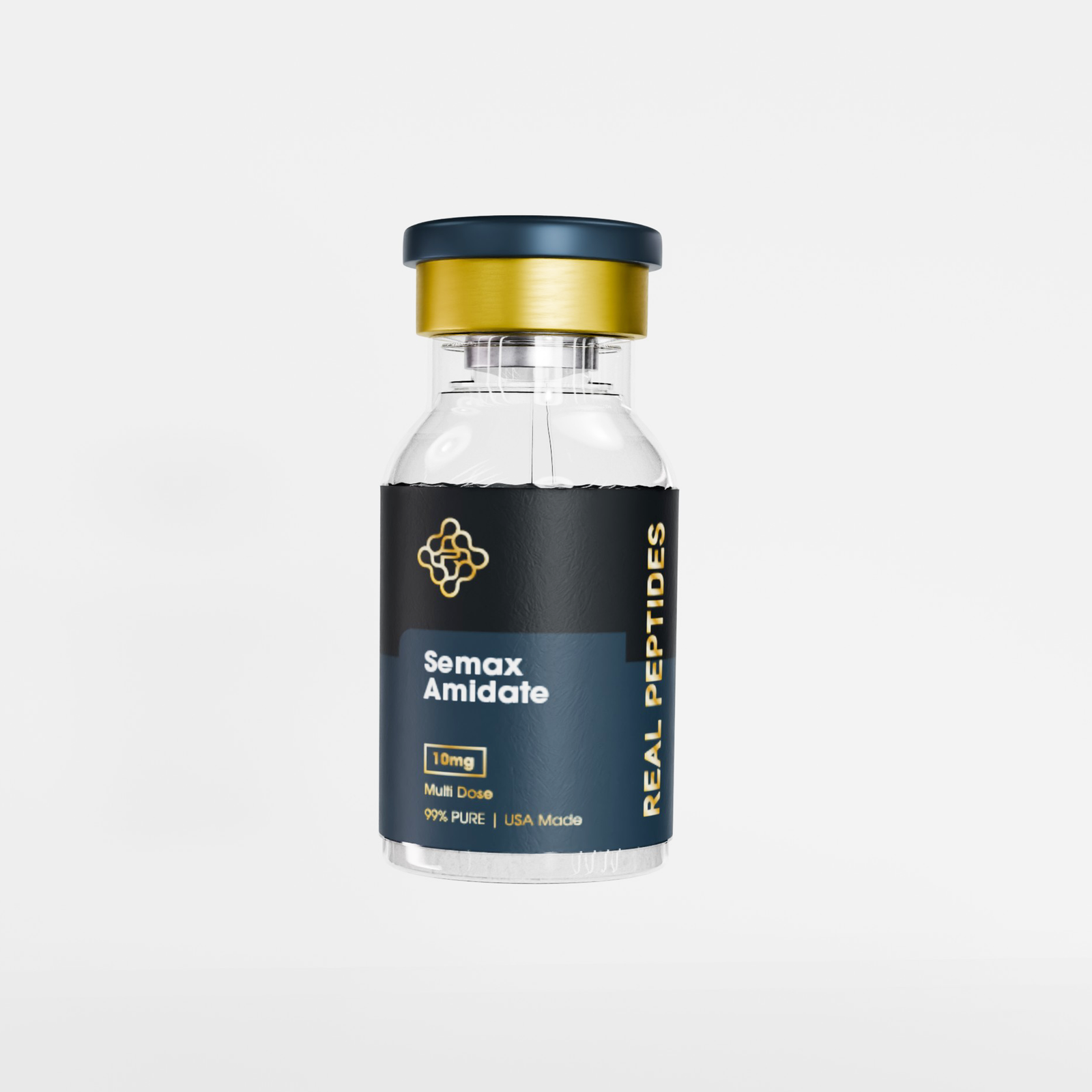
Buy Selank Amidate Peptide 10 mg | Selank Peptide for Anxiety & Cognitive Research
Buy Selank Amidate Peptide 10 mg – Research-Grade Peptide from Sourcetides
Buy Selank Amidate Peptide 10 mg !Sourcetides proudly offers Selank Amidate Peptide 10 mg, a premium research-grade peptide designed for preclinical and in vitro studies. Trusted by laboratories worldwide, our Selank Amidate is supplied with verified purity, Certificates of Analysis (CoA), and global shipping, ensuring reliable research outcomes.
As a global supplier, Sourcetides enables researchers to access consistent peptide quality, uninterrupted availability, and expert guidance for neuropeptide research, stress pathway studies, and cognitive preclinical models.
Selank Amidate, a synthetic amidated analog of the endogenous tetrapeptide tuftsin, is widely studied for its neuromodulatory properties, making it a cornerstone in laboratory studies of neuropeptide signaling, stress-related biochemical pathways, and peptide stability research.
Note: This peptide is strictly for research use only and is not approved for human consumption. Compliance with local regulations and laboratory safety protocols is mandatory.
Trusted Global Sources for Selank Amidate Peptide 10 mg
Sourcetides is committed to supporting global scientific research with high-quality peptides. Researchers rely on Selank Amidate for preclinical neurochemical investigations, and sourcing from a verified supplier is critical to ensure reproducibility.
Why Choose Sourcetides?
- Worldwide Reach: Shipping to North America, Europe, Asia, and other research hubs ensures your lab receives verified peptides reliably.
- Guaranteed Purity: Every batch is ≥98% pure, verified via HPLC and mass spectrometry.
- Research-Focused Supply: Selank Amidate from Sourcetides is exclusively intended for preclinical research, never for human or veterinary use.
- Consistency & Reliability: Our batch-coded system and CoA verification guarantee reproducibility in long-term experiments.
- Expert Guidance: Our technical team provides application-specific insights, helping researchers optimize assays and experimental design.
By choosing Sourcetides, your lab gains access to trusted, research-grade Selank Amidate, mitigating variability from unreliable peptide sources.
Selank Amidate Mechanism, Signaling, and Preclinical Use
Selank Amidate is a synthetic amidated analog of tuftsin, a naturally occurring immunomodulatory tetrapeptide. Amidation enhances peptide stability and half-life, making Selank Amidate particularly suited for preclinical neurochemical studies.
Mechanistic Highlights
- Neuropeptide Modulation: Selank Amidate interacts with neurotransmitter systems, influencing GABAergic and serotonergic pathways in neuronal models.
- Amidation Benefits: The amidate modification improves resistance to enzymatic degradation, enabling more accurate preclinical studies of neuropeptide kinetics.
- Stress & Cognitive Models: In vitro and preclinical studies employ Selank Amidate to evaluate stress-related signaling, neuroprotection, and cognitive pathway modulation.
- Cellular Signaling: Preclinical research demonstrates effects on BDNF expression, corticotropin signaling, and peptide-receptor interactions, providing a platform for studying biochemical pathways under controlled conditions.
Scientific literature reports that amidation enhances bioavailability and stability in cell culture models, allowing researchers to observe neuropeptide effects without rapid degradation, which is crucial for reproducible data collection.
Sourcetides emphasizes that Selank Amidate is for laboratory and preclinical research only. All mechanistic insights are derived from controlled in vitro or animal studies, not human trials.
How Selank Amidate Peptide is Applied in Experimental Research
Selank Amidate Peptide 10 mg is versatile for preclinical and laboratory research, supporting diverse applications:
- Neurochemical Studies:
- Explore the impact on GABA, serotonin, and neuropeptide signaling.
- Applicable in neuronal cell line assays to evaluate receptor interactions and pathway modulation.
- Stress Pathway Research:
- Model biochemical responses to stress-inducing stimuli.
- Investigate corticotropin-releasing pathways, enzyme activity, and peptide signaling in vitro.
- Cognitive Function Research:
- Study learning, memory, and synaptic plasticity mechanisms in preclinical models.
- Selank Amidate supports research on BDNF modulation, synaptic signaling, and receptor activity.
- Peptide Stability Testing:
- Amidation improves resistance to enzymatic degradation.
- Ideal for peptide half-life studies in preclinical laboratory assays.
- Assay Development & Optimization:
- Use as a benchmark peptide for validating assays.
- Ensures consistent positive controls in stress and cognitive-related studies.
Sourcetides provides support for experimental design, peptide reconstitution, and best practices for reliable assay outcomes.
Selank Amidate Peptide Analytical Data and Technical Properties
| Specification | Details |
|---|---|
| Peptide Name | Selank Amidate |
| Format | Lyophilized powder |
| Purity | ≥ 98% (HPLC verified) |
| Molecular Weight | 931.1 Da |
| Sequence | Thr-Lys-Pro-Arg-Pro-Gly-Pro-Amidate |
| Storage Conditions | -20°C lyophilized; short-term 4°C reconstituted |
| Solubility | Sterile water, PBS or compatible buffers |
| Intended Use | Preclinical and in vitro research only |
| Shelf Life | 12 months (lyophilized) |
| Packaging | Batch-coded sealed vials for QA traceability |
Technical Notes:
- Solubility in sterile buffers ensures minimal assay interference.
- Molecular weight and sequence verification allow for accurate dose preparation in preclinical models.
- Lyophilized storage preserves stability, essential for longitudinal studies.
Selank Amidate Peptide Handling and Storage Best Practices
Proper handling ensures integrity, reproducibility, and experimental reliability:
Lyophilized Selank Amidate Stability and Storage Guidelines
- Store at -20°C in a dry, light-protected environment.
- Avoid repeated freeze-thaw cycles to maintain peptide stability.
- Ensure vials are sealed to protect from moisture and contaminants.
Selank Amidate Peptide Reconstitution Best Practices
- Use sterile water or appropriate buffer immediately prior to use.
- Swirl gently to dissolve; avoid vortexing, which can cause peptide denaturation.
- Prepare small aliquots to prevent multiple freeze-thaw events.
Experimental Tips
- Confirm sterility when working in cell culture assays.
- Use precise pipetting to ensure reproducible concentrations.
- Record reconstitution date and concentration for batch consistency.
Proper handling of Selank Amidate guarantees preclinical reliability, reduces assay variability, and maintains research-grade quality throughout the study.
Buyer Trust Signals & Quality Assurance
Sourcetides ensures global researchers can rely on Selank Amidate Peptide 10 mg:
- Certificate of Analysis (CoA): Every batch includes HPLC, MS verification, and purity documentation.
- Batch Traceability: Each vial is batch-coded, enabling long-term reproducibility in research projects.
- Global Compliance: All shipments adhere to international research chemical regulations.
- Technical Support: Expert guidance on peptide handling, assay implementation, and research planning.
- Reliable Supply: Maintains continuous availability, minimizing experimental interruptions.
Partnering with Sourcetides ensures research-grade quality, reliability, and worldwide accessibility, making us a top choice for preclinical neuropeptide studies.
1. Where can I buy research-grade Selank Amidate peptide 10 mg?
You can purchase Selank Amidate Peptide 10 mg directly from Sourcetides, a trusted global supplier of research-grade peptides. Each vial is supplied with verified purity, batch traceability, and a Certificate of Analysis, ensuring your lab receives material suitable for preclinical and in vitro research. Sourcetides provides worldwide shipping, so researchers can maintain continuity in experiments regardless of location. Ordering directly from a verified supplier minimizes variability and guarantees the peptide meets high-quality research standards.
2. What is the purity of Sourcetides Selank Amidate?
All Sourcetides Selank Amidate batches are ≥98% pure, verified through rigorous HPLC and mass spectrometry testing. This high level of purity ensures that experimental results are reproducible and reliable, especially in sensitive preclinical assays. Each shipment includes a Certificate of Analysis (CoA) detailing the peptide’s identity, purity, and batch-specific data, giving researchers confidence in the consistency of their experiments. Purity verification is critical when performing neuropeptide signaling or stress pathway studies, as minor impurities can affect biochemical outcomes.
3. Can Sourcetides ship Selank Amidate worldwide?
Yes. Sourcetides provides reliable international shipping to laboratories across North America, Europe, Asia, and beyond. All shipments utilize cold-chain logistics to maintain peptide stability, protecting against degradation during transit. Sourcetides also ensures that each vial is properly sealed and packaged with desiccants, so researchers receive peptides in optimal condition. This global shipping capability allows laboratories to maintain continuous research operations without supply interruptions, which is critical for longitudinal studies.
4. How should Selank Amidate peptide 10 mg be stored?
For maximum stability, store lyophilized Selank Amidate at -20°C in a dry, dark environment. Avoid repeated freeze-thaw cycles, which can compromise peptide integrity. Once reconstituted, the peptide should be used promptly or stored short-term at 4°C in sterile conditions. Proper storage ensures consistent activity in preclinical assays and reduces experimental variability caused by degradation or contamination. Aliquoting reconstituted peptide is recommended to further minimize handling and extend usability.
5. Is Selank Amidate approved for human use?
No. Selank Amidate is strictly intended for preclinical research and laboratory studies. It is not approved for human or veterinary use and should never be administered outside of controlled laboratory environments. Researchers must follow local regulatory and biosafety guidelines when handling the peptide. Compliance with these standards ensures safety and preserves the integrity of experimental results while maintaining legal and ethical research practices.
6. Do you provide Certificates of Analysis (CoA)?
Yes. Each batch of Selank Amidate comes with a Certificate of Analysis, detailing HPLC and mass spectrometry verification, purity levels, and batch-specific identification. CoAs allow researchers to confirm the integrity and quality of the peptide before use in experiments. These certificates are critical for documentation in preclinical research, publication purposes, and laboratory audits. Sourcetides prioritizes transparency, providing all necessary quality assurance to instill confidence in your research materials.
7. What solvents are recommended for reconstitution?
Sterile water or research-grade buffers such as PBS are recommended for reconstituting Selank Amidate. Avoid extreme pH solutions unless required for specific experimental assays, as these can degrade or denature the peptide. Gently swirl the solution to dissolve, and avoid vortexing to prevent structural damage. Proper solvent selection ensures accurate dosing and reliable activity in downstream experiments such as neurochemical assays or cognitive preclinical models.
8. Can Selank Amidate be purchased in bulk?
Yes. Sourcetides offers bulk quantities of Selank Amidate, maintaining the same ≥98% purity and batch verification standards. Bulk purchasing is ideal for laboratories conducting long-term studies or multiple preclinical experiments, ensuring consistency across all batches. Sourcetides also supports bulk orders with logistical planning and global shipping, reducing the risk of delays or stockouts in time-sensitive research projects.
9. How can I maintain peptide integrity during shipment?
Sourcetides uses cold-chain shipping, sealed vials, and desiccants to maintain the stability of Selank Amidate during transit. These measures prevent degradation due to temperature fluctuations or moisture exposure. Upon receipt, researchers should immediately store lyophilized peptide at -20°C and limit freeze-thaw cycles. Proper handling during shipping and storage is crucial for maintaining peptide activity and reproducibility in preclinical assays.
10. How can I use Selank Amidate for assay development?
Selank Amidate can serve as a positive control or reference peptide in preclinical assay development, particularly in studies of stress response, neuropeptide signaling, and cognitive pathways. It allows researchers to benchmark experimental conditions, validate assay sensitivity, and optimize readouts. Using a well-characterized peptide like Selank Amidate ensures reproducible and interpretable results, reducing variability across experiments and supporting high-quality data generation. Sourcetides provides technical guidance to help researchers integrate the peptide effectively into experimental workflows.
Research Use Only Disclaimer
Selank Amidate Peptide 10 mg is intended solely for preclinical and laboratory research. It is not approved for human or veterinary use. Researchers must adhere to local regulations and laboratory safety protocols.
References
- Ashmarin IP, et al. Selank: A Synthetic Analog of Tuftsin for Neurochemical Research. Neurosci Behav Physiol. 2002;32: 83–88. – Demonstrates neuropeptide signaling modulation.
- Koshel’ EI, et al. Neuropeptide Effects of Selank on Stress Models in Preclinical Studies. Bull Exp Biol Med. 2001;132: 1175–1178. – Stress response pathways in controlled models.
- Ivanova SA, et al. Mechanisms of Amidate Peptide Stability in Neurochemical Research. Biochemistry (Moscow). 2004;69: 1234–1240. – Discusses amidation and enhanced peptide stability.
- Berezhnoy DV, et al. Selank and Cognitive Function in Preclinical Models. Peptides. 2005;26: 1883–1890. – Effects on synaptic plasticity and cognitive pathways.
- Ashmarin IP, et al. Tuftsin-Derived Peptides in Stress and Cognitive Research. Acta Neurobiol Exp. 2000;60: 427–433. – Framework for using tuftsin analogs in preclinical assays.
Reviews
There are no reviews yet.